

Note: This is another installment of candidate Q&As featuring contested races on Tippecanoe County ballots. Answers from candidates who did not respond in time for this edition will be updated as they arrive.
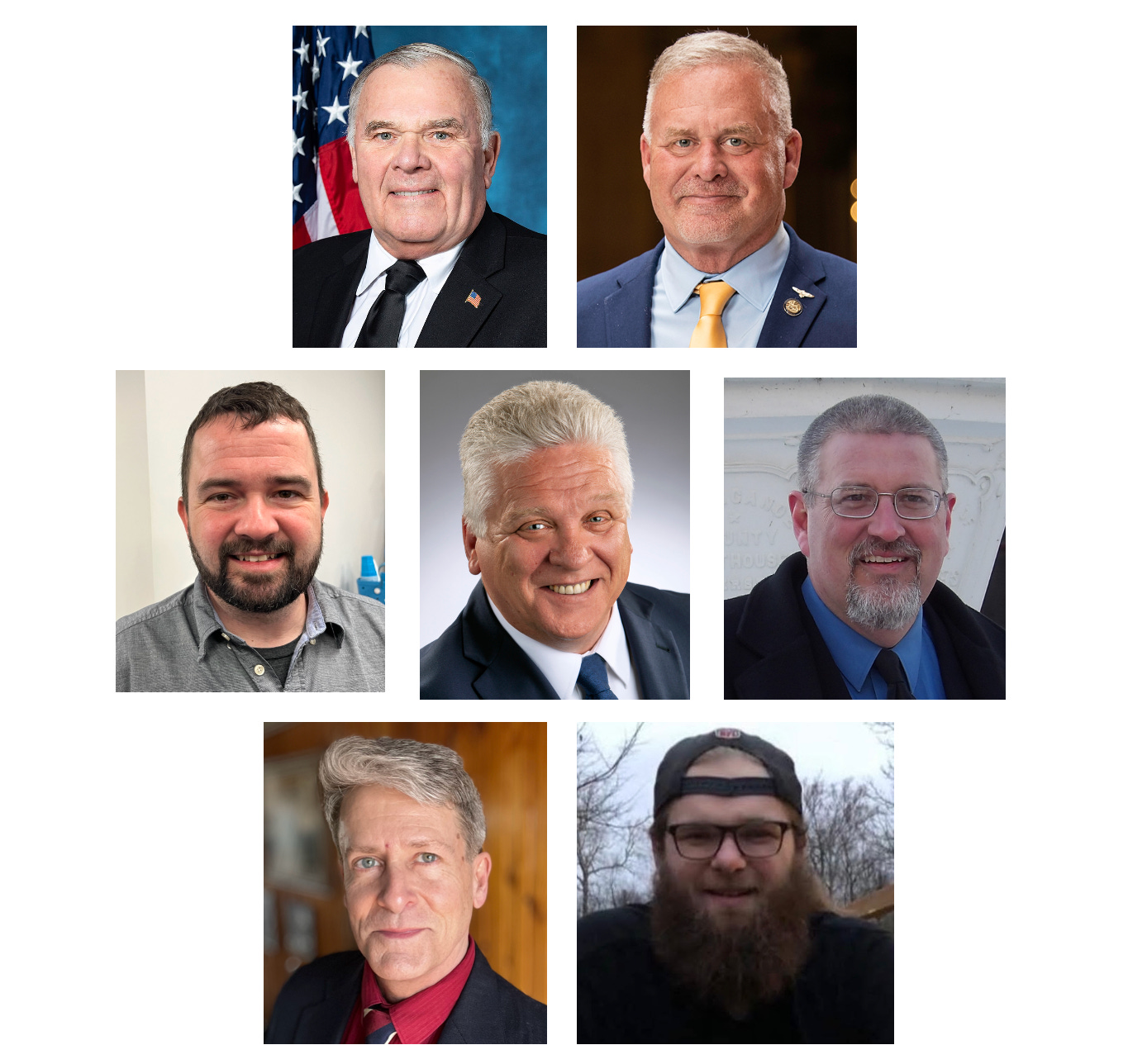
U.S. Rep. Jim Baird, seeking a fifth term in Congress, faces a primary challenge from a pair of Republicans, including state Rep. Craig Haggard and John Piper.
On the Democratic ticket, eight candidates are vying for the party’s nomination. They are: Drew Cox, Roger Day, Darin Griesey, Thomas Hall, Joe Mackey, Jayden McCash, Paul McPherson and John Whetstone.
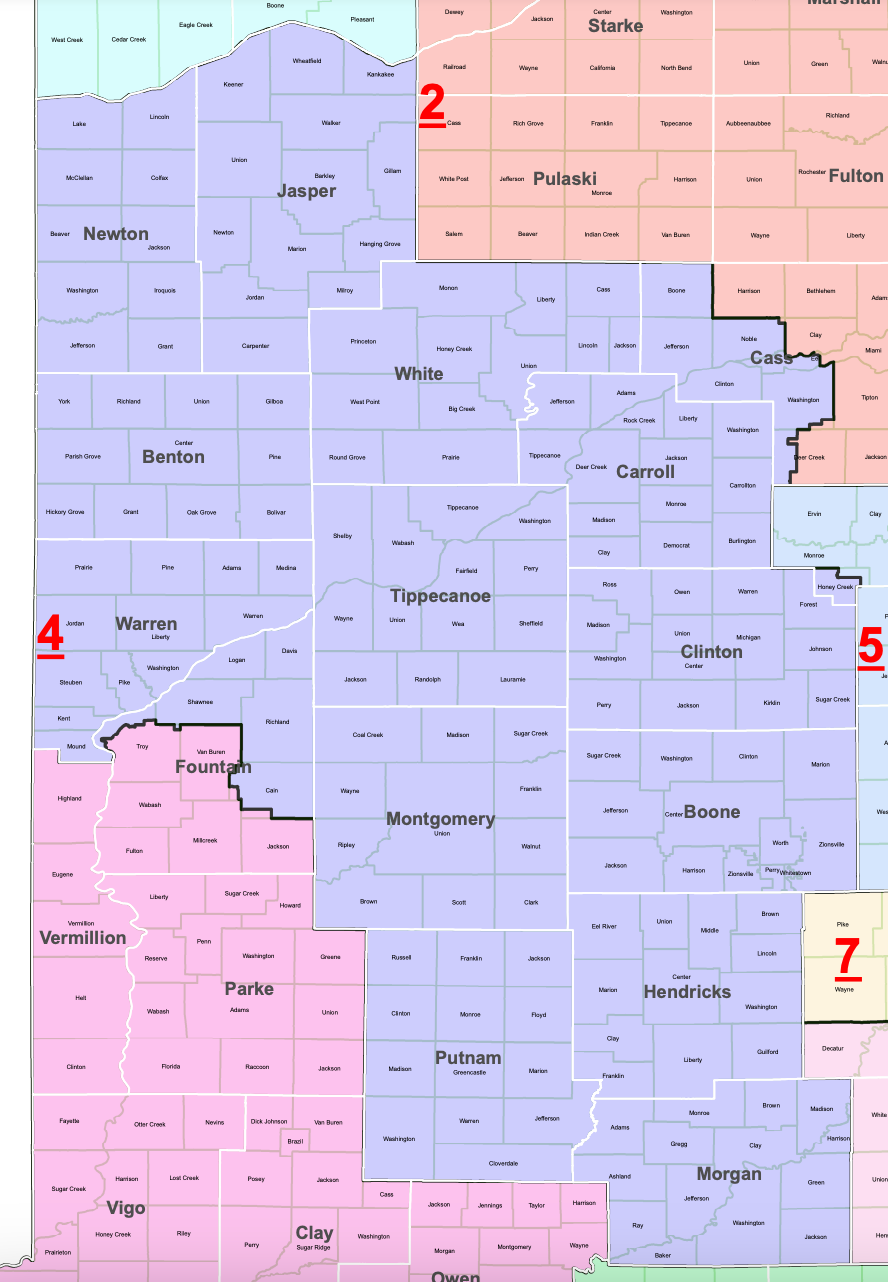
The 4th District takes in much of west-central Indiana, including Tippecanoe and surrounding counties.
Here, candidates answer questions about their approach.
For more: Find bios of each candidate, along with information about where and when to vote, at the end of this article. Watch in the coming days for more candidate Q&As in other races on Tippecanoe County primary ballots.
Why do you want this job? Why are you running now for this position?
Republicans
Jim Baird: I’m running to continue fighting for Hoosier values at a time when many feel our country is on the wrong track. Families are struggling with rising costs, and Washington is out of touch. I bring real-world experience and will keep working to restore accountability, strengthen our economy, and protect our freedoms.
Craig Haggard: I’ve spent my whole life in service, first in the military, and later as a state representative because I believe in giving back to the country that’s given so much to me. I’m running for Congress now because I believe we need someone who will show up, be accountable and work for the people of Indiana.
John Piper: Did not respond.
Democrats
Drew Cox: I was inspired to run after seeing ICE terrorize communities here in the U.S. According to the dictionary, we technically have concentration camps in the U.S. We need to demand that ICE be held to the same standards as every other law enforcement agency. At the bare minimum, they need to remove their masks, produce judicially signed warrants and conduct themselves in a way that serves communities and does not terrorize them.
Roger Day: Did not respond.
Darin Griesey: Washington is broken and this district needs help! So when elected, I promise to bring accountability and transparency back to politics. And on Day One this candidate pledges to submit to Congress a series of bills focused on lifting the lives of Hoosiers, guaranteeing health care as a right, strengthening Social Security, balancing the federal budget, limiting the terms of Congress, reforming federal education funding, reducing gun violence, protecting the environment, securing American energy, and ushering in a new American economy.
Thomas Hall: Did not respond.
Joe Mackey: I believe residents of the 4th Congressional District have been, and I fear will continue to be, represented in Congress by people who are more committed to a party than they are to their district.
Jayden McCash: I want to bring positive change to our district. Hoosiers feel like they are being left behind. The status quo isn’t working. I felt like joining the race today was my best opportunity to flip our ruby red district.
Paul McPherson: I am running because I am tired of the inaction in Washington and having a Congress that does not want to work for the American people. I am also running because I am tired of the same proposals on both sides of the aisle being presented, knowing they will not go anywhere. I believe my background as a farmer, engineer, and teacher, along with my managerial experience and out-of-the-box problem solving skills will serve me well in Washington to present new solutions to tackle some of today’s social and economic problems.
John Whetstone: Did not respond.
Name two of your top priorities for the position. And how will you handle them?
Republicans
Jim Baird: First, lowering costs by cutting federal spending, supporting energy independence, and reducing regulations. Second, securing the border through stronger enforcement and resources for law enforcement. I’ll work with colleagues to advance legislation that reflects these priorities and hold agencies accountable for results.
Craig Haggard: My top priorities are addressing the national debt and national security. First, on the national debt, I will push for a balanced approach, making responsible cuts while investing in growth so we aren’t saddling future generations. At the same time, I know a strong national defense is non-negotiable, so I’ll make sure we have a well-funded, modern military that keeps us safe, without adding undue burdens at home.
John Piper: Did not respond.
Democrats
Drew Cox: Two priorities are an affordable economy and affordable healthcare. As a congressman, I would move to regulate data centers and other types of industries that come into our communities, consume our precious resources, and pass their utility costs onto residential consumers. I’m also advocating for a single payer healthcare system. Our current taxation system disproportionately favors the ultra-wealthy. The CEO of Eli Lilly makes $30 million per year, yet kids from Riley Children’s Hospital are losing Medicaid and disability.
Roger Day: Did not respond.
Darin Griesey: Ending the corruption in Washington, and putting more money in the pockets of Hoosiers are two of my greatest priorities. To end the corruption in Washington, I promise to run a grassroots, solution-oriented campaign focused on addressing 4th District needs. This campaign has also pledged on Day One to bring forth a bill to limit the terms of Congress and the Supreme Court judiciary. And an ethics reform bill to stop unlimited spending in federal elections and ban congressional stock trading. And to put more money in Hoosier pockets, this campaign has pledged to bring forth bills to reform healthcare, balance the budget, and create a more progressive federal revenue strategy. These initiatives, if passed, can provide an additional 30% of disposable income available for individuals, while freeing up businesses to invest in higher wages and new projects.
Thomas Hall: Did not respond.
Joe Mackey: Rural Healthcare. Healthcare is a human right which has grown well beyond affordable. Education is fundamental to our future. Education should be viewed as an investment in our future and not just an expense from the taxpayer’s pocketbook.
Jayden McCash: My top two priorities are anti-war and Medicare for all. We must end the funding for the genocide in Gaza. I won’t send a dime of your tax dollars overseas until we pass Medicare for all. I’m done with talk and I want to see action.
Paul McPherson: The top two priorities include sensible and affordable Healthcare reform and education reform. When it comes to healthcare, we are already spending $2 trillion to $2.5 trillion on Medicaid, Medicare, and ACA subsidies and yet have a broken/unaffordable healthcare system. I believe the government needs to invest in facilities and employees, similar to the VA system but more robust to overcome the access and affordability. I also think Congress needs to set more money aside for K-12 education reform to include curriculum reform and more hands-on education in formative years to help build student interest in trades and technical related careers.
John Whetstone: Did not respond.
What’s the best thing Congress can do to improve access to quality health care? And how would you propose getting that done?
Republicans
Jim Baird: We need to lower healthcare costs and expand access, especially in rural areas. That means increasing competition, supporting telehealth, and reducing burdensome regulations. I’ll support policies that empower patients and providers while strengthening rural healthcare systems so families can access quality care close to home.
Craig Haggard: You know, for me, health care isn’t just a policy, it’s personal. I’ve seen how the cost of care affects everyday families, and I know we can do better. In Congress, I’ll focus on making care more affordable by expanding options so people have real choices. I’ll also fight for transparency in pricing and make preventive care easier to access, because I truly believe everyone should be able to get the care they need without fear of financial ruin.
John Piper: Did not respond.
Democrats
Drew Cox: Congress needs to restore Medicaid. Rural healthcare access will continue to fade due to Medicaid cuts, because over 70% of rural hospitals’ costs are funded with Medicaid. We need to expand our Mobile Integrated Healthcare (MIH) capabilities. We are currently losing prenatal and maternal healthcare options across the state, but our population isn’t decreasing at a proportionate rate.
Roger Day: Did not respond.
Darin Griesey: The most effective path is a federal-state Medicaid expansion. Congress must set a national eligibility rule and a standard of care. Fund it with a robust federal match, then let states administer enrollment, and benefits through approved state plans. This preserves state flexibility while using federal rules, and financing to create uniform delivery and standardized services available to all US Citizens to travel with them throughout life and across states.
Thomas Hall: Did not respond.
Joe Mackey: Congress must act to bring under control a runaway healthcare system. End healthcare conglomerates, negotiate drug costs, and create a rural mobile healthcare program such as the state of Nevada has created.
Jayden McCash: Medicare for all. Period. I’ll get it done during my time in office. We will use a single-payer system. Healthcare should be a birthright for every American. Your healthcare shouldn’t be tied to your job. Your insurance isn’t your friend.
Paul McPherson: While it will be a transition to a better system, I believe Congress needs to allocate money for investment in facilities and employees to staff such facilities that operate similar to the VA system. While I have a couple different approaches to make this system viable and sustainable, I believe that healthcare should be free for those individuals living below the poverty line, have disabilities that prevent them from working, and anyone over 65. I think this involves redirecting some of the money being spent on Medicaid, Medicare, and ACA subsidies. Over time, all of the money being spent on Medicaid, Medicare, and ACA subsidies would go to funding these proposed healthcare facilities.
John Whetstone: Did not respond.
How do you rate the performance of President Donald Trump during his second term in office?
Republicans
Jim Baird: President Trump has focused on restoring strength at the border, supporting American energy, and putting America first. While no administration is perfect, I support policies that strengthen our economy, secure our nation, and reflect the priorities of the American people.
Craig Haggard: I respect many of the America First policies that President Trump championed, especially in strengthening our economy and putting American interests first. At the same time, I think his second term reflected some missed opportunities for collaboration. I believe we need to move forward by embracing bipartisan efforts, because no matter how much we love our country, we can’t solve big challenges alone. If we’re going to build a stronger future, we need to get back to listening, working together, and finding common ground.
John Piper: Did not respond.
Democrats
Drew Cox: The current administration’s performance is abysmal. There are so many things, but I think it could be boiled down to a rogue executive branch that isn’t vaguely concerned with the idea of three co-equal branches of government, checks and balances, etc. With Iran, we are sleepwalking into another war with no clear objective.
Roger Day: Did not respond.
Darin Griesey: 1 out of 10. The President’s failed use of tariffs has raised prices for Hoosier families and lost markets for American agriculture. His use of executive orders to weaken U.S. soil, water and air pollution laws will kill more Americans. Trump policies have increased the federal budget deficit, while eliminating administrative transparency and constricting congressional oversight. And lastly, his alarmingly corrupt abuse of the U.S. Constitution and International laws to enrich himself and others, threatens civil liberties, and weakens the global economy. The president’s actions have also eroded public trust in politics, by normalizing criminal behavior and foreign influence in American policy making.
Thomas Hall: Did not respond.
Joe Mackey: Failure is the word I would use to define the current administration. Failure to control food pricing, failure to bring down gas prices, failure to make healthcare affordable, failure to protect our agricultural interest, failure to address the costs of education, failure to address the nation’s housing crisis, failure to safeguard our relationships with our allies around the world. Failure in diplomacy! These failures will haunt the United States for generations to come.
Jayden McCash: President Trump has been an utter embarrassment during his second term. He has tanked the economy and has put our national security in jeopardy for starting a war of choice and continuing the funding of the genocide in Gaza that was started under the Biden regime.
Paul McPherson: Trump receives an F in my book. I honestly believe this presidency will go down as the worst in American history up to this point in our country.
John Whetstone: Did not respond.
Do you agree with the White House’s handling of military operations in the past two years, including in Iran? Why or why not?
Republicans
Jim Baird: America must remain strong and decisive in protecting our national security. I support actions that defend American lives and deter threats like Iran. Any military action should be strategic, clearly defined, and focused on protecting our interests while avoiding prolonged, unnecessary conflict.
Craig Haggard: First and foremost, I believe we need to be the best fighting force in the world with one top standard across every branch. I’m really encouraged that we’ve refocused on being warfighters, discipline, readiness, and excellence have to be our priority. I also strongly agree with the actions we’ve taken, including our approach to Iran, because this is a long-running threat. At the same time, I recognize the importance of not getting pulled into endless wars, we must be strategic, stay focused on real threats, and always put preparedness first.
John Piper: Did not respond.
Democrats
Drew Cox: No – again, it’s a lack of a clear objective. And it certainly seems like it was a U.S.-made bomb that destroyed a school in Iran, killing over a hundred innocent civilians. The administration claimed we completely obliterated Iran’s nuclear capabilities last year, so why are we bombing them again now?
Roger Day: Did not respond.
Darin Griesey: The president since entering office has used American military operations around the globe as mechanisms for personal enrichment. Against all moral and ethical standards, he has ignored allies and eroded global trust. This administration’s interventions seem less about strategy and more about business interests, raising constant concerns of corruption. Rather than strengthening America’s strategic positions around the world, his decisions have blurred the lines between national security and self-enrichment, leaving U.S. credibility fractured and global alliances strained.
Thomas Hall: Did not respond.
Joe Mackey: Disastrous engagement with our adversaries has emboldened them and now the world is not safe. No strategy, no exit plan and the outlandish expense of this needless engagement. Following decades of war this administration failed to learn from recent misadventures in that region of the world. Now the President and his followers want to pay for this “not a war” by stealing away from Social Security, Medicare, Medicaid, daycare, and lord knows how far these fools will go.
Jayden McCash: I do not agree with how our regime has handled military operations. It seems like we have been taking orders from Bibi Netanyahu instead of the focusing on the interests of Americans. How is that America First?
Paul McPherson: While I agree with getting out of the Middle East, I believe that the combination of poor negotiations before Trump left office in 2020 and the lack of planning and communication between the Trump and Biden transition made the exiting of the Middle East a complete and utter disaster. I certainly do not agree with the ongoing military operations throughout the world.
John Whetstone: Did not respond.
What, if anything, would you suggest to either support or limit ICE enforcement and operations in communities across the country?
Republicans
Jim Baird: We must enforce our immigration laws. That means supporting ICE with the resources they need to remove criminal illegal immigrants and secure our communities. At the same time, enforcement should be focused, lawful, and effective. The priority must always be protecting American citizens and upholding the rule of law.
Craig Haggard: I want to be clear, I fully support our brave men and women in law enforcement, both at the federal and local levels. I believe that when all agencies cooperate, we create a safer environment, so everyone is protected, from the officers to the civilians, and even the people we are trying to bring to justice. By enforcing the rule of law with cooperation and balance, we keep everyone safer and reduce the risk of harm.
John Piper: Did not respond.
Democrats
Drew Cox: ICE needs to remove their masks, produce judicially signed warrants, and ultimately serve their communities. If they continue to be a rogue agency, they need to be abolished.
Roger Day: Did not respond.
Darin Griesey: This campaign has consistently called for an immigration policy that possesses clear pathways for entry and faster case processing with adequate legal staffing. We must build a system that prioritizes serious public safety threats, while giving voice to a local community’s labor needs and integration capacity. This campaign also supports expanding the 287(g) law enforcement program. The proposal will recruit local officers to become designated community ICE agents, creating trusted neighborhood liaisons within local agencies, so enforcement is fair, effective, and accountable. And if elected, I pledge to bring forth a bill to reform immigration policy in America, while further limiting a future president’s use of military personnel on US soil.
Thomas Hall: Did not respond.
Joe Mackey: It’s horrifying to watch ICE agents running around our cities brutalizing innocent people. ICE has very little training in our Constitution, in de-escalation tactics, and proper use of warrants. At this point ICE should be abolished from the ground up and rebuilt in the true image of real law enforcement.
Jayden McCash: I believe that ICE has been an overreach and abuse of power. They need to get their funding cut or abolished. ICE ranks in the top 15 of military budget of all the countries in the world. I don’t think we need to allocate that much funding to this rogue agency. Also, show your faces. You didn’t want to wear masks in 2020. If you aren’t doing anything illegal take them off.
Paul McPherson: I believe ICE powers should be significantly limited. ICE needs to work with local and state law enforcement rather than raiding communities with no clear objective. They need to be limited to only seeking individuals that have committed harsh crimes and are actively considered a threat to the community. They should not have absolute immunity for their actions and should not be able to enter homes without a warrant. They should not be operating in large groups as it just creates more chaos within a community.
John Whetstone: Did not respond.
What can Congress do in the next two years to best help the economy?
Republicans
Jim Baird: The top priority is lowering costs. Congress should cut spending, make tax relief permanent, support American energy production, and reduce regulations that hold businesses back. We must also strengthen supply chains and support agriculture and manufacturing to keep our economy strong and competitive.
Craig Haggard: In the next two years, Congress can do the most for our economy by cutting back on unnecessary government overreach and lowering burdens on businesses. I believe we need a conservative fiscal approach by reducing wasteful spending, simplifying the tax code, and incentivizing job creators. By unleashing the private sector, we’ll foster real growth, create more opportunities, and get the economy moving in the right direction without relying on constant government intervention.
John Piper: Did not respond.
Democrats
Drew Cox: Congress needs to assert dominance with regard to tariffs. Congress should also pass a consumer bill of rights for energy consumption that ensures various industries cannot pass their costs onto local communities.
Roger Day: Did not respond.
Darin Griesey: First pass a Medicaid for all bill, and next pass a series of bills that will balance the federal budget, reform taxation policy, and incentivize business development in sustainable energy, closed loop manufacturing and green battery technologies. Freeing up healthcare costs will give Hoosiers more disposable income to invest and spend. Balancing the budget and reforming tax policy will stabilize global markets. And incentivizing development in environmentally friendly technologies will reduce long term healthcare costs associated with pollution, while expanding jobs here in the 4th District. This progressive, three-tier strategy will create a new American economy based on the power of money and the movement of capital in our financial networks, while building a sustainable future for the next generation of leaders, teachers, and
Thomas Hall: Did not respond.
Joe Mackey: Everywhere I travel I hear the same concerns. Unaffordable healthcare. Ever increasing cost of energy, poorly funded public schools and higher education costs continue to increase. While Wall Street gains, Main Street suffers. I will focus on the issues which affect all Hoosiers living in the 4th District.
Jayden McCash: Congress needs to limit government overspending. Government overspending is destroying our future generations chances to succeed in life. We must also invest in American infrastructure instead of bombs that kill children overseas.
Paul McPherson: Congress first needs to rein in the president and how much he is overstepping his constitutional authority. They need to renegotiate tariffs to a reasonable level. Congress needs to pass legislation that invests in alternative energy resources to make them more affordable for implementation. Legislation also must be developed to halt the extreme rate hikes on power/energy to reduce the cost of electricity. This legislation would require the companies needing or building data centers to bear the cost of upgrading the grid to support such operations. Finally, legislation needs to pass to break up monopolies that are driving up the cost of apartments and prevent corporations from buying single family homes and turning them into rentals.
John Whetstone: Did not respond.
Name two specific things that separate you from your opponents and why those matter.
Republicans
Jim Baird: First, real-world experience. I am a farmer, Veteran, small business owner, and have served at every level of government, so I understand the challenges Hoosiers face. Second, a proven record of results and fiscal responsibility. I’ve consistently worked to deliver for this district while being a responsible steward of taxpayer dollars.
Craig Haggard: What truly separates me from my opponents is the breadth of my life experience. I’ve dedicated my entire life to service, from my years in the military, to public service in the State House, to humanitarian missions, and even as a successful business owner. That gives me a unique perspective, one that’s grounded, practical, and driven. Plus, as a family man, I know what’s at stake for everyday Americans, and that’s why I fight with passion and purpose for them today.
John Piper: Did not respond.
Democrats
Drew Cox: As a U.S. Marine, I’m the only military veteran in the Democratic primary. Veterans are underrepresented by the current administration, despite leaders claiming to be pro-military and pro-America. I’m also the only candidate that regularly talks about reproductive freedom being a healthcare decision between a woman and her doctor.
Roger Day: Did not respond.
Darin Griesey: My 30 years of professional experience in policy research, program development, and project evaluation throughout Urban and Rural Indiana. Also I have traveled throughout 15 foreign countries, and across 45 U.S. states, listening to the concerns of others, and helping create solutions to their organizational needs. These life skills and in depth world view, allow me to better advocate on behalf of a diverse body of constituents, while giving me the insight to work across the complex caucuses of congress to build lasting change in Washington.
Thomas Hall: Did not respond.
Joe Mackey: I have worked in the 4th District for a decade. I have served as the Chair of the 4th District Democratic Party. I am no stranger to every corner of our district. I know and understand our district rural, urban and suburban. I believe I can bring people together of all ages and walks of life and bring back real representation in Washington.
Jayden McCash: I am unapologetically Hoosier First. I’ll use the Republican talking points against them. I’ll also not fall in line. I’ll always listen to Hoosiers in District 4 over corporate lobbyists. I’ll always put Hoosiers First.
Paul McPherson: The first area where I feel as though I stand out from my opponents includes my background as a farmer, engineer, educator, and administrator that provides a broad perspective of several economic and social issues we currently see facing our society. The second area I feel separates me from my opponents is my ability to communicate well with individuals from all walks of life and across various generations.
John Whetstone: Did not respond.
Candidate bios
Jim Baird
Party: Republican
Age: 80
Occupation: Small Business Owner, Farmer, U.S. Congressman, Vietnam Veteran
Educational background: Purdue University, B.S. in Animal Science; Purdue University, M.S. in Animal Science; University of Kentucky, PhD in Monogastric Nutrition
Past elected positions, if any: Putnam County Commissioner, Indiana State Representative, U.S. Congressman
Community boards or other community leadership and service: American Legion, Farm Bureau, Rotary, agricultural organizations, veterans groups, faith-based and local community organizations; former President of the Greencastle Rotary Club, Putnam County Fair Board, and other local organizations
Immediate family: Married; three children, several grandchildren (here in Lafayette)
Your campaign site online: www.electbaird.com
Craig Haggard
Party: Republican
Age: 57
Occupation: Retired Lt. Colonel USAF, 22 years total; 11 years USMC AV8b Harrier aviator and 11 years Active Duty Indiana Air Guard. F16 pilot and Commander HQ Det 1 Camp Atterbury. Currently, Indiana State Representative, District 57, and commercial Broker.
Educational background: BA Hanover College, Naval Post Graduate School, Air Force War College
Past elected positions, if any: Indiana State Representative District 57
Community boards or other community leadership and service: I am a member of the NRA national board of directors, board member of the 2A Project, board member of the Warrior 110. I’m also a member of the VFW and American Legion.
Immediate family: Wife, Brooke Haggard; four children: Ian, Isabella, Eleyna, Aidan
Your campaign site online: Haggardforcongress.com
John Piper
Did not respond.
Drew Cox
Party: Democrat
Age: 42
Occupation: Faculty at Purdue University
Educational background: Doctorate in Music from Indiana University
Past elected positions, if any: N/A
Community boards or other community leadership and service: Member of Lafayette Symphony Orchestra, and Lafayette Citizens Band
Immediate family: N/A
Your campaign site online: drewcox.org
Roger Day
Did not respond.
Darin Patrick Griesey
Party: Democrat
Age: 59
Occupation: Farm Owner, NGO Consultant
Educational background: Bachelor’s of Science, RHIT Purdue University with Post Graduate Certificates in Community Development (Ball State University) and Public Management (Indiana University)
Past elected positions, if any: Democrat Precinct Committeeman – Marion, Hamilton, and White counties
Community boards or other community leadership and service: Past, Trustee, Twin Lakes Regional Sewer District, 12 years; Board Member, White County Farm Bureau, 6 years; Board Member, Western Indiana Sustainable Energy Resource (IWISER), 5 years; Board Member, Indianapolis 10 Point Coalition, 4 years; Board Member, Indianapolis Olive Branch Society, 4 years. Community affiliations/associations: Current, Monon Historic Preservation Society, Lifetime Member; Monticello Spirit Festival, Chairman; Big Monon Basin Conservation Club, Chairman
Immediate family: Divorced, Single Parent, one Daughter in Law School (IU McKinney)
Your campaign site online: www.darinpatrick.com
Thomas Hall
Did not respond.
Joe Mackey
Occupation: Machinist
Community Boards: Founder Claire E. and Patrick G. Mackey Children’s Cancer Foundation
Family: Wife Tami (37 years); son, Connor.
Website: joe4hoosiers.org
Jayden McCash
Party: Democratic
Age: 29
Occupation: Teamster (Union) Truck Driver
Educational background: Vincennes LTEC and some Ivy Tech
Past elected positions, if any: N/A
Community boards or other community leadership and service: I’ve volunteered with McSheer Inc.; they help people with disabilities.
Immediate family: Wife Jessica, three children
Your campaign site online: mccash4congress.com. Facebook: Jayden McCash For Indiana’s 4th District https://www.facebook.com/share/1DWmed6aBa/?mibextid=wwXIfr
Paul McPherson
Party: Democrat
Age: 39
Occupation: Faculty in School of Engineering Technology and Director of Bechtel Innovation Design Center at Purdue University
Educational background: M.S. in Technology – Purdue University, B.S. in Technology and Industrial Arts Management – Berea College
Past elected positions, if any: Medina Township Board Member – Warren County
Community boards or other community leadership and service: I serve as the chair of the Warren County Democrats. I serve as a volunteer for Friends of Downtown Lafayette Christmas Meal at Jefferson High School.
Immediate family: Kimberly McPherson, spouse, and two teenagers
Your campaign site online: www.votemcpherson.com
John Whetstone
Did not respond.
ABOUT THE MAY 5 PRIMARY
Early voting ahead of the May 5 primary election runs April 7 to May 4 with contested races on Tippecanoe County ballots for U.S. House, several Indiana General Assembly seats, Tippecanoe County commissioner and Tippecanoe County Council seats, township position and state convention delegates. Voters may choose a Republican or Democratic ballot, but not both, when checking in at the voting site.
Voter registration/ballots
To check your voter registration and to see candidates who will be on your R or D ballot, go to the Secretary of State’s portal at www.indianavoters.com.
Early voting sites
In Tippecanoe County, registered voters may cast their ballot at any vote center.
April 7 to May 4: Tippecanoe County Office Building, 20 N. Third St. in Lafayette. Weekday hours: 8 a.m.-4:30 p.m. April 7-10, April 13-17, April 20-24, April 27-May 1. Other hours: 9 a.m.-4 p.m. April 25 and May 2; and 8 a.m.-noon May 4.
April 18: McAllister Recreation Center, 2351 N. 20th St., Lafayette. Hours: 9 a.m.-1 p.m.
April 21: Córdova Recreation Center, 355 N. Martin Jischke Drive, West Lafayette. Hours: 10 a.m.-4 p.m.
April 23: First United Methodist Church, 1700 Mitch Daniels Blvd., West Lafayette. Hours: Noon-5 p.m.
April 25: West Point Fire Station, 4949 Indiana 25 S., West Point; Otterbein United Methodist Church, 405 Oxford St., Otterbein; and Clarks Hill Christian Church, 9510 Pearl St., Clarks Hill. Hours: 9 a.m.-1 p.m.
April 28-May 1: Tippecanoe County Fairgrounds, 1406 Teal Road, Lafayette; Wea Ridge Baptist Church, 1051 E. County Road 430 South, Lafayette; Eastside Assembly of God, 6121 E. County Road 50 South, Lafayette; and John Dennis Wellness Center, 1101 Kalberer Road, West Lafayette. Hours: Noon- 6 p.m.
May 2: Tippecanoe County Fairgrounds, 1406 Teal Road, Lafayette; Wea Ridge Baptist Church, 1051 E. County Road 430 South, Lafayette; Eastside Assembly of God, 6121 E. County Road 50 South, Lafayette; and John Dennis Wellness Center, 1101 Kalberer Road, West Lafayette. Hours: 9 a.m.-3 p.m.
Election Day vote centers
Voting on Tuesday, May 5, will be 6 a.m.-6 p.m. Registered voters in Tippecanoe County may choose any of these sites.
Lafayette
Tippecanoe County Fairgrounds, 1406 Teal Road
Lafayette Community Church of the Nazarene, 3801 Union St
The Grove Covenant Church, 3600 S. Ninth St.
Tippecanoe County Historical Association History Center, 522 Columbia St.
Wea Ridge Baptist Church, 1051 E. County Road 430 South
Eastside Assembly of God, 6121 E. County Road 50 South
Northend Community Center, 2000 Elmwood Ave.
West Lafayette
Faith West Community Center, 1920 Northwestern Ave.
Córdova Recreation Center, 355 N. Martin Jischke Drive
Connection Point Church, 2541 Cumberland Ave.
John Dennis Wellness Center, 1101 Kalberer Road
Outside Lafayette/West Lafayette
Shadeland Town Hall, 2485 Indiana 25 West, Shadeland
Tippecanoe Township Volunteer Fire Station No. 2, 448 W. County Road 650 North, West Lafayette
Dayton Gathering Point Church, 7201 Wesleyan Drive, Dayton
Battle Ground Fire Station, 112 North St., Battle Ground
On the ballot
Here are candidates who will be on Tippecanoe County ballots in the May 5 primary. (* = incumbent)
Tippecanoe County
Commissioner, District 1: Julie Roush and James Waters, R; Andrea Burniske, Travis Dowell, Justin Kendall and AR Lane, D
County Council, District 1: Ben Murray*, D; Trent Richter, R
County Council, District 2: Jody Hamilton* and Jonathan Chapin, R
County Council, District 3: Lynn Beck, R
County Council, District 4: Lisa Dullum*, D
County Clerk: Abby Myers and Carrie Sanders, R; Karan Benner, D
Assessor: Anthony Hustedt-Mai, R; Kaitlyn Butler, D
Auditor: Jennifer Weston*, R; Eric Grossman, D
Recorder: Kristy Martin*, R; Monica Casanova, D
Prosecutor: Jason Biss, R
Judge, Superior Court 1: Kevin McDaniel*, R
Judge, Superior Court 2: Sarah Wyatt, R
Judge, Superior Court 4: Matt Sandy*, R
Judge, Superior Court 5: Kristen McVey*, R
Judge, Superior Court 7: Dan Moore*, R
Indiana General Assembly
House District 13: Matt Commons*, R; Brenna Geswein and Ed Moyer Jr., D
House District 26: Chris Campbell*, D; Magdalaine Davis, R
House District 27: Sheila Klinker*, D; Tracy Brown and Oscar Alvarez, R
House District 38: Heath VanNatter* and Mark Hufford, R; and Nate Stout, D
House District 41: Mark Genda*, R; Jackson Hayes, D
Senate District 22: Ron Alting* and Richard Bagsby, R; Natasha Baker and Marlena Edmondson, D
Senate District 23: Spencer Deery* and Paula Copenhaver, R; David Sanders, D
Congress
U.S. House, District 4: Jim Baird*, Craig Haggard and John Piper, R; Drew Cox, Roger Day, Darin Griesey, Thomas Hall Jr., Joe Mackey, Jayden McCash, Paul McPherson and John Whetstone, D.
For a look at all candidates on Tippecanoe County primary ballots, including those for township trustee, township boards and state delegates, here are links to Democratic candidates and Republican candidates.
Thank you for supporting Based in Lafayette, an independent, local reporting project. Free and full-ride subscription options are ready for you here.
Tips, story ideas? I’m at davebangert1@gmail.com.
Among the Republicans, the "Did not respond" guy makes the most sense.