

Support for Based in Lafayette comes from Purdue Convocations, presenting Jim Brickman: The Gift of Christmas on Thursday, Dec. 11. Join us for this one of a kind concert that blends holiday classics, heartfelt originals and a touch of humor — all delivered with Jim Brickman’s signature piano style. Along with special guests Luke McMaster and John Trones, Brickman will create something truly special on Purdue’s beautiful Steinway D concert grand piano. Take a break from the holiday rush and BUY TICKETS today!

Thanks, also, to Stuart & Branigin for continued support of the Based in Lafayette reporting project.

A PLAYLIST AND PORTRAIT OF DON SEYBOLD, A JAZZ CHAMPION FOR LAFAYETTE
Sometime in the mid-‘90s or so, when one of my jobs was previewing music around town for the J&C, Don Seybold would have me over to his home in the weeks ahead of a Purdue Convocations show, setting up his stereo system for a listening session to get acclimated to the jazz ensemble heading to a campus stage.
If I was going to write about it, Seybold would, in so many words, say, I might as well have a feel for it. All the better if it sunk in and took hold for the most casual of jazz fans.
“That sounds about right – that was just that was a big part of who he was,” Matt Seybold, Don Seybold’s son, said this week.
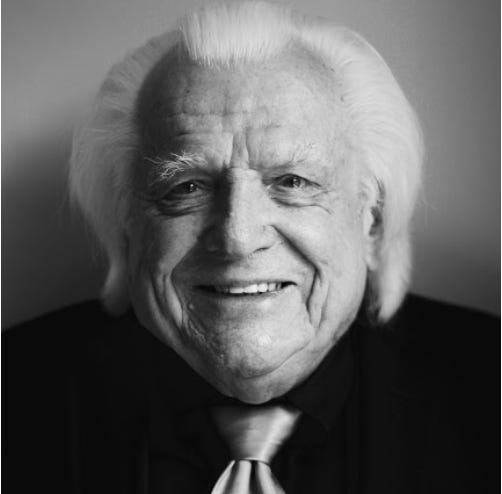
“If you showed any kind of interest in the things that he was interested in, he would try to find a way to help you go deeper,” Matt Seybold said. “I think he just saw it as trying to cultivate whatever excitement people had about art and culture and history. He had this reservoir of knowledge and passion and connections that he felt he could bring people who already had the interest and give it some greater weight.”
Seybold, former associate director at Convos, radio host, teacher and local champion of jazz, died Nov. 26 in Indianapolis, due to complications connected to Parkinson’s first diagnosed five years ago. He was 85.
Matt Seybold, an associate professor who teaches at Elmira College in upstate New York, said family was with him in the final days.
“We put on stuff that I knew he liked – the late-‘60s and early-‘70s hard bop and soul jazz that I knew was kind of essential to his taste,” Matt Seybold said. “We listened to ‘A Love Supreme’ together one more time, the John Coltrane record. We certainly listened to some Miles (Davis). Then a lot of people that he was friends with – the Ramsey Lewis records with Redd Holt, some Michael Weiss records, Ray Drummond’s Excursion band. … These were people, this was music he’d surrounded himself with and wanted everyone to hear and experience.”
Don Seybold came to Purdue in the early-‘70s, enrolled in a Ph.D. program in the English department, lecturing on campus and working at the Stabilizer night club. By the late-‘70s, he’d landed at Convos, where he was part of bringing shows to Loeb Playhouse and Elliott Hall of Music, ranging from the tight jazz combos for the Purdue Jazz Festival to the pop acts with the Student Concert Committee.
He’d found his way onto the radio after volunteering at hometown stations as a teen. In Lafayette, he’d dig through his collections for deep cuts of jazz, R&B and blues for radio shows that started with an overnight gig at WKHY and took him to stints with the short-lived WIIZ, WGLM and eventually a weekly jazz show on WBAA. That show lasted until 2020, when the pandemic kept him from coming to the studios in the basement of Elliott Hall. It was a run that suited Seybold, his son said, because he got to play whatever he wanted and whatever was right in the moment.
“That mattered most to him,” Matt Seybold said.
Brent Laidler is host of WBAA’s weekly Night Shift show now. He said he patterned his show, “challenging listeners a little bit,” from the way Seybold did it, “trying to be the keeper of the flame for Don and going back to (Lafayette jazz champion) Persis Newman.” Laidler said phone calls with friends in the music scene in the past week have been “filled with Don stories.”
Laidler said he’d pestered Seybold for a slot for his band on the Riverfront Jazz and Blues Festival, a downtown event Seybold helped host and book.
“I think he finally said OK, just to get me to shut up,” Laidler said. “After he heard us play, I went on to play the different iterations of the Jazz and Blues Festival for the next 16 years with the blues band. … That’s still a big deal to me. Don was the intangible reason so many things that were around and are still around. He was a guiding influence, just essential.”
Scott Pazera, a Lafayette guitarist and bass player, figures large in the Jazz Club of Lafayette, a nonprofit community organization dedicated to jazz performance that Seybold helped found.
“He was always focused on the real component of jazz and that it be authentic and genuine,” Pazera said. “He was always ready to help foster an environment that gave the audience a true experience. … He was always supportive of the local scene and was a friend and supporter of Tony Zamora and the Tony Zamora scholarship, which is maintained through the Jazz Club. Our talks were always full of substance and smiles. His presence will be missed, but not forgotten.”
From the J&C, July 2020: “Tony Zamora, longtime Purdue BCC director and Lafayette jazz legend, remembered as more than ‘that damn good musician.’”
Matt Seybold said his dad loved promoting and cultivating a local scene.
“It was very much a design to say, you know, a great jazz scene can happen anywhere, even small town Indiana,” Matt Seybold said. “In his public life, it was all about the music and devoting himself to those who devoted themselves to it, too.”
A portrait, in five records
I asked Matt Seybold if there was a playlist, an essential five of some sort, that might be considered recommended listening that his dad might give his stamp of approval.
He wrote this, offering six:
Two things need be said upfront. First, my dad had no patience for superlatives, rankings, favorites, “best of,” listicles, etc. I remember very clearly asking him who his favorite saxophonist was, as a teenager, and being told such question were for “softheaded youths who have no sense of history.” To him, the practice of choosing Coltrane over Parker, Shorter or Dolphy served no purpose in understanding the music and potentially trivialized the musicians, objectified them. So, what follows is certainly not a ranking of his favorite albums, just a selection of ones I know mattered to him.
Secondly, while my dad accumulated a collection of tens of thousands of CDs and vinyl records – 99% of them by jazz musicians – and used to create the setlists for his radio shows, which ran in Lafayette for 34 years, and which he definitely considered an art, he would also be quick to tell you that jazz was a performance art. It lives on the stage and you can’t really appreciate it until you experience it in-person. The recordings served two valuable functions. They were advertisements for active musicians, and they were an archival tool for those same musicians (as well as jazz historians and aficionados) to hone their craft through study of past practitioners. His sense of jazz history was very much in line with T.S. Eliot’s account of poetry in “Tradition & The Individual Talent.”
So, those caveats out of the way…
“Red Clay,” Freddie Hubbard (CTI, 1970)
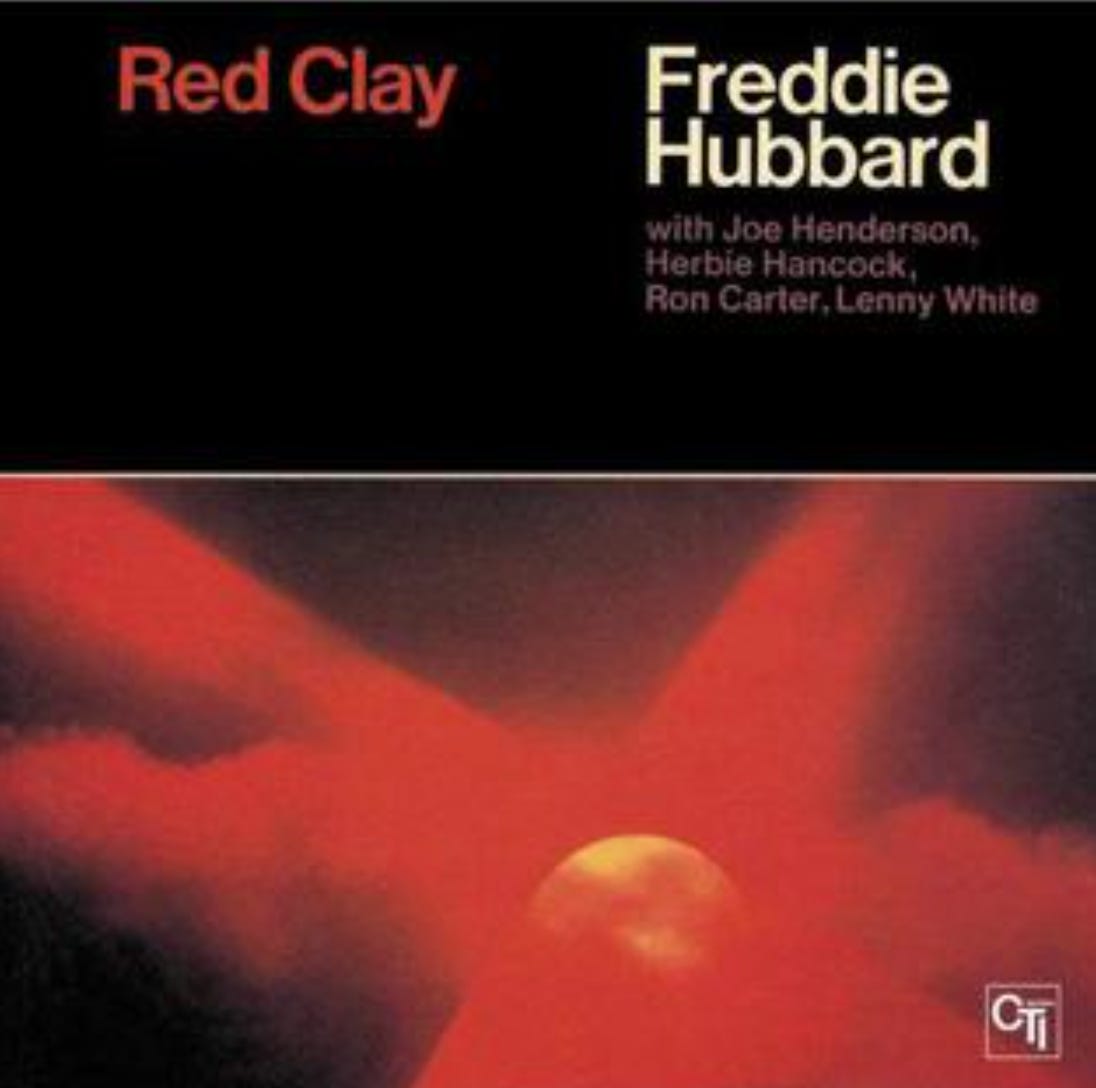
My dad would sometimes refer to himself as a beatnik, and his initial relationship with jazz was definitely informed by the Bebop revolution and the sounds of the 1950s, when he was a teenager. But the era that clearly resonated with him most enduringly, perhaps even nostalgically (though he would deny it), was the late ‘60s and early ‘70s, hard bop and soul jazz. He returned over and over to the records on Blue Note, Prestige, CTI, Impulse, etc., many of them produced by Rudy Van Gelder, from Hubbard, Lee Morgan, Herbie Hancock, Hank Mobley, Sonny Rollins, and many more. “Red Clay” epitomizes that sound/era, and my Dad loved Hubbard’s trumpet sound and his composing, which tends to have somewhat unconventional structure (especially for that time), something which he would be enduringly attracted to.
He was also very proud of having put together, in the 1980s, a band led by Hubbard featuring all musicians who hailed from Indiana, including…
“The New Quartet,” Gary Burton (ECM, 1973)
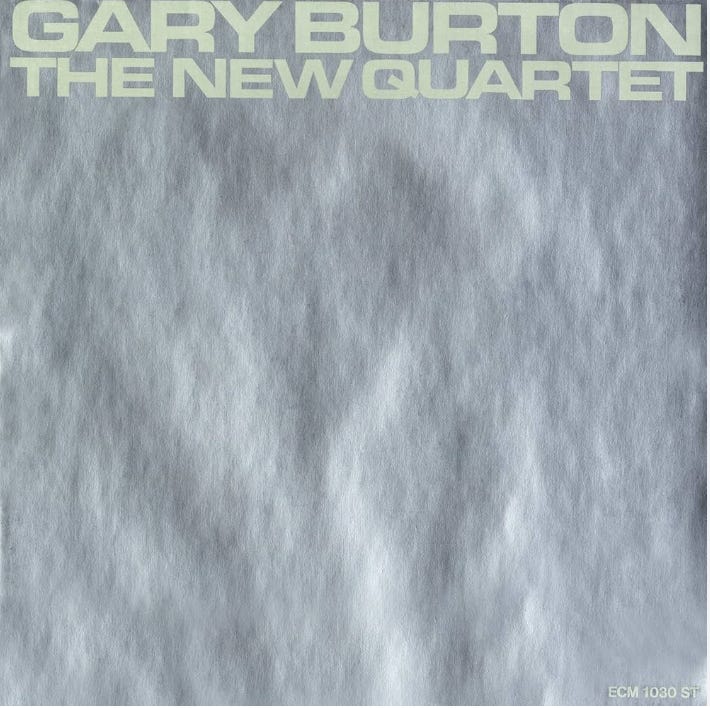
My Dad played the vibes in teens and early-20s, and had special affection for vibraphonists, including Steve Nelson, Stefon Harris and Joe Locke. But he saw Burton play a lot, maybe as much as any other musician, and loved especially his quartets and his duets with Chick Corea.
“Requiem,” Branford Marsalis (Sony, 1999)
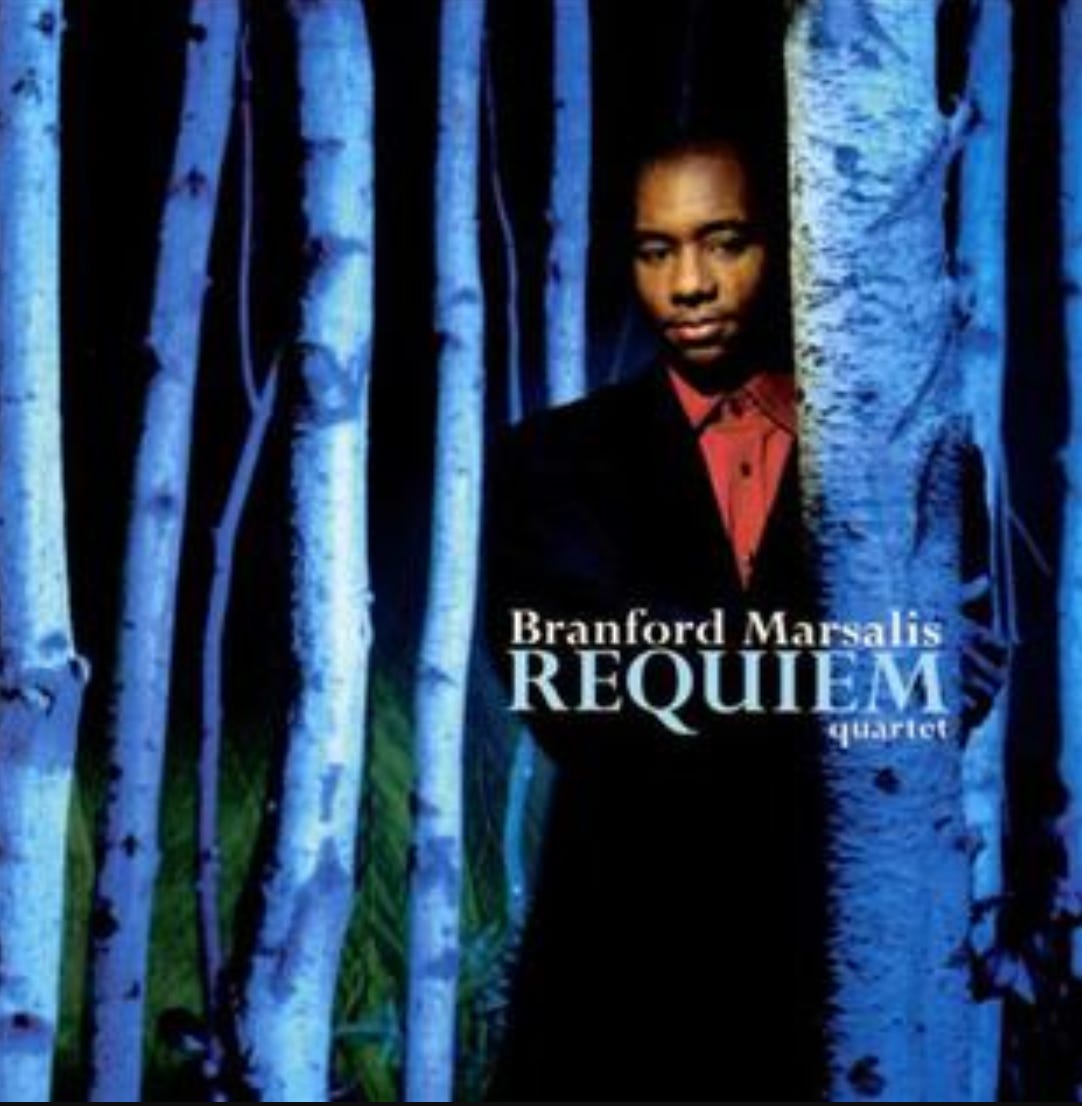
All the Marsalis family members performed at Purdue while my Dad was directing the Jazz Series, most of them multiple times. But Branford was by far his favorite, both in terms of the adventurousness of his composing and improvising, and because he was a supremely good hang. And Branford’s new albums were something of an event in my household in the ‘90s. I particularly remember “The Beautyful Ones Are Not Yet Born” (Sony, 1991) and this one, which came out after I had left for college, but which my Dad and I talked about for many months, and made an effort to see Branford perform multiple times during the associated tour. I know my Dad felt like the energy and excitement of Branford’s live performances had finally be captured, as much as was possible, on record.
And that was kind of characteristic of him during this period. He had been in the industry for multiple decades. He had both personal relationships and professional opinions with many musicians. He was actively rooting for them and for jazz generally, at a time when the infrastructure for making the music was changing and there was a lot of cynicism about jazz’s future. My Dad was cynical about a lot of things, but never about jazz.
“Excursion,” Ray Drummond (Arabesque, 1993)
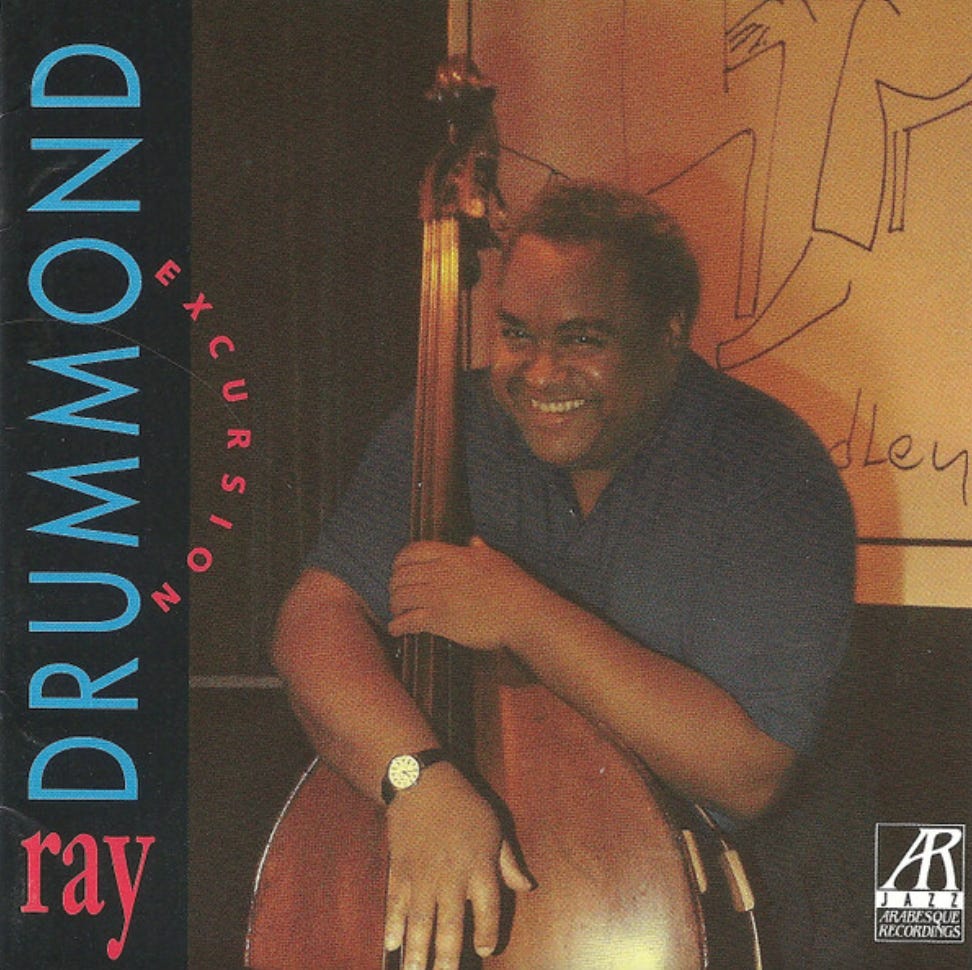
Drummond died just a few weeks before my Dad, so he’s also front of my mind. They were part of the same generation and became good friends. Drummond’s Excursion band, which only made one record but toured throughout the ‘90s and early ‘00s, epitomized what was exciting about jazz at that time, which was also a time during which my Dad was really embedded, not just doing all the stuff in Lafayette, but regularly visiting NYC, Chicago, St. Louis, Indy, etc. I know he saw the Excursion ensemble half a dozen times. This was a time when there were a lot of bassists who were composers and bandleaders – Dave Holland, Avishai Cohen, Lonnie Plaxico, etc. – who were writing acoustic fusion with complex structures and unusual instrumentation for quintets and sextets. The Excursion band, which was really built around Drummond and Djembe percussionist, Mor Thiem, was of this model.
“Echoes of The Inner Prophet,” Melissa Aldana (Blue Note, 2024); and “Defiant Life,” Vijay Iyer & Wadada Leo Smith (ECM, 2025)
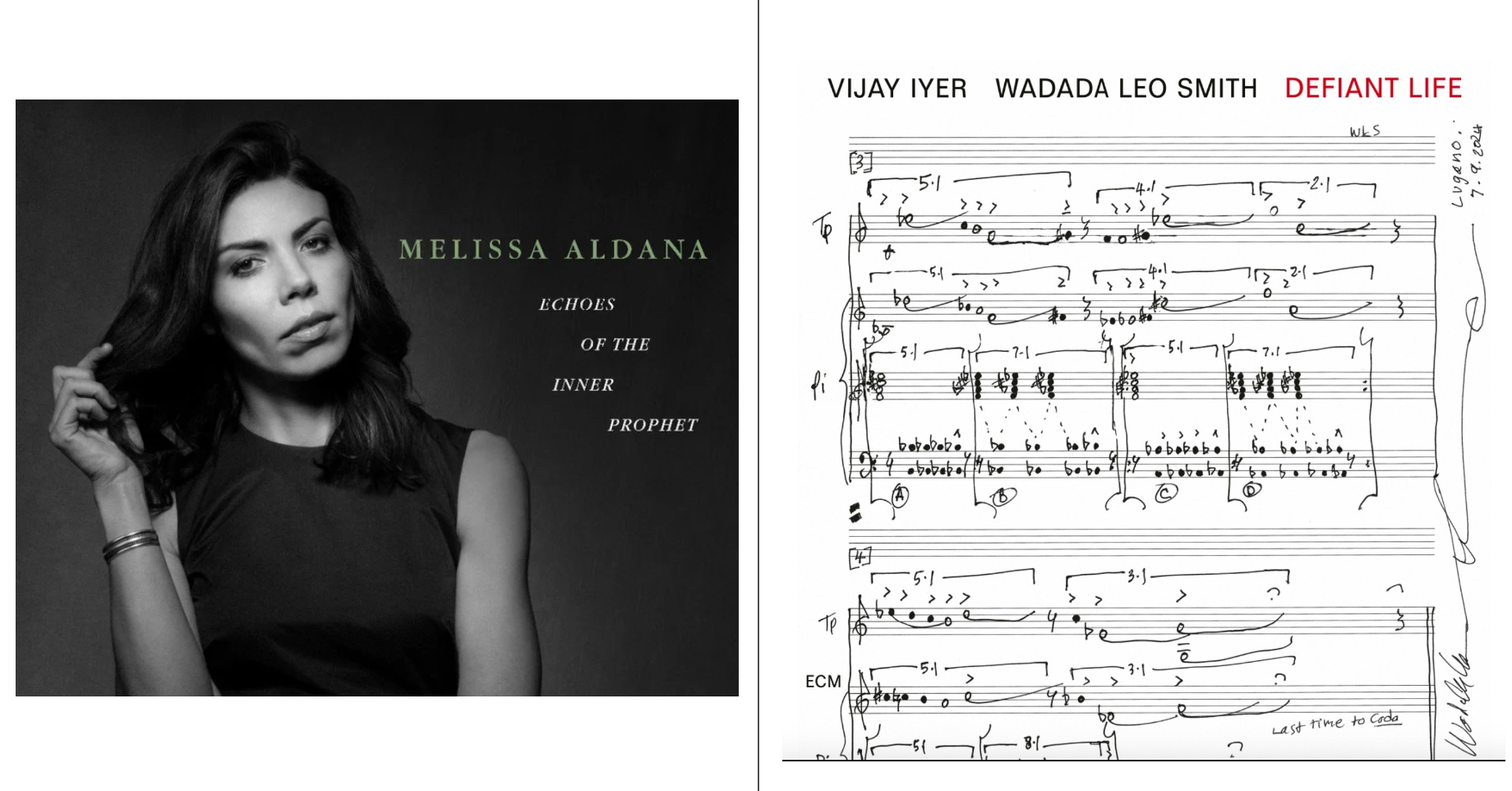
Jazz is not a museum music. Unlike many of his peers who were particularly critical of the Lincoln Center and the jazz conservatory programs, my Dad was never all that worried about it becoming one. Like I said, he was never cynical about jazz’s future. But part of that was that he was always deeply engaged in jazz’s immediate present. Even after he stopped doing his radio show in 2020 and was no longer able to go to the Jazz Kitchen in Indianapolis as regularly as he would like, he was still a regular consumer of new releases. And one thing we did was exchange listening recommendations. We would choose a couple of new albums and both listen to them for a couple weeks, then talk for an hour or so about what we were hearing. These were the two we had settled on for November (he recommending the Aldana). When I went into his office last week, I found the CDs, dutifully, in his stereo.
Thanks, again, for support from Purdue Convocations, presenting Jim Brickman: The Gift of Christmas on Thursday, Dec. 11. Get tickets here.
Thanks, also, to sponsor Stuart & Branigin for continued support of the Based in Lafayette reporting project.
Thank you for supporting Based in Lafayette, an independent, local reporting project. Free and full-ride subscription options are ready for you here.
Tips, story ideas? I’m at davebangert1@gmail.com.
Don was great. When Acoustic Blend inherited his former time slot on WBAA, I did an imprompto on-air tribute to him, if anything to inform his loyal Saturday night listeners about his unexpected absence from the microphone. His legacy will endure.
The jazz history course I took from Don at Purdue is still something I remember fondly. Really cool guy.