

Support for this edition comes from State Bank. Since 1910, State Bank has helped local businesses grow and communities move forward. With decisions made right here and relationships built for the long term, their team works alongside businesses across Greater Lafayette to turn plans into progress. Learn more about how State Bank supports local businesses at https://www.statebank1910.bank/business-tippecanoe.

BALLOTS IMPOUNDED FOR RECOUNT, QUESTIONS SWIRL ABOUT CHALLENGING VOTERS IN SENATE DIST. 23
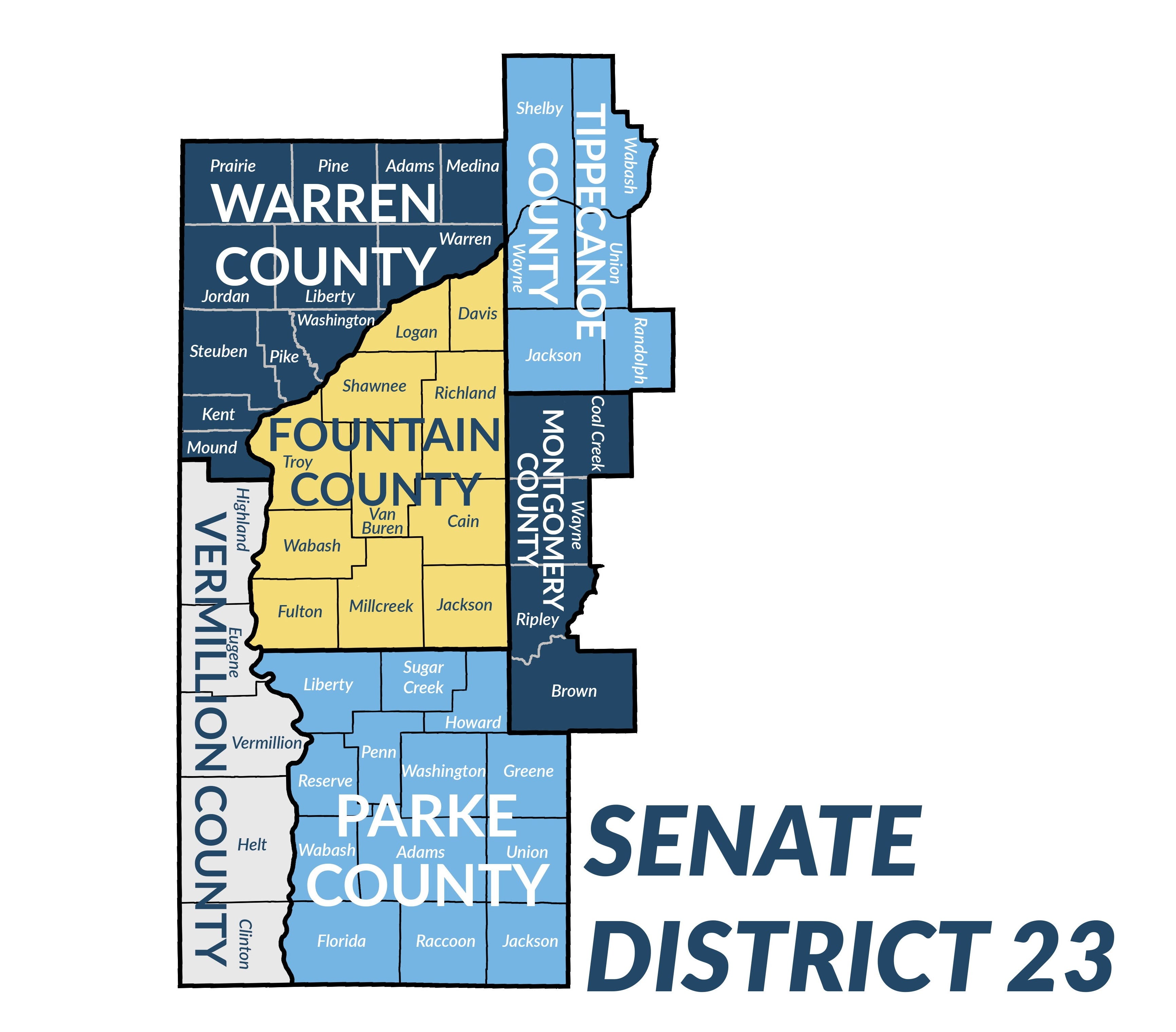
Indiana State Police on Tuesday impounded and secured election equipment, ballots and tally tapes from the May 5 primary in the six counties across Indiana Senate District 23, including Tippecanoe County, as work started on Fountain County Republican Paula Copenhaver’s recount request and challenge of her three-vote loss to state Sen. Spencer Deery.
The timing for the recount hasn’t been set in a race that stands at 6,337-6,334 in favor of Deery, according to Lindsey Eaton, a spokesperson for the Indiana Secretary of State’s office.
“Depending on logistics and scheduling it may take a number of weeks to complete individual county recounts,” Eaton said Tuesday. “At the completion of individual county recounts, the Secretary of State will call a public meeting of the Indiana Recount Commission to receive reports from the State Board of Accounts and recount director (Jessica Dickinson).”
Deery’s team has until Tuesday, May 26, to file a cross petition to address the positions and allegations laid out in a series of Copenhaver’s filings from Monday. Samantha DeWester, an Indianapolis attorney working with Deery’s campaign, said Tuesday that she was still going through everything and was working toward that deadline.
But Deery already had blasted the premise at the center of Copenhaver’s allegations of “election tampering,” saying her campaign had identified and want to issue subpoenas for 14 voters who she says “boasted” about crossing over to pull Republican ballots so they could vote for Deery, despite typically voting for Democrats. His response: “We don’t do that in America. We respect the results of elections and the voters who decide them.”

Among some of the movement and conversation about the recount …
From Deery’s campaign: DeWester said Tuesday that in 15 years of handling recount requests she’d never seen a challenge like Copenhaver’s, looking to bring people before the Indiana Recount Commission to swear under oath about how they voted and why.
At the heart of the petition is Copenhaver’s complaint that voters were gaming an Indiana election law that allows voters to request either Republican or Democratic ballots at a polling site during a primary. With an open primary system, there is no requirement for formally registering with a party. State election law sets parameters that allow someone to pick a primary ballot if they voted for a majority of that party’s candidates in the last general election or intend to in the upcoming election.
State law also provides a way to challenge someone at the polling place looking to pull a crossover ballot. That’s typically been interpreted as a challenge made on Election Day, given specific forms from the Indiana Election Commission that poll workers, challengers and the voter are required to fill out before a provisional ballot is cast. Copenhaver’s filing points to case law from other states that indicate that once voters talked about crossing over in a primary, they’ve given up the secrecy of their ballot and that there is a pathway to challenge that voter after the polls close, too.
DeWester said that beyond the straight recount of all votes requested by Copenhaver’s petition filing Monday, the campaign is chasing votes that already have mixed into a pool of other ballots and can’t be pulled back out.
“You can’t disqualify their vote, so the only thing they could try to do is to try to contest the results all together,” DeWester said. “But I can’t imagine any court of law disenfranchising thousands of people over what, 14 people they say they want to depose? … Courts have never been fans of disenfranchising voters.
“The whole thing is unfortunate for a lot of reasons,” DeWester said. “It’s frustrating. It’s sad. This shouldn’t be the way we are. If this is going to be the future of elections, you’re going to get a lot of people not voting. You’re going to have a lot of pissed off voters.”
