

Support for this edition comes from Our Saviour Lutheran Church. We warmly invite you to attend our Christmas Eve Service, on Wednesday evening, Dec. 24, with Christmas themed music beginning at 6:30 p.m. and worship at 7 p.m. This service is available both in-person and online, so you can participate from wherever you are. Join us in person at 300 W. Fowler Ave. in West Lafayette, or connect with us virtually through our Facebook (facebook.com/osluth) or YouTube (youtube.com/@osluth). Our phone number is 743-2931. Service highlights: reflecting on God’s love; celebrating the birth of Christ through meaningful scripture readings; candle lighting ceremony; singing of traditional hymns; and participating in communion together. We look forward to gathering as a community to honor the spirit of Christmas and rejoice in the birth of Christ. All are welcome on this special evening of worship and celebration.
Q&A: MURAL PROJECT PAYS TRIBUTE TO NORTH END’S ‘GREATRIARCHS’
A new mural project in Lafayette’s Lincoln Neighborhood is aiming to share the faces and stories of those being dubbed “Greatriarchs” of north end Lafayette.
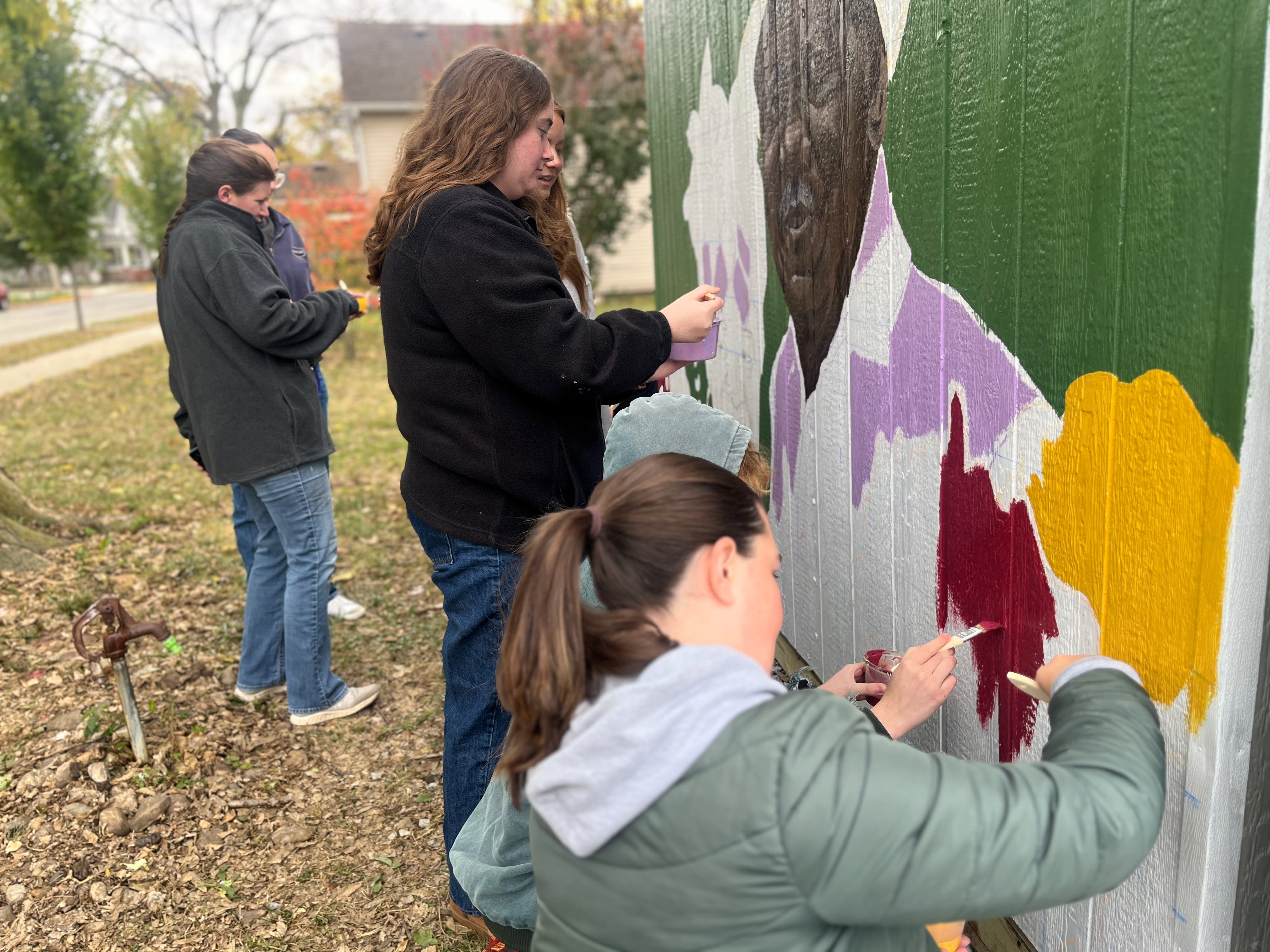
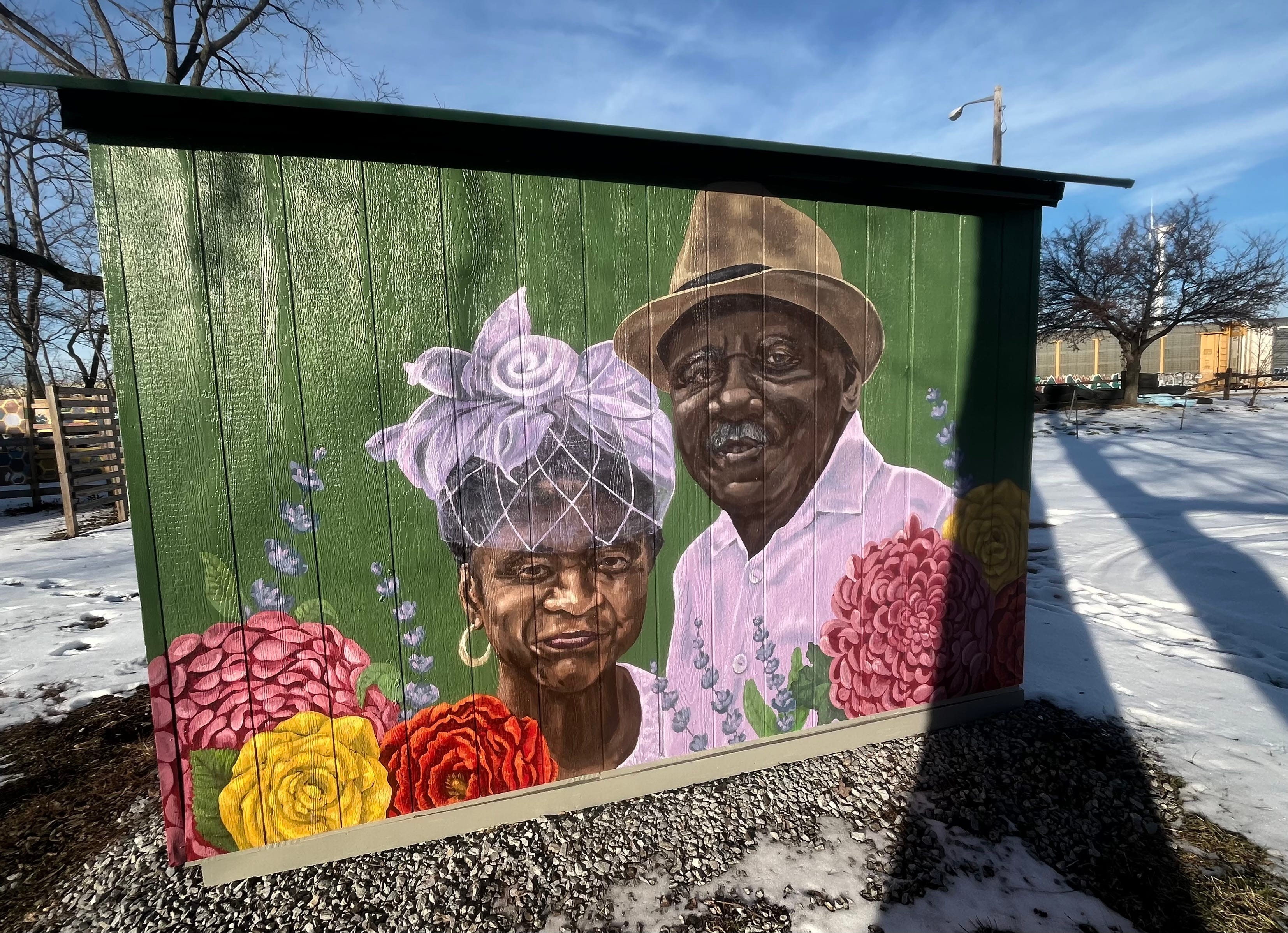
The first mural, painted in late October on a GrowLocal sharing garden shed near the corner of North Sixth and Heath streets, features a portrait of the Rev. James and Thometra Foster. As many as nine more are in the works.
“Having the Fosters as the first, painting the mural was a pretty awesome experience,” Jason Ware said about a couple that now leads Living Truth of Christ Church on South 24th Street and has played community roles ranging from the Tippecanoe County Health Board, the city’s redevelopment commission and more.
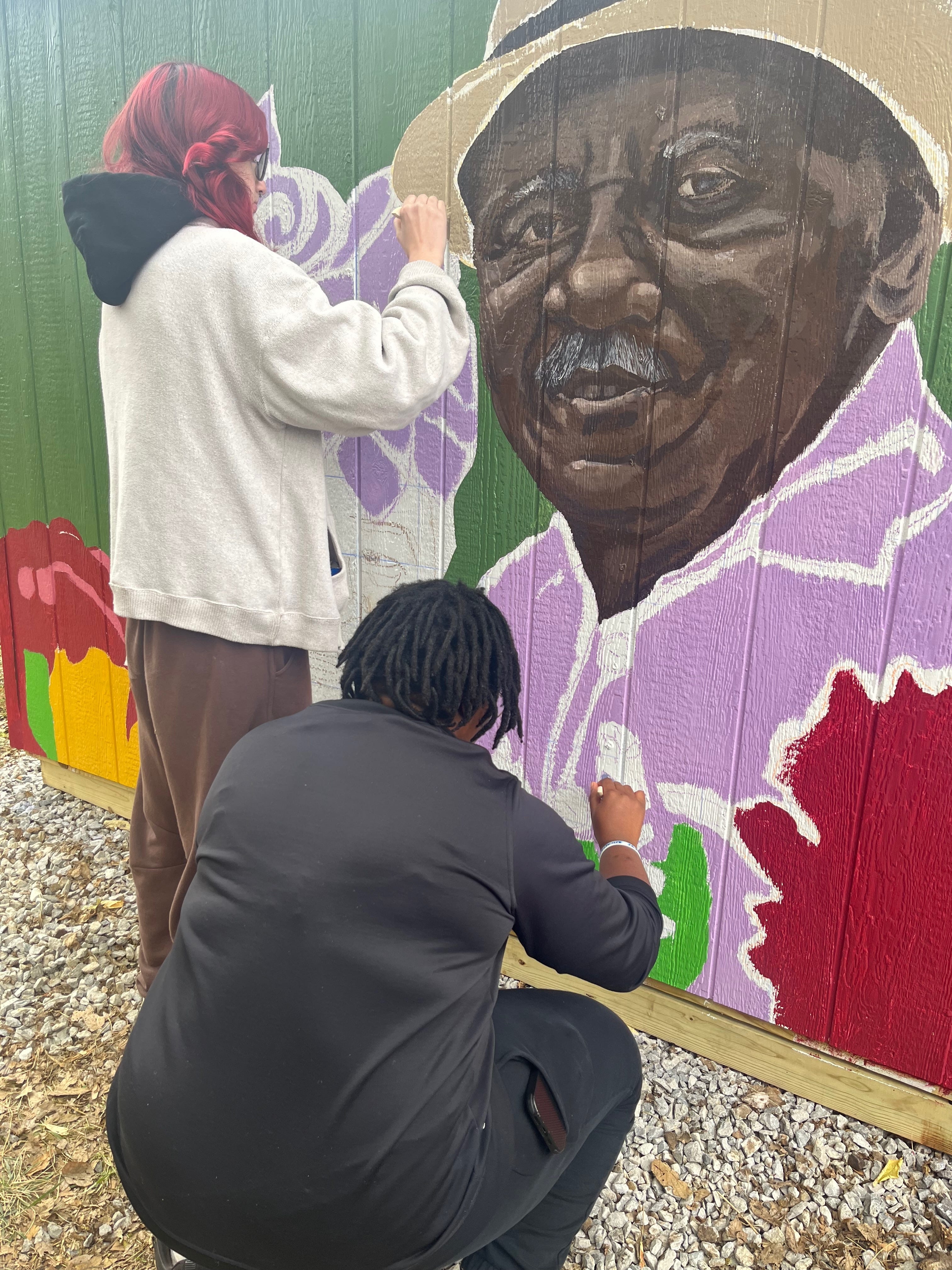
“How it came together It was definitely community involved, definitely multiple generations,” Ware said. “The Fosters, to me, seemed perfect for this idea of a ‘Greatriarch.’”
Ware leads students in the project through the Transformative Scholarship Research Generator (TREKS) at Purdue’s John Martinson Honors College to collect oral histories in Lafayette’s north end in an effort meant to highlight the past and to help shape a sense of the neighborhood for the future.
Question: Where did this get started?
Jason Ware: Around 2016 I was part of a service learning fellowship at Purdue. And through that fellowship, they introduced some of us faculty members to different community partners that had particular needs. I toured the Hartford Hub that the Faith Community Development Corp. had built as a third space for the folks there in the Lincoln Neighborhood. I thought, well, I’d be happy to teach a course that got students involved and we could do service learning in the neighborhood and serve in that way. Ever since then, we’ve been working with the Faith Community Development Corp., as well as a couple of different other organizations like the city of Lafayette, to better understand quality of life and quality of life issues with and for residents in that neighborhood.
Question: Where did it go from there?
Jason Ware: Over the years, there’s been a lot of work done to try to hear from residents about what’s necessary to improve quality of life and to enhance community well-being there. The north end is also a focus of the city in terms of enhancing overall livability so people want to live there, so we can reduce transiency and that kind of thing.
A couple of years ago, the city hired MKSK to do a study there. The result of that study was a community enhancement plan for the Lincoln Neighborhood. One of the elements that’s focused on place-making suggested that we collect oral histories from folks who used to live in the neighborhood – not just people who used to live in the neighborhood, but have longevity, who have a lot of history. Who are perhaps connected to Second Baptist Church, which used to be there.
Question: How did that lead to murals in the neighborhood?
Jason Ware: I saw that at the Harrison Center in Indianapolis, they have this “Greatriarchs” project or program in Martindale-Brightwood Neighborhood. In partnering with the city on a different AARP grant/project to work with seniors and to do art, I suggested that we try complementing the oral histories that we’re collecting and that we also celebrate some of these elders from the neighborhood by painting murals of them and leaning on them, like they do in the neighborhood in Indianapolis – leaning on them to host community events that bring multiple generations of people together. The city was on board.
Question: What’s the goal here? How many murals are we talking about?
Jason Ware: The goal for now, anyway, is to collect 10 oral histories of folks we’re calling “Greatriarchs” in the Lincoln Neighborhood. The Fosters’ mural was the first, right now. We have seven oral histories. We want to collect three more, and that shouldn’t be an issue.
Question: How did you pick that spot?
Jason Ware: We’ll do that, again, at least two more times for that shed, on other sides of it. Then we’ll have to find other places throughout the neighborhood to paint the other murals. We’re using that shed at the GrowLocal garden as sort of that first canvas for the murals. We commissioned Bekki Canine, a local artist, to help with the art direction. And she did such a great job. But, really, there were people from all over the neighborhood, some of whom were the Fosters’ kids, who came and helped paint.
Question: How did you pick the Fosters first?
Jason Ware: They are just so involved, not only in the neighborhood but in the city. I guess part of it was ease. I had easy access to them, because I’ve known them – well, I’ll just say I’ve known them my whole life, so I don’t remember a time when I didn’t know them. I think that’s the way it is for a lot of people in town. So, I think it came down to their level of involvement and commitment in the community at large. It seemed right. … We’re going to put a QR code up so that you can read the brief biography that the students have drafted. They’re also having the Fosters read their biography, so if you scan the QR code, you’ll hear them reading a short biography.
Question: Were they open to the idea? Or did you have to convince them?
Jason Ware: I don’t think they originally knew. Students in the research group conduct the interviews with the Greatriarchs, so I’m not there. And so, I don’t know what the students said, but they were supposed to tell them when setting things up that the Greatriarchs project would mean murals, too. When we sent the flyers out saying, now we’re doing this thing, they were flabbergasted. They were excited, but they said they didn’t know this was going to happen. But they were overjoyed and felt very honored.
Question: Let’s step back – what exactly is a Greatriarch?
Jason Ware: I cannot take credit for the term, and I don’t really know the history behind the Harrison Center. But I’m borrowing that common concept from the Harrison Center in Indianapolis. Greatriarchs are typically, I’m going to call them elders, from a neighborhood who have a lot of history, a lot of knowledge about the neighborhood. But they’re also typically respected people in the neighborhood or in the community, and folks that we want to lean on to bridge intergenerational gaps. Sometimes they still live in the neighborhood, sometimes they don’t, like the Fosters. But we’re focusing on the neighborhood to make it better, so we’re just considering them Greatriarchs, as opposed to a matriarch or patriarch. So, they’re great elders from a community that we want to lean on. That’s how we’re using the term.
Question: Where else will the murals go?
Jason Ware: We’re working with the city to figure that out.
Question: How long is this project expected to take? Is there a timeline or a deadline of any sort?
Jason Ware: There’s not really a deadline, but I’m not imagining that it would take more than five years for the mural part. Probably less than that. But we’re giving ourselves that space just because it’ll take us some effort to determine where these other murals are going to be.
Question: Is this basically done through your students?
Jason Ware: Through my research group, yes. The students who worked on this mural were in the course I teach each fall. But the oral histories were collected by a different group of students. Obviously, students are here semester by semester. At least two or three groups have collected the oral histories over the last year-and-a-half. The students who were part of this initial mural, their class ends in December and many of them are going to graduate in May. In the spring, we’re hoping to do two more murals, and those will be different students that are part of our research group.
Question: What are you learning from the oral histories? What are you hearing, so far?
Jason Ware: As old as I am or as young as I am, depending on whose perspective you’re looking at, I feel like there’s a lot that I just know having grown up here and having lived in the north end when I was a kid. So some of it seems like it’s common knowledge to me, things that have been passed along and just have been floating around for a very long time. But I’m sure it’s not common knowledge to everyone.
Once upon a time, the north end was, even if segregated in some ways, a vibrant, lively place from a social and community perspective. There was a lot more going on. Back in the day – when I say back in the day, I’m going to say like the ‘50s, ‘60s and ‘70s and maybe even the 80s – we still had neighborhood schools and locally owned businesses in the neighborhoods that served as places where people could meet and did meet on a regular basis. You had, for example, St. Lawrence School, where kids would gather and play unorganized baseball and it was a time when people would get out lawn chairs and families would connect, so people knew each other. Obviously, in the days when we had the Monon Shops, it was a completely different vibe in the north end. And so the things that we hear is that the community used to be strong, connected and felt a sense of community. There were more homeowners, so people were in neighborhoods for longer times and they watched kids grow up together. Monon Shops closed. You had St. Elizabeth Hospital expanding in the Hanna Neighborhood. Things changed. In some instances, people got good prices for their homes and they’re able to get nicer homes than they had before. From a community perspective, it wasn’t as great. People saying they’re not as connected. We’re hearing some of that. …
It makes a difference in that community well-being piece – liking where you live, wanting to be where you live, wanting to connect with people. All that makes a difference. And part of the reason we started doing oral histories to begin with is because the city wanted to hear from folks about, what is it going to take to make the neighborhoods better? That was even before the Greatriarchs project. When we’re talking about north end neighborhoods, not just Lincoln Neighborhood, what was it about the neighborhood in the past? Obviously, we can’t bring all that stuff back. We can’t bring back all the schools. But what influenced that sense of community? Maybe some of it’s not simple, but it wasn’t rocket science. People had spaces where they could connect, and they lived next to each other long enough to connect with each other. They trusted each other, looked out for each other, and that made a difference.
LOOKING FOR GIFT IDEAS? HOW ABOUT A SUBSCRIPTION TO BASED IN LAFAYETTE?
BUILDING A BiL HOLIDAY PLAYLIST: TELL US WHAT’S ON YOURS
Through Christmas, BiL will curate three songs a day from readers. The assignment isn’t necessarily about the best or most iconic songs of the season. Just songs that you’d want in the mix and why they belong. Enjoy.
Larry DeBoer
Retired professor of agricultural economics.
“Christmas Time’s A-Comin’,” Bill Monroe and His Bluegrass Boys – We heard on a late-night bluegrass show that in the early ‘50’s there were no other Christmas songs recorded by bluegrass artists, so this one got played a lot. At our house we sing, “Christmas time’s a-comin’, Christmas time’s a-comin’, Christmas time’s a-comin’, and there’s nothing you can do!” Two-year old granddaughter Blair was transfixed the first time she heard it, true to her hillbilly roots.
“Unto Us a Child is Born,” The Roches – An excerpt from The Messiah sung by the Roches, Maggie, Terre and Suzy. Their Christmas album is our family’s favorite. They do the song in intimate three-part harmony, proving that this Handel guy could really write a tune.
“Come on a Sleigh Ride with Me,” Tillotson, Cannon and Hyland – Teen idols from the late-1950s Johnny Tillotson, Freddy Cannon and Brian Hyland spent the ‘90s together on oldies tours, and concocted this song, which plugs their biggest hits in the lyrics — Tillotson’s “Poetry in Motion” Hyland’s “Sealed with a Kiss,” and Cannon’s “Palisades Park.” It has no right to be a good song — but it is.
Your turn
What three songs are going into your holiday/seasonal playlist this year? If you’re game share, here’s all we need:
Three songs and the artists.
One or two sentences about why you chose each one – could be a memory or a short history or review about why that track belongs in your mix and why you’d recommend it to others.
A little bit about you to let readers know who’s making the picks.
Send to: davebangert1@gmail.com
Thanks, again, for support from Our Saviour Lutheran Church, 300 W. Fowler Ave. in West Lafayette, inviting you to attend Christmas Eve Service, Wednesday evening, Dec. 24, with Christmas themed music beginning at 6:30 p.m. and worship at 7 p.m. Learn more at facebook.com/osluth.
Thank you for supporting Based in Lafayette, an independent, local reporting project. Free and full-ride subscription options are ready for you here.
Tips, story ideas? I’m at davebangert1@gmail.com.
What a great project! Jason is such an asset to Purdue and the Greater Lafayette community.
What a wonderful project!