

Whether three West Lafayette residents challenging a 2025 city council rezoning that cleared the way for construction of SK hynix’s $3.87 billion semiconductor facility have standing in their cases can expect a ruling quickly – likely in the next two weeks – a judge said during a hearing Thursday afternoon.
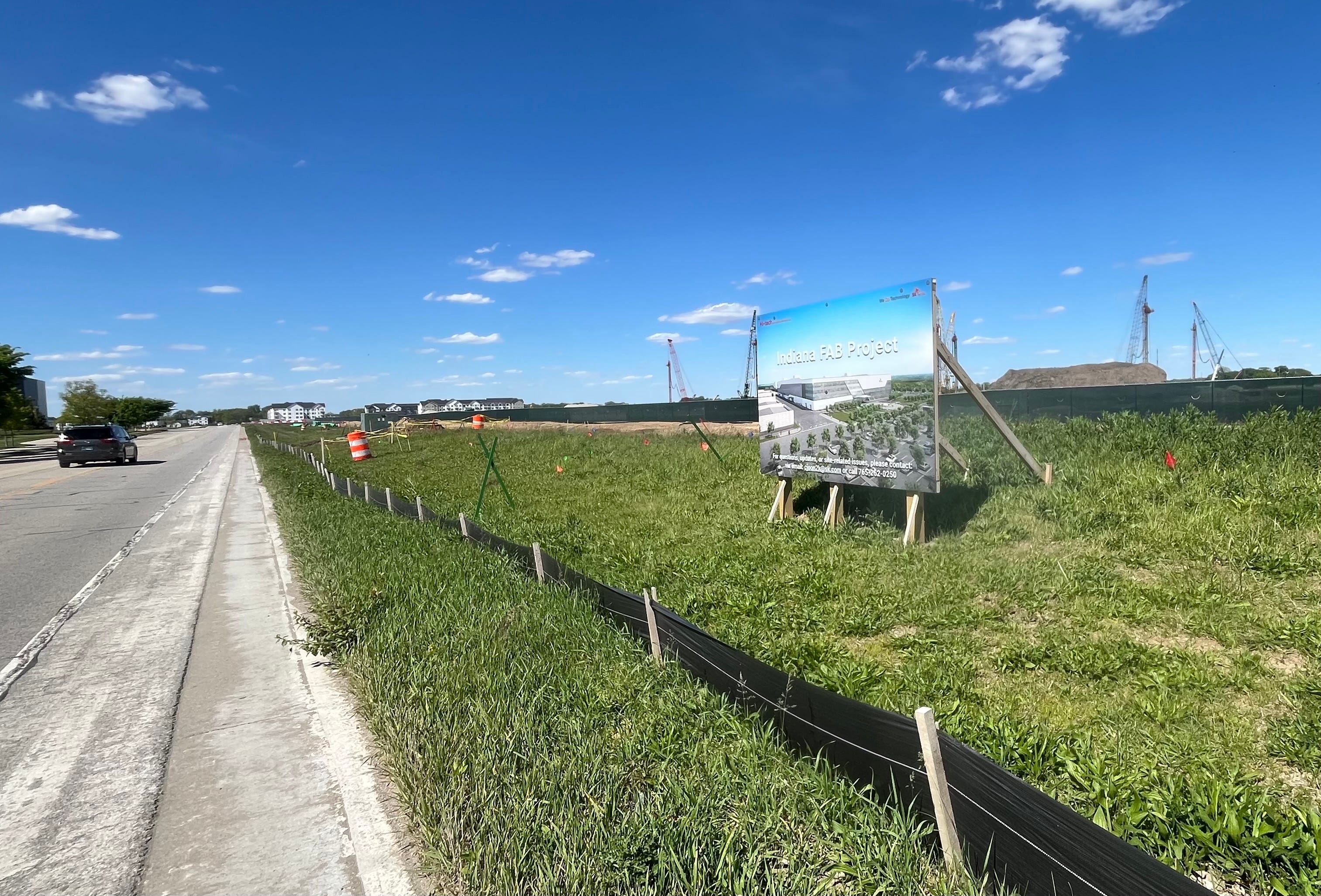
Attorneys for the South Korean company, the city of West Lafayette and Purdue Research Foundation – the real-estate arm of Purdue that owns the 121-acre site north of Kalberer Road – argued their case Thursday afternoon for summary judgment in a pair of lawsuits filed in June 2025, saying the three residents behind them live too far from the site and have no evidence, beyond speculation, that they’ve been harmed by the city council’s vote.
Without standing, they argued, the lawsuits shouldn’t continue.
Attorneys for Lora Williams – a nurse at a local hospital who said she frequently cycles or travels near the proposed SK hynix site – and residents Karl Janich and Sean Sasser countered, saying unresolved environmental questions and questions about lost home values from being so close to a heavy industrial site gave them ground to take their case to trial.
Circuit Court Judge Sean Persin spent much of the 90-minute hearing questioning both sides, saying a key question for him was whether there was evidence that the three had been or would be harmed by the land-use change and the construction that followed.
Persin told both sides, along with a crowd in the courtroom of West Lafayette residents who have been pushing back against the site, that he planned to rule before the case is scheduled for another hearing May 28.
At the heart of the lawsuits, each filed in June 2025 and later consolidated into one court, Williams, Janich and Sasser argue that the city council overstepped its authority, ignoring warnings from local experts about health, environmental and other concerns in its vote to rezone the property between Yeager Road and County Road 50 East from single-family residential to heavy industry uses. They’ve raised questions about improper notice about the rezoning process, a general lack of study or evidence about the potential impacts on the environment and the neighborhoods, and allegations of backroom negotiations between the city and SK hynix that influenced what was a controversial decision. The lawsuits contend the city council should have either accepted a 9-5 vote in March from the Area Plan Commission to recommend denial or sent the matter back to the APC for further review.
Representing SK hynix Thursday, attorney Alan Townsend argued that the lawsuits did not show how the three plaintiffs were uniquely harmed any more than others in the community. Townsend pointed out that the plaintiffs lived nearly a mile away, arguing that case law in Indiana had gone with closer distances to measure whether someone had standing to sue in land-use decisions. Townsend argued that the zoning change simply allowed the SK hynix project to move across Yeager Road from what has come to be known as “Site A” – PRF land that had the previously zoned industrial – to the current “Site B,” meaning the difference the city council vote made was negligible.
Townsend also parsed the difference between the rezoning decision and what came after it, pointing to a case that an alleged injury must directly result from a final decision, ruling or order, “without any intervening cause.”
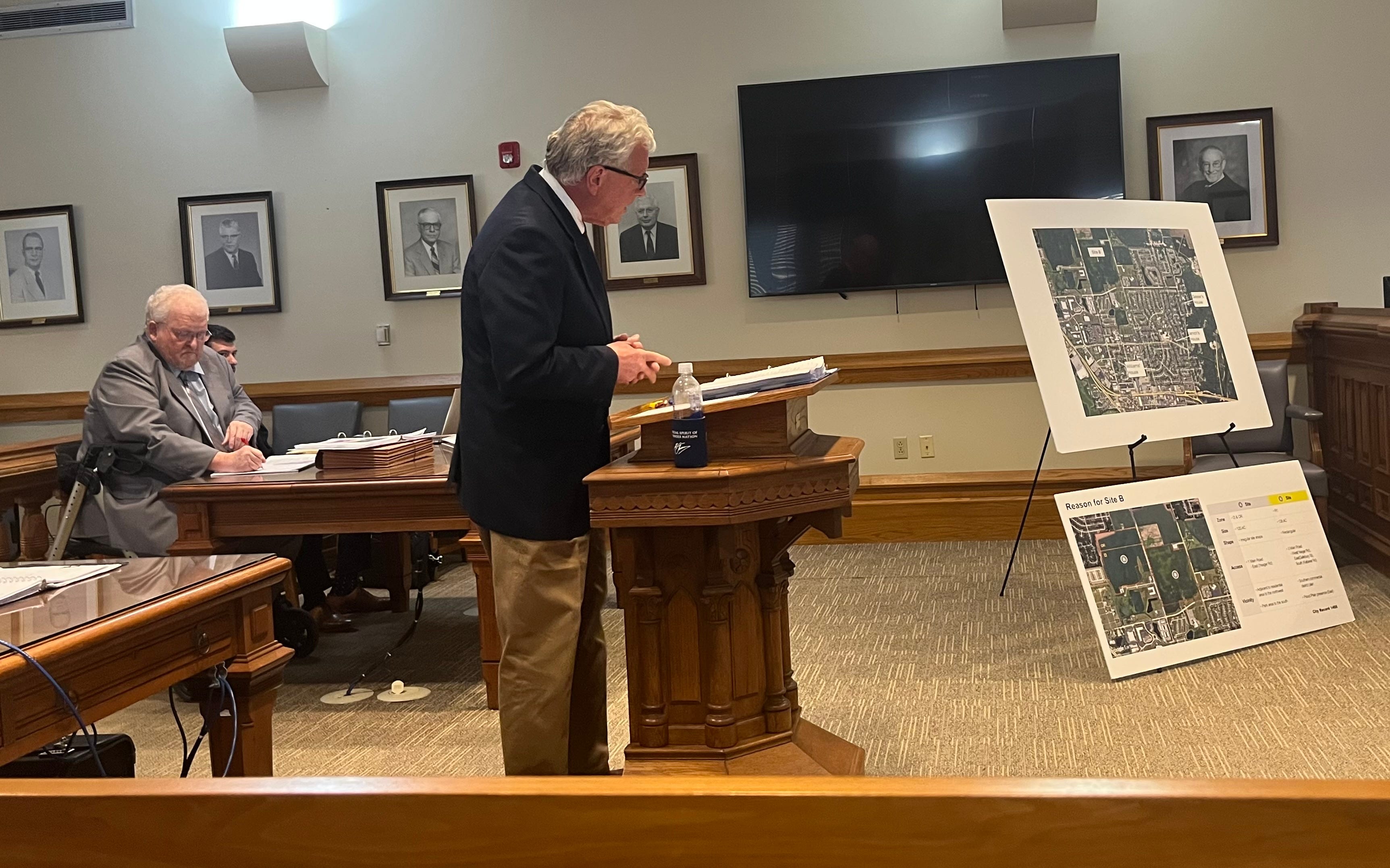
“They complain about the rezoning decision,” Townsend argued. “What they’re really complaining about is this intervening cause or this chain of events that happen next. They speculate that, as a result of the rezone, SK hynix will purchase Site B. SK Hynix will make a decision to construct a facility. It will design one, it will apply for and obtain environmental permits and approvals, construct the facility, and then somewhere down the line, it will operate it in a manner where there’s some sort of widespread environmental problem. That’s not just an intervening cause, that’s a parade of intervening causes that are years down the road.”
Persin called out that argument as the weakest of the bunch, presuming the SK hynix officials might have been saying, “ ‘We didn’t know what we’re going to do. Oh, it wound up going this way, but we could have done anything.’”
“It’s far-fetched, in my opinion,” Persin said.
The judge also questioned whether there were actual distance requirements in previous cases that could readily be applied to standing to sue in the SK hynix situation.
But Persin keyed in on whether the plaintiffs could provide evidence they were going to take a financial hit.
