

Support for this edition comes from State Bank. Since 1910, State Bank has helped local businesses grow and communities move forward. With decisions made right here and relationships built for the long term, their team works alongside businesses across Greater Lafayette to turn plans into progress. Learn more about how State Bank supports local businesses at https://www.statebank1910.bank/business-tippecanoe.

Support for Based in Lafayette comes from Purdue Convocations, presenting Magdalena Bay on Thursday, April 23. Experience the genre-blending pop of Magdalena Bay, the LA-based duo of Mica Tenenbaum and Matthew Lewin. Known for shimmering melodies and a nostalgic yet futuristic sound, the pair has earned acclaim for albums like Mercurial World and Imaginal Disk. With a vibrant live show and inventive pop style, Magdalena Bay offers a fresh take on modern pop, featuring an opening set by Purdue student band 3rd Street Collective! Don’t miss it — BUY TICKETS today!

FIRST NEIL ARMSTRONG SPACE PRIZE GOES TO ‘PARADIGM CHANGING’ FALCON 9 TEAM
A five-member team at SpaceX that helped develop Falcon 9, a reusable two-stage rocket system touted as boosting the frequency of space launches, were named the first recipients of the Neil Armstrong Space Prize, announced Tuesday at Purdue.
The five – Lars Blackmore, Shana Diez, Jon Edwards, Yoshi Kuwata and Eduardo Velazquez – were chosen for their work in developing the system’s reusable vertical landing capability, which has been used in more than 600 missions, as of this week.
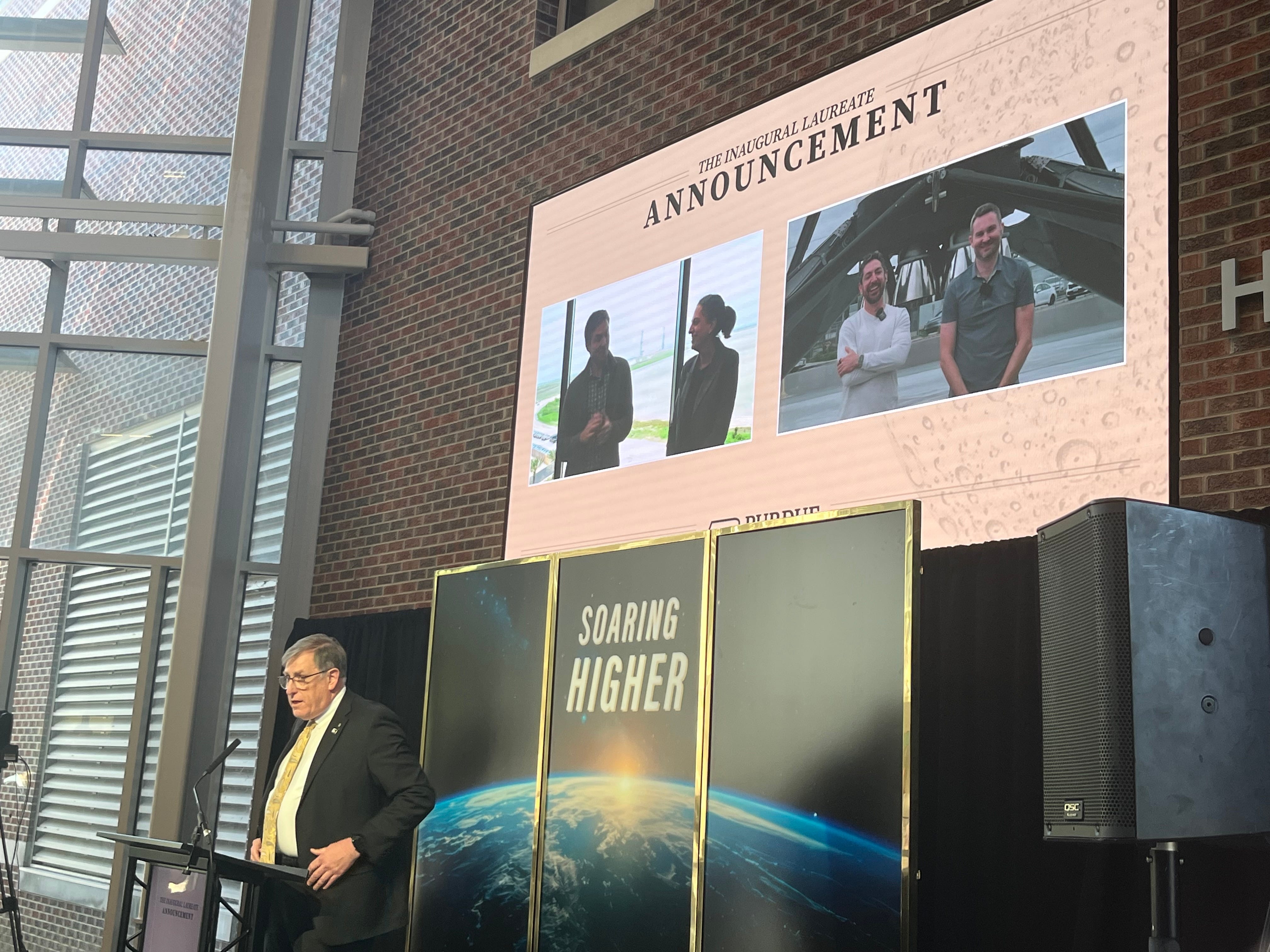
“The Falcon 9 booster landing success has been a paradigm changing accomplishment to reduce the cost of access to space so necessary for opening up space for everyone,” Dan Dumbacher, a Purdue professor and chair of the prize selection committee, said during an announcement in the Armstrong Hall of Engineering. “This team has opened the door for the rapid proliferation of payloads, leading to groundbreaking science, expanded commercial markets and provided opportunity to new entrants in the space industry around the globe.”
Four of the five recipients appeared via video during Tuesday’s event. They will be honored during a Purdue-hosted event in September in Washington, D.C.
“Just speaking for the five of us, we want to recognize that it wasn’t just five people,” Edwards, senior vice president of Falcon and Dragon projects at SpaceX, said. “Many, many people, engineers and technicians, poured a lot of blood, sweat and tears into that achievement, landing the first booster. And it’s also worth pointing out that landing a rocket once is hard, but doing it 601 times – which we actually accomplished last night – is also extremely hard, if not harder, and requires just a continued relentlessness, pursuing full and rapid reusability.”
Dumbacher said that when Purdue contemplated the Neil Armstrong Space Prize, an international award conceived as a Nobel-level recognition for space innovation, discovery and human achievement made in the past decade, the family of the man who took the first steps on the moon told his alma mater what they wanted it to honor.
“We purposely, and particularly in discussions with the family, want to recognize the people that did the work,” Dumbacher said. “It’s key that it’s not just an organization. … Jon’s right, it takes a big team. But the five people that were recognized were the nucleus of making it happen. So we wanted to recognize that nucleus.”
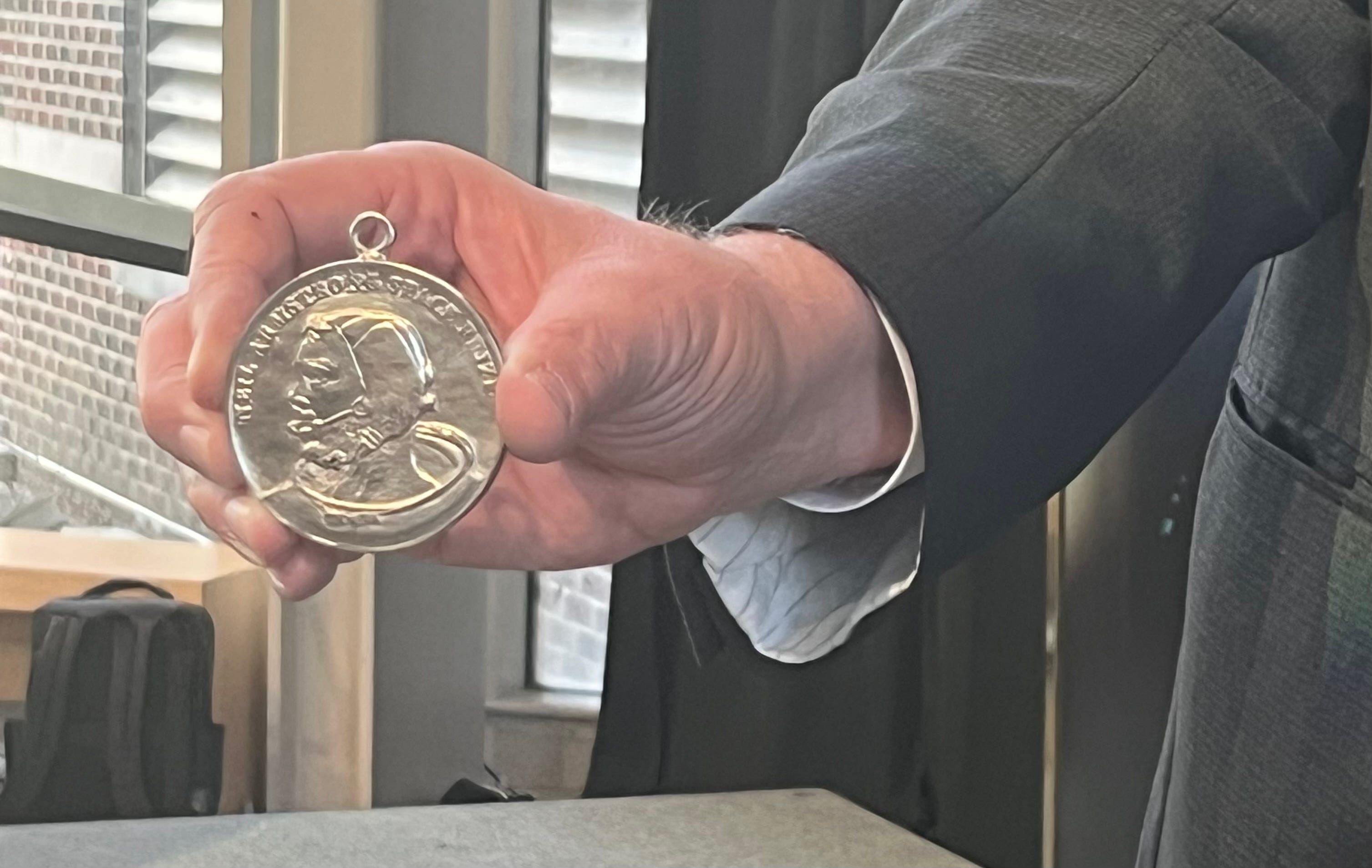
Purdue announced in 2025 that it planned to initiate the prize. Dumbacher said Purdue wasn’t releasing how many nominations it had received in that time. But Kathleen Howell, a Purdue professor of aeronautics and astronautics and chair of the prize advisory committee, said the nominations covered a wide range of the space domain.
“That made it difficult, because they all contributed to different aspects – all so amazing,” Howell said.
“We knew with the inaugural one, everybody needed to clearly see the value,” Dumbacher said. “But with all the nominations we had, we had several of those. So, that was not going to be an issue. And I think the impact that this one has had, what this team has done, has been game-changing for the industry. It’s long been a dream of the industry. We’ve taken several runs at it, and now this team accomplished it.”
On hand for the ceremony Tuesday was Amit Kshatriya, associate administrator of NASA, who said he was at Purdue for the first time and didn’t know when he arrived that he’d be on campus for the Armstrong Space Award announcement.
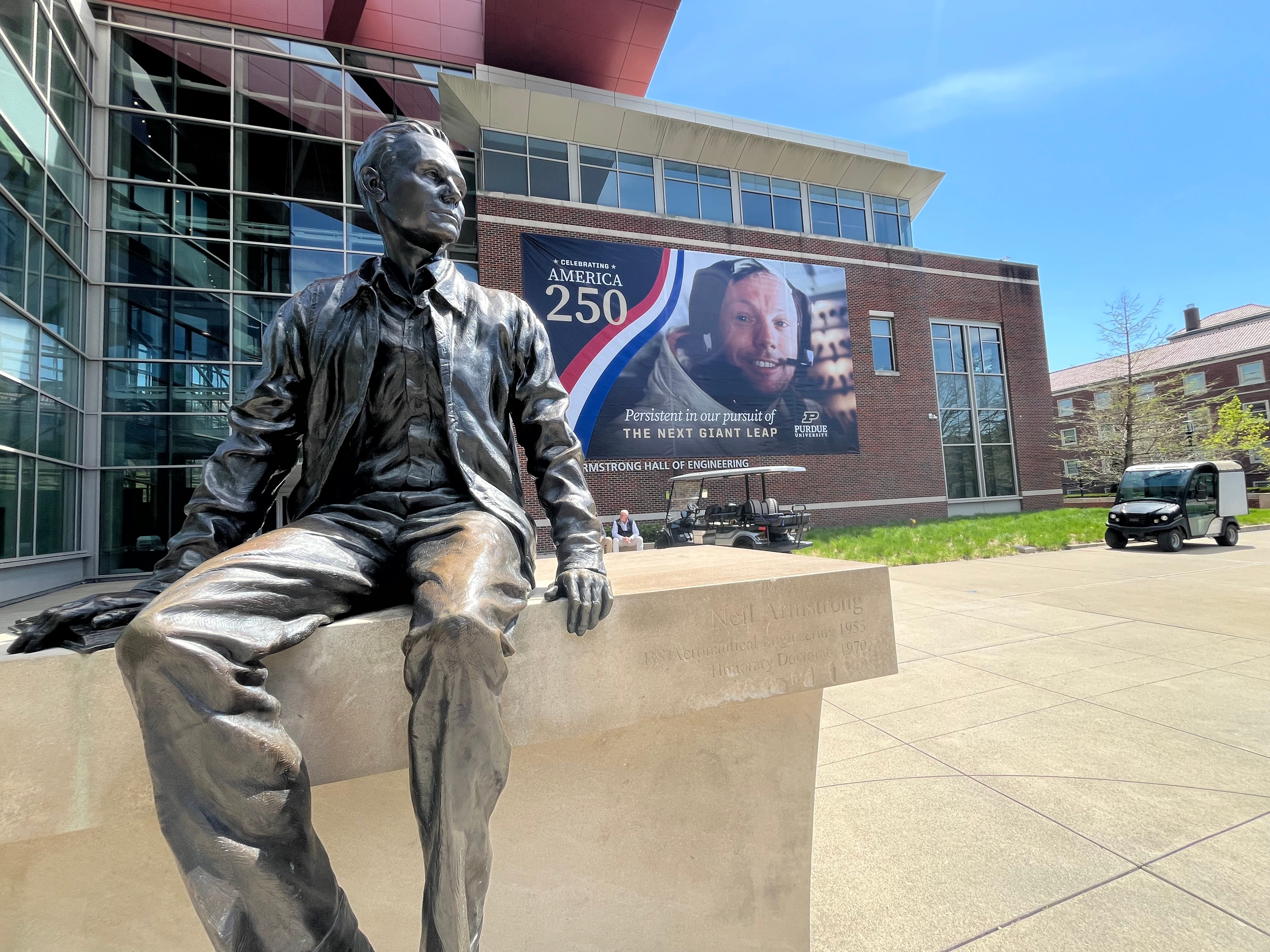
“I think everybody’s first day (at Purdue) is like this, maybe?” Kshatriya joked.
He said he knew the Falcon 9 team being honored and called it “an incredible way to christen this award.”
Kshatriya picked up on the theme Dumbacher mentioned about the people in the space program who made huge contributions but weren’t on first-name basis with the public, speaking then to students who’d gathered between classes and lab work in Armstrong Hall to watch the Armstrong Space Prize announcement.
“It’s such a phenomenal time to be in this business,” Kshatriya said, referring to the recently returned Artemis II mission to the moon and putting it into context of Armstrong and 29 other Purdue grads who are part of the university’s “Cradle of Astronauts.”
“You think about the amazing achievements of the astronauts that are here,” Kshatriya said. “I will tell you, it was the thousands of people who put their hands on the rocket, on the heat shield, on the Orion (space craft) that brought them home. … You belong to that legacy, as well.”
A FEW OTHER TAKEAWAYS FROM UNIVERSITY SENATES VOTE OF NO CONFIDENCE FOR PURDUE PROVOST
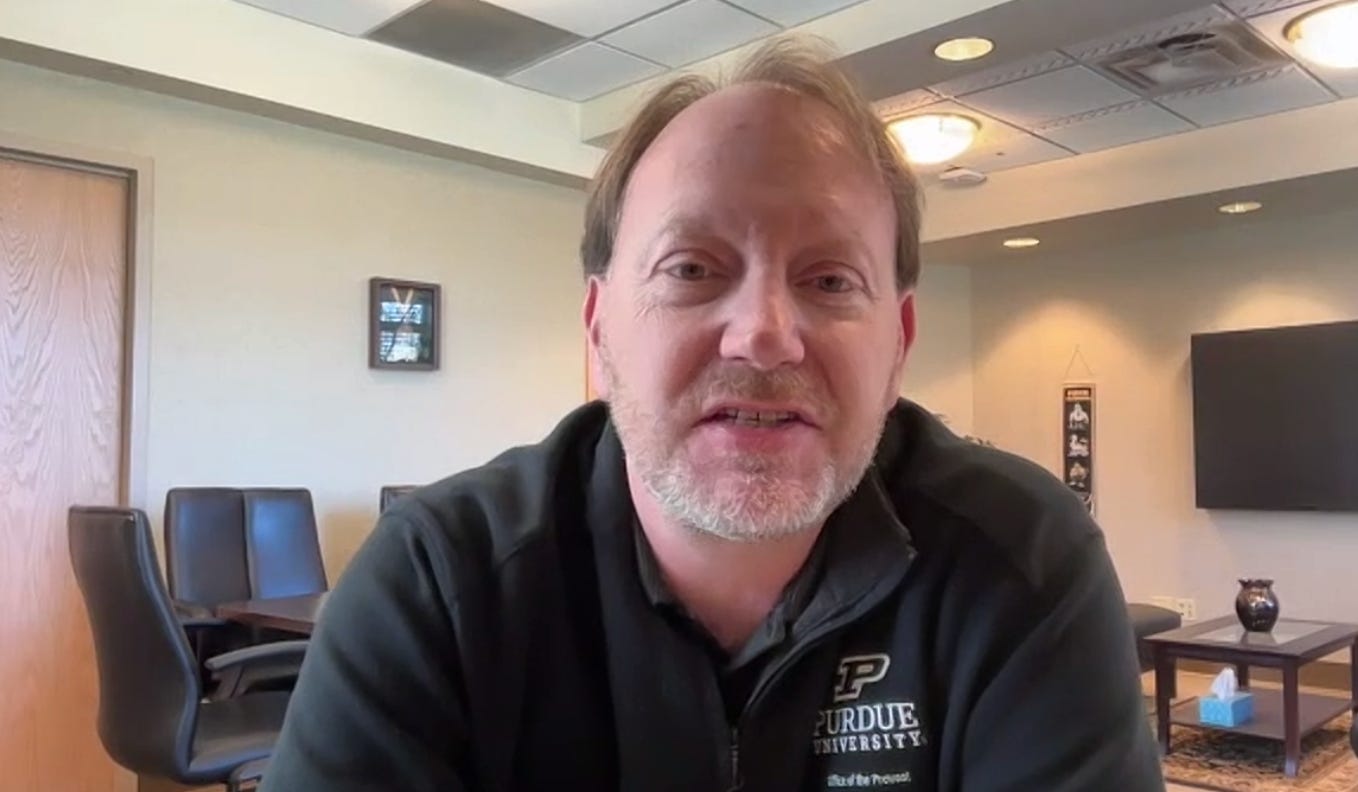
Tucked into a debate that ended with Monday’s vote of no confidence for Purdue Provost Patrick Wolfe – one that carried 74% of the faculty-led University Senate against the university’s top academic officer – was a concerted attempt by some to slow the momentum building over the past year to do something about what had been portrayed as heavy-handed moves without adequate explanation out of the office in Hovde Hall. Several leaders urged the body not to blow what had been bridge building they said had been happening between University Senate and Purdue administration.
Just what an uphill battle that turned out to be was signaled from the start by Mark Zimpfer, who is finishing his one-year term as University Senate chair.
