

A weekly look at what’s playing at our local farmers markets and how to put those finds to work in your kitchen …

How to make rhubarb a hero
By Carol Bangert/For Based in Lafayette
I’m calling this edition of Market Report “My $14 Experiment with Rhubarb.”
On a whim, I purchased two bunches of rhubarb at the farmers market on Saturday, then spent a couple of days just staring at them. My experience cooking with rhubarb is negligible, at best, and my reasons can be summed up in one word: Sugar.
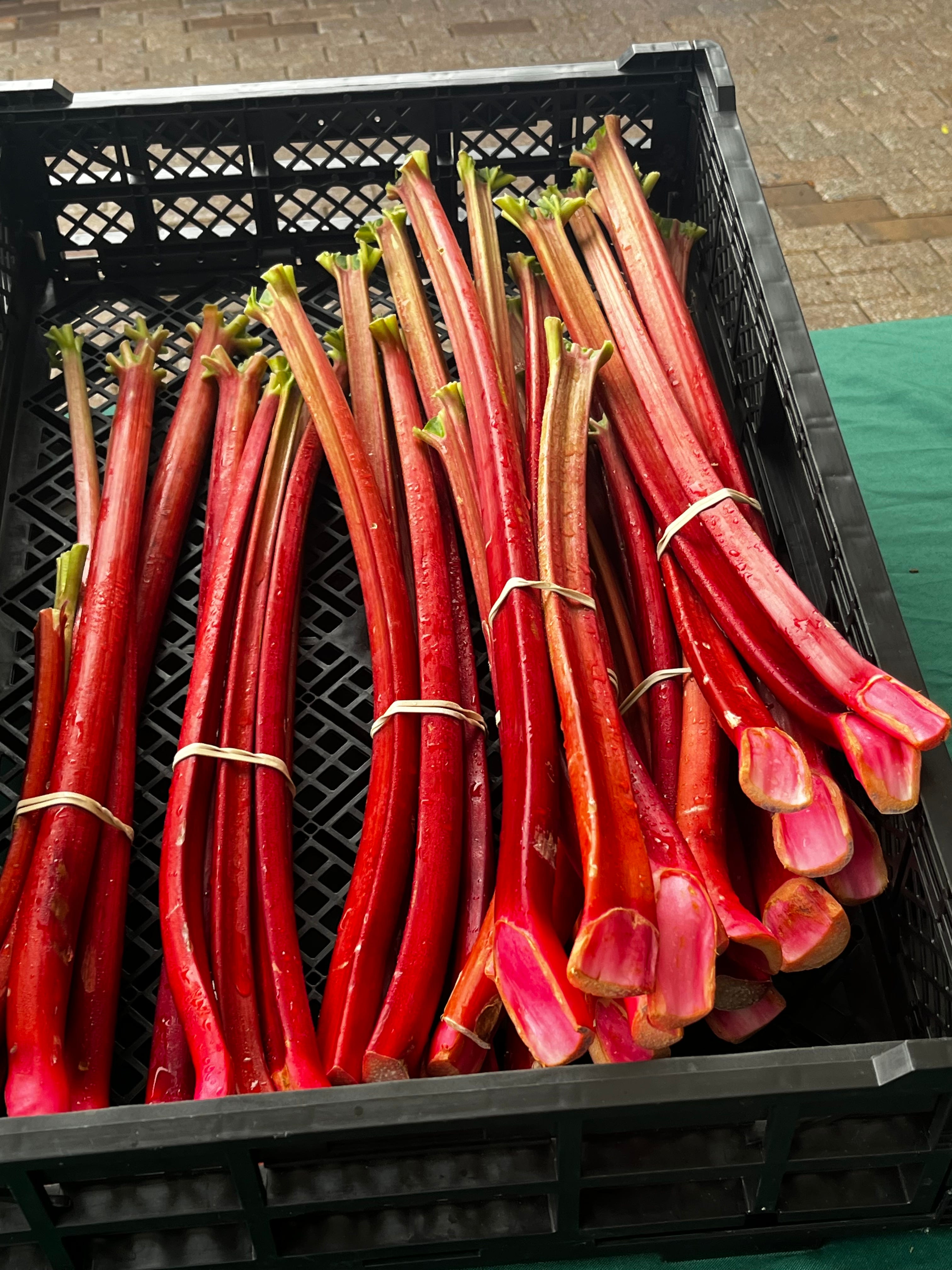
Oh, don’t get me wrong – I’ve been known to plow down small children to get the last slice of sugar cream pie, especially if it’s my mother’s now-lost recipe. But when it comes to fresh produce, I’d prefer to let the inherent taste of that fruit or veg be the hero. When it comes to rhubarb, I’ve always thought copious amounts of sugar were necessary to make those gorgeous red and green stalks palatable.
Why bother? you might ask. Because rhubarb is in season for only a short time, and if I’m going to report on what’s in season, I ought to cook with it as well. (This philosophy has not gone over well in my house, I might add.)
After a series of delightful and informative discussions with local farmers at the market, I found that I was wrong (big surprise). Although rhubarb does need some sweet element to remove the tang, there are ways to prepare it that enhance, rather than hide, the vegetable’s famous tart taste. (And, yes, it is a vegetable; but back in 1947 the USDA classified rhubarb as a fruit because tariffs on fruit imports were lower than vegetable tariffs. Yep.)
So based on what I learned, I prepared rhubarb in the following ways:
First I cut and blanched a few stalks of rhubarb in boiling water for about 45 seconds, then shocked it in cold water and then froze the chunks. Brittani Atchley of Atchley Farm suggested using the blanched rhubarb in smoothies, so I blended one up with a few strawberries, the frozen rhubarb, avocado, yogurt, a bit of honey and some cantaloupe microgreens from Bear Fruit Farm. Greens are mandatory in a smoothie, right? (Actually, microgreens are astonishing: they pack concentrated flavor in a small package. You should give them a try.) The smoothie was tart, sweet and one I’ll make again.
After talking with J. Abby Abbott-Rider at Thistle Byre Farm, I set aside one bunch of rhubarb for roasting. Abbott-Rider says you don’t need a boat-load of sugar to tame the tartness, pointing to vanilla or vanilla paste, lemon or orange juice and zest as options. My rhubarb was still super tart after roasting, so I added some strawberries to create a great topping for oatmeal and yogurt.
Finally, Abbott-Rider and Kathy Riley-Beck of Wabash & Riley Honey Co., pointed to rhubarb as a great ingredient in pies and cakes, adding moisture and tartness to sweet baked goods. I opted to freeze the rest of my haul for one of those later this summer.
I highly recommend buying a bunch of rhubarb and adding your own twists. Wash, dry and wrap the stalks loosely in a plastic bag and store it in the fridge. If you get a hankering for rhubarb in cold months (and who doesn’t?), the good news is it freezes well. Cut it into bite size pieces, blanch in boiling water for a minute, then dunk in ice water to stop the cooking process. Cool, dry and freeze. A slice of rhubarb cake with a cup of coffee might just hit the sweet spot on a cold December day. Rhubarb can be picked into August, but farmers I spoke with say they usually stop harvesting at the end of June.
Radishes, radishes everywhere
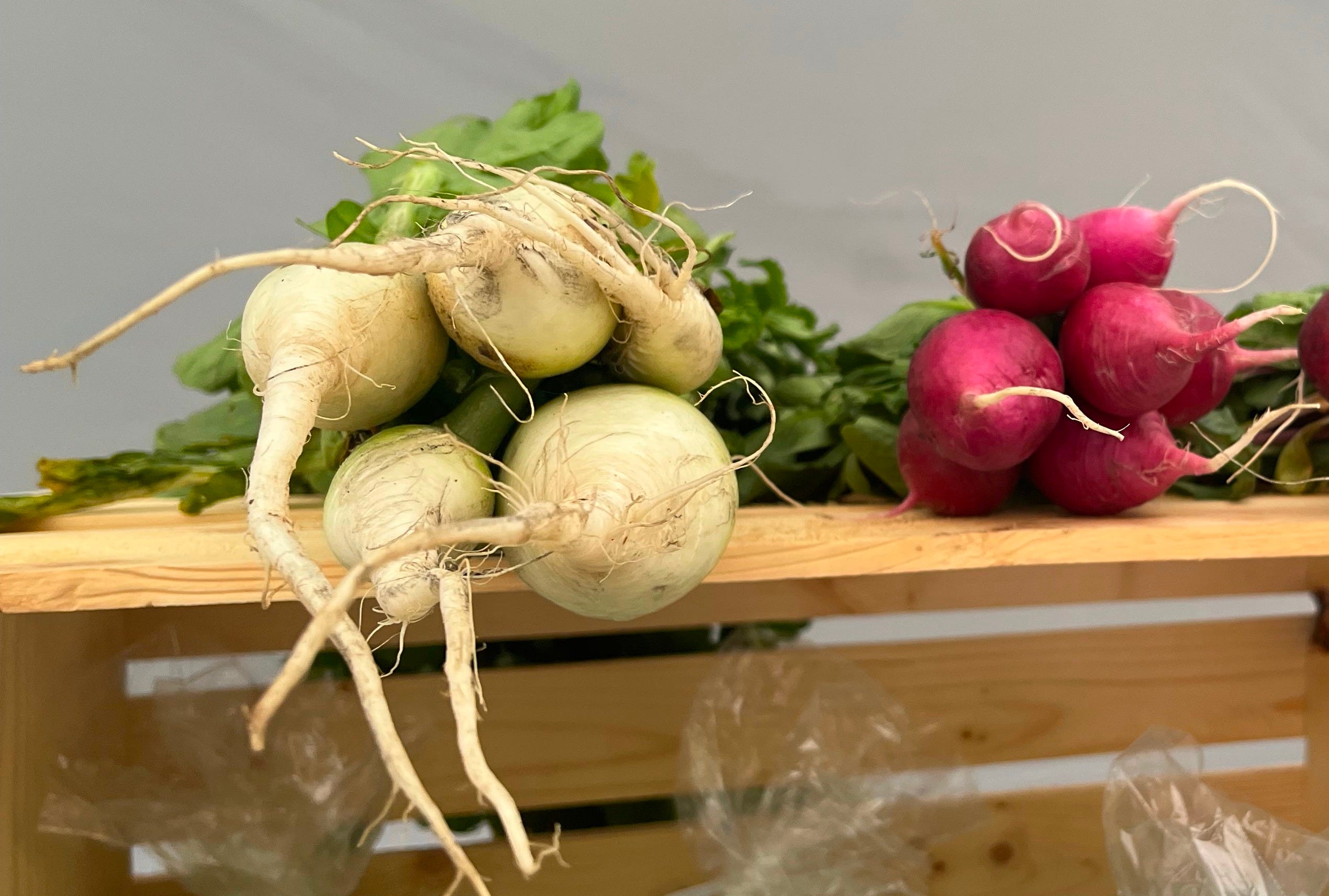
Almost every market stall offers radishes right now, and I can’t resist picking up a bunch each time I shop. Radishes are crunchy and peppery and are often relegated to veggie trays or salads. And I’m guilty of limiting them to cold applications.
Brittani Atchley praises the versatility of radishes in hot and cold dishes. “Try roasting them along with a roast, the way you would turnips or potatoes. They have the texture of carrots,” she suggests. After writing about radishes last year, I routinely roast a bunch with olive oil, salt and pepper. The radishes turn sweet and mellow in the oven and taste great hot or at room temperature.
At Bear Fruit Farm I spotted the last bunch of wasabi radishes and I snatched them up. If you like heat (peppery heat not ghost pepper, runny nose heat) you will adore these!
To store radishes, cut off and compost the green tops, wash them, and place them in the fridge in an airtight bag.
Take advantage of asparagus
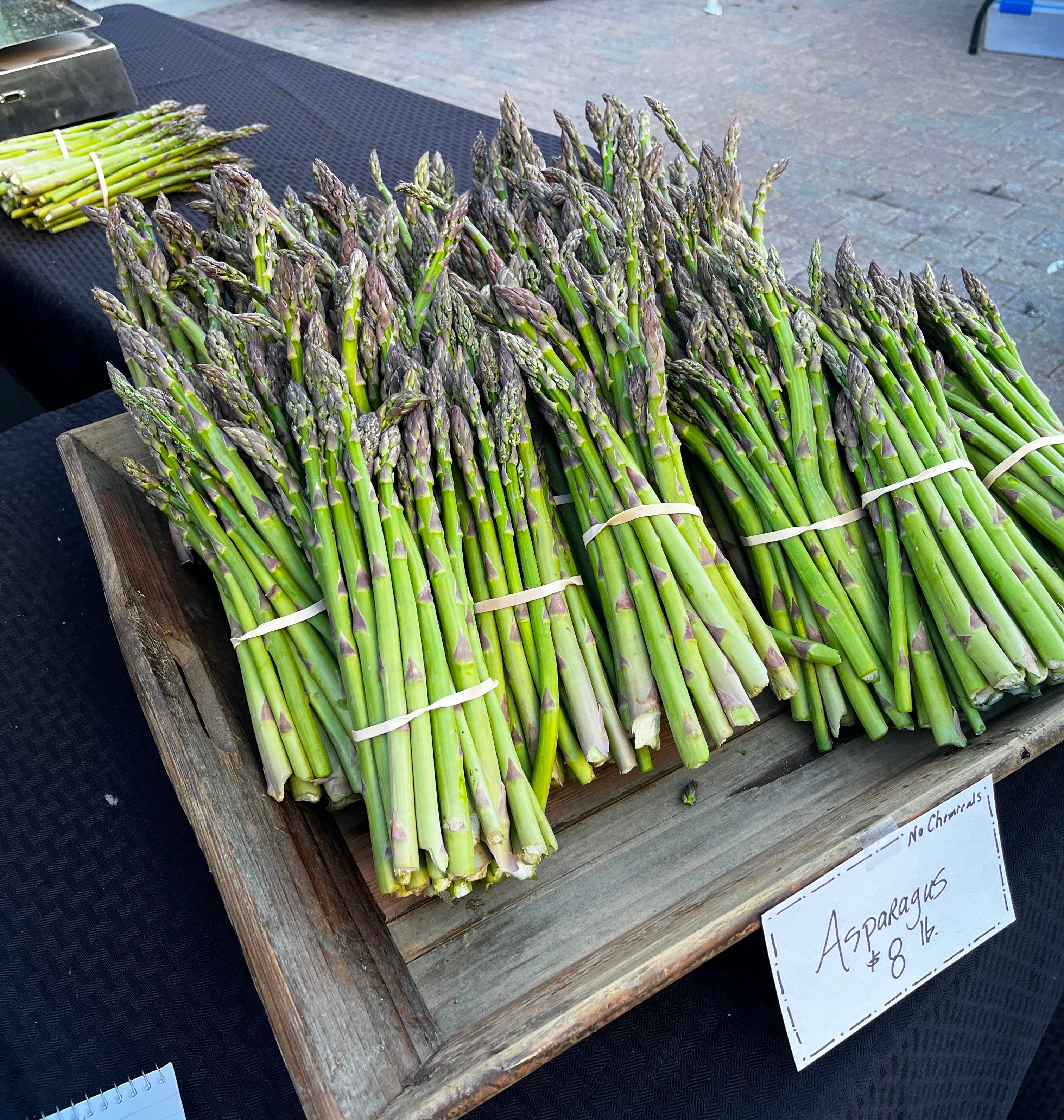
Grab asparagus while it’s still in season – it won’t be around much longer. It’s a labor- and time-intensive vegetable. Once planted, it can take three years before the first stalks are harvested, and those fragile stalks are hand-picked, making it relatively expensive compared to other vegetables. But it’s worth trying, especially fresh from local fields. It’s got a grassy, earthy flavor that just says spring.
Aspen Brubaker at The Weathered Plow recommends tossing the spears in olive oil, salt and pepper and grilling.
Other mid-May produce at the market includes:
Asparagus
Red and green onions
Garlic
Radishes
Salad turnips
Bok choy
Greens (kale, mustard, arugula, lettuce varieties)
Lots of herbs ready to pot or place in your garden (Mint, oregano, basil, cilantro, sage, lavender, thyme, chives)
Rhubarb
Strawberries
DAYS/HOURS FOR THE MARKETS
West Lafayette Farmers Market: 3:30-7:30 p.m. Wednesdays, through October. This year marks the 20th anniversary of the West Lafayette market. The market is held at Cumberland Park in West Lafayette with more than 50 vendors.
Lafayette Farmers Market: 8 a.m.-12:30 p.m. Saturdays, through October, on Fifth Street between Columbia Street and mid-block to Ferry Street, and Main Street between Fourth and Sixth streets.
Purdue Farmers Market: 11 a.m.-3 p.m. Thursdays, through October. The Purdue Farmers Market is held on the Memorial Mall on Purdue’s campus. This market is a concession-heavy market that allows students, faculty and staff to have lunch options in a unique outdoor setting.
Carol Bangert, editor of Greater Lafayette Magazine, has been a regular at Greater Lafayette farmers markets for more than 20 years. From May through October, she’ll scout out in-season produce at the markets and report back on fresh finds and how to use them.
Thank you for supporting Based in Lafayette, an independent, local reporting project. Free and full-ride subscription options are ready for you here.
Tips, story ideas? I’m at davebangert1@gmail.com.
Last summer I got a bunch of rhubarb in my CSA share and I wasn't sure what to do with it so I made a few batches of strawberry-rhubarb bread. It freezes really well, too.
https://cheesecurdinparadise.com/strawberry-rhubarb-bread/#recipe
Sauté in a bit of oil a cut up stalk of rhubarb, a few cloves of roasted garlic, and a tablespoon of white wine vinegar. After a minute, mush a bit, add a quarter cup of water, and reduce to a sauce. Off heat, mix in some honey. Great tanginess on roasted chicken.