

Support for this edition comes from Greater Lafayette Family Shelter. From July 20 through July 25, donate to Greater Lafayette Family Shelter’s Christmas in July campaign to support our community’s only shelter dedicated to serving families. Your gift helps parents and children stay together while they work toward safety, stability, and a new beginning. Give today at bit.ly/GLFSDonate

PURDUE-BACKED EXPEDITION TO FIND AMELIA EARHART’S PLANE BACK ON
A Purdue-backed expedition to uncover whether an object seen in satellite images of a small Pacific island might be remnants of the Lockheed Electra 10-E aviator Amelia Earhart was attempting to fly around the world in 1937 is back on track, set to go in October, university officials said Friday.
Initially planned for October 2025, Steve Schultz, Purdue’s general counsel, said approval came in the past few days for the necessary permits from the Kiribati government to explore a lagoon of Nikumaroro Island, where researchers believe they’ve spotted evidence of Earhart’s plane.
Schultz said Friday that efforts to clear the way for the expedition – one the Purdue Research Foundation is backing with a $500,000 stake and that will include three people with university ties playing roles in the search – took several visits to the Pacific nation and help with introductions to Kiribati lawmakers via contacts in the U.S. embassy in Fiji.
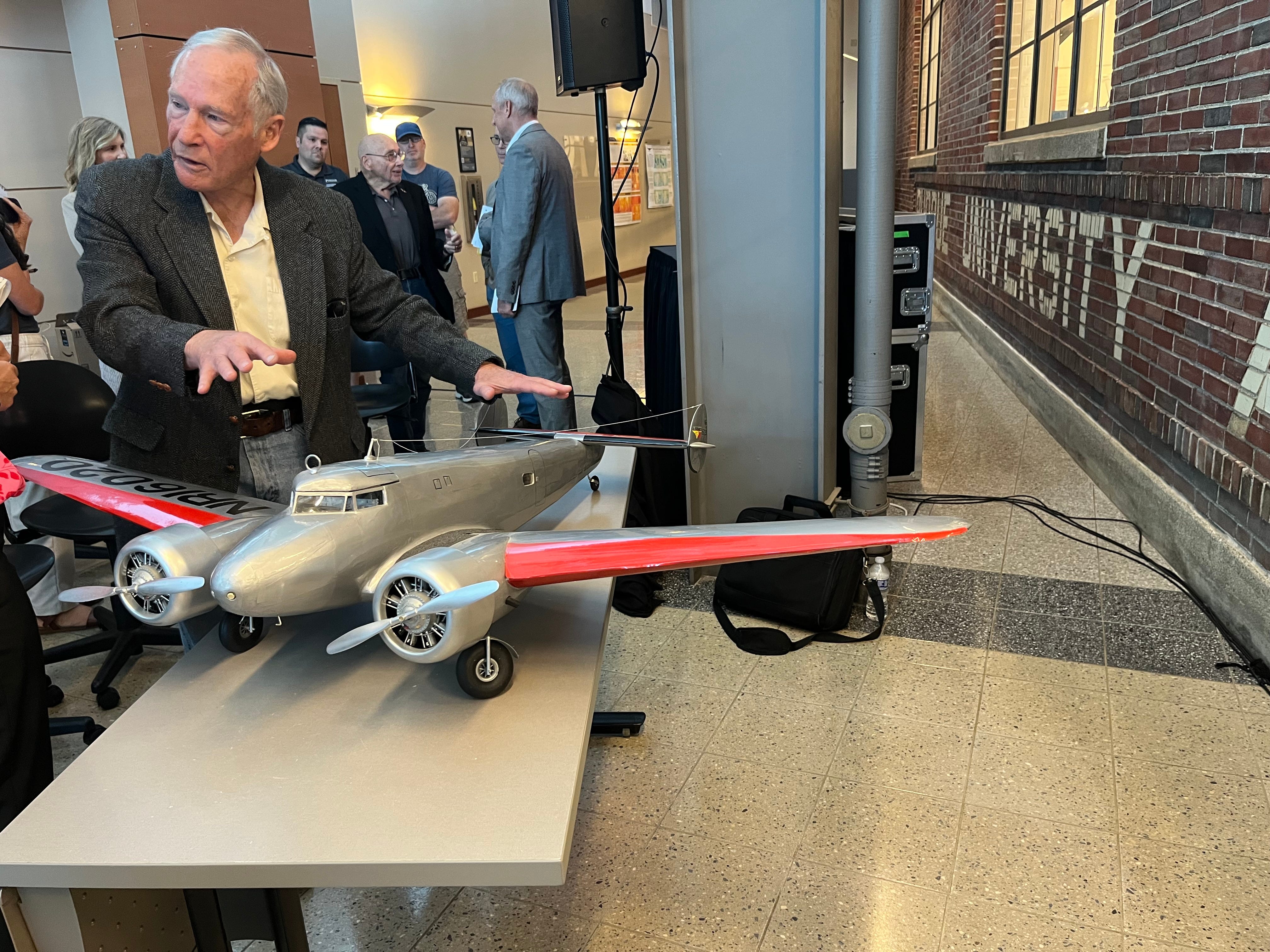
With that secured, some members the 16-member crew will leave for Tarawa, Kiribati, from the Amelia Earhart Terminal at Purdue Airport on Oct. 3. From there, the crew of archaeologists, filmmakers and others will travel six days by ship to Nikumaroro, roughly midway between Hawaii and Australia, to check on what has become known as the Taraia Object.
“At its core, this is a scientific endeavor that has a simple premise: the Taraia Object is either the lost Electra or it’s not,” Schultz said Friday. “We think somebody has to go there and look at it, and it might as well be us at Purdue. We owe it to her legacy to do that. And if we don’t do it, the world might never know.”

Initially announced in July 2025, the expedition was instigated by Rick Pettigrew, executive director of the Archaeological Legacy Institute, and leans heavily into Purdue funding and the university’s ties to Earhart.
