

Support for this edition comes from State Bank. Since 1910, State Bank has helped local businesses grow and communities move forward. With decisions made right here and relationships built for the long term, their team works alongside businesses across Greater Lafayette to turn plans into progress. Learn more about how State Bank supports local businesses at https://www.statebank1910.bank/business-tippecanoe

FACULTY EDGE CLOSER TO VOTE OF NO CONFIDENCE FOR PURDUE PROVOST
A vote of no confidence for Provost Patrick Wolfe, Purdue’s chief academic officer, is likely to come when the faculty-led University Senate meets in April.
Senate members voted overwhelmingly Monday afternoon to advance the question after taking the past month to review a collection of 16 allegations first lodged in February by the Purdue chapter of the American Association of University Professors revolving around what they called “unilateral decision-making” and heavy-handed treatment in hiring, admissions and campus policies.
Findings presented Monday outlined four “major areas of concern,” including patterns of lack of transparency, inadequate conflict resolution, delayed decision making and actions that “do not adequately reflect sufficient engagement with the day-to-day realities faced by Purdue faculty.”
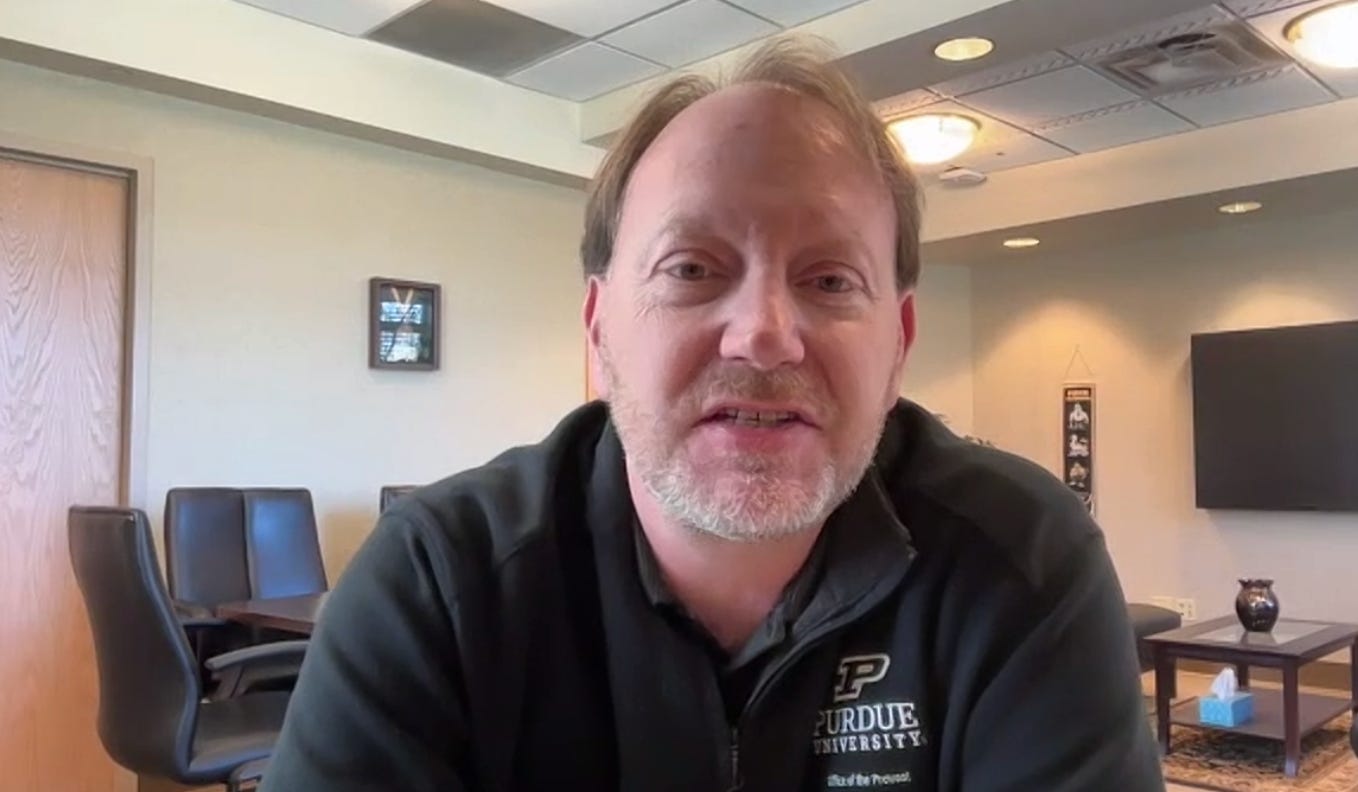
“Collectively, the concerns raise broader issues about how the Provost’s administrative practices have impacted Purdue’s institutional climate,” a resolution outlining University Senate concerns read.
Lisa Bosman – a University Senate member who co-sponsored the resolution, calling a vote of no confidence “one of the most serious actions a University Senate can take” – said the past month included reports from six University Senate committees; results from a survey open to faculty, staff and administrators; and feedback from other one-on-one meetings with faculty and community members.
