

Support for this edition comes from La Scala. Missing La Scala? Welcome back! Brunch buffet tickets are on sale now. The menu is big. Seating is limited. Grab your brunch tickets now.

PURDUE PROVOST: TIME TO ‘OWN IT’ ON BETTER COMMUNICATION AFTER FACULTY’S VOTE OF NO-CONFIDENCE
In his first interview since closing out Purdue’s last academic year as the target of a vote of no confidence from the faculty-led University Senate, Purdue Provost Patrick Wolfe said there are things he could have done better as allegations of his being distant and disconnected from day-to-day realities on campus gained traction during the spring 2026 semester.
Wolfe said he understood he was running point for Purdue’s administration at a time when pressures on the university – and higher education, in general – pushed just about every corner of campus.
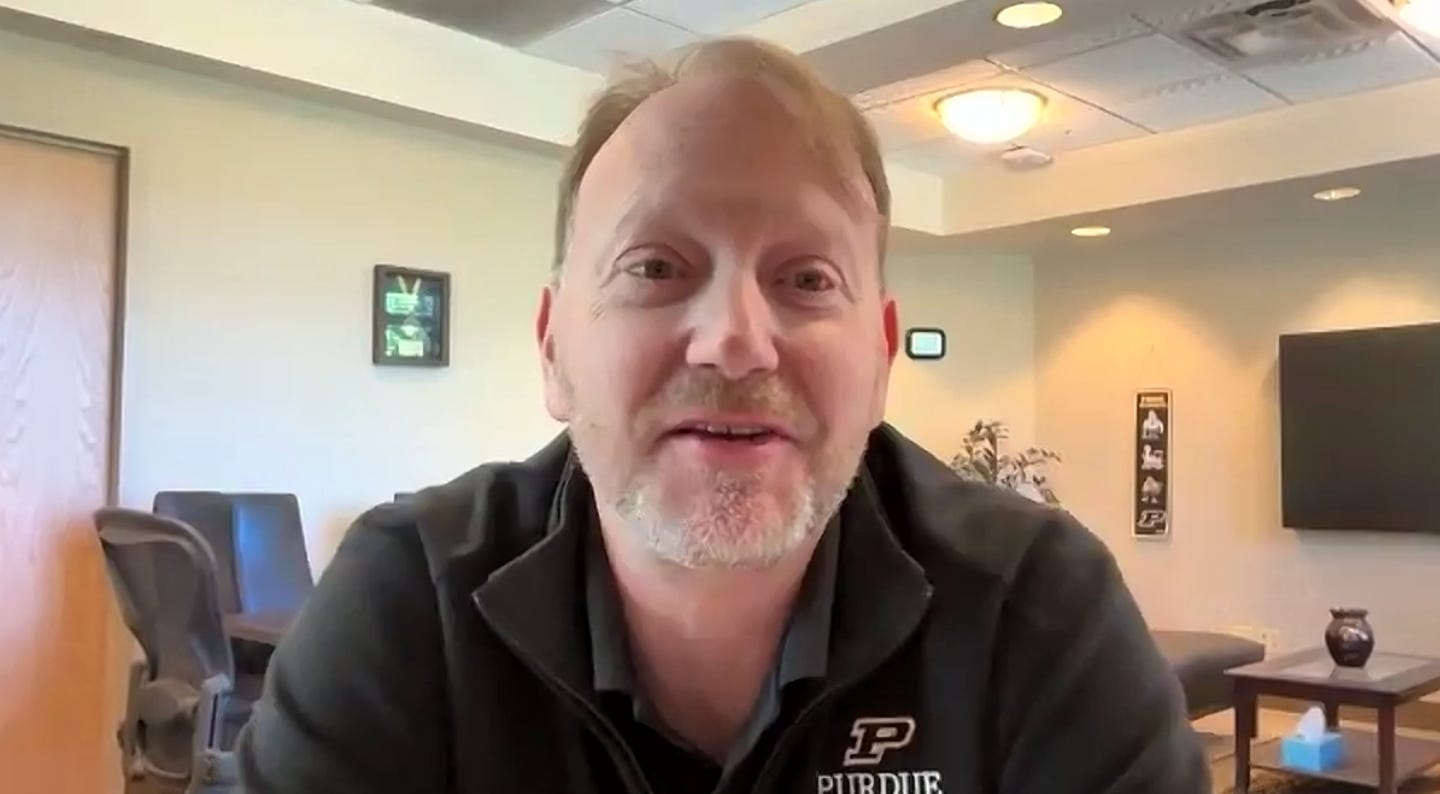
Monday afternoon, Wolfe, who has been provost since 2023, heads into the first meeting with the full University Senate since an April 20 session where 74% of the body signed off on accusations about “unilateral decision-making,” a climate of self-censorship on campus, and heavy-handed treatment in hiring, admissions and campus policies, first lodged publicly in a Purdue chapter of the American Association of University Professors’ call for Wolfe to resign.
At the time, then-President Mung Chiang and Purdue Trustees Chairman Gary Lehman stood by Wolfe, calling the faculty vote “misinformed,” “lacking in authority” and warranting no response.
In fresh letters sent in August to faculty and students to start the fall 2026 semester – and throughout an interview this week with Based in Lafayette – Wolfe said work is being done to improve communication.
“As good leaders, you own it, you take responsibility, you learn what you can from the disagreements and feedback that’s offered in good faith, and you take it on board and you commit to doing better at communicating and engaging,” Wolfe said. “Then you’ve got to go out and do it.”
Here are excerpts from that conversation with Wolfe, the top academic officer at Purdue, covering the vote of no confidence, as well as Purdue’s approach to AI, enrollment trends and a summer that included a change in leadership at Hovde Hall.
Question: What was going through your head on that day, in that moment, when the University Senate vote came down?
Patrick Wolfe: I would say we make decisions collectively as a leadership team, and there’s no unilateral decisions that emanate from any one of us. The thing that maybe stuck out the most to me was just how much support I received from the rest of our team here, all of whom understand that we don’t make decisions unilaterally or in a vacuum. I’m so pleased to be just able to sit with you here today and have an opportunity generally this semester to take on board the feedback, to communicate more, to engage more, to do all these things and use the muscles that we built. We just didn’t use them as much as we could have over the past few years.
Question: Why do you think that was?
Patrick Wolfe: I think in every organization, culture, tone and communication style are set from the top. And every leader is going to put a different stamp on what I would call the house communication style. The tone and tenor of any leader are going to depend on the experience base of the leader, their past experiences, their future experiences and also on external factors. I think we all signed up for a pretty wild ride in the sense that we none of us quite knew that so many buffeting forces were likely to impinge on the sector in quite the way that they did after Mung and I started our kind of joint tenure.
Good leaders take responsibility. And I think we’re a place that values open and robust debate, and everybody’s entitled their opinion. I’d much rather have people surfacing criticisms and bringing them to me and my attention and my team’s attention and our leadership team’s attention than the other way around.
You probably saw in my communications this semester, we’ve probably had more interactions with the new Senate leadership in the past two month than we had maybe in the preceding 3½ years, I would say. It’s part and parcel of the job to make decisions in the best interests of Purdue and to help own those decisions. You’ve got to be willing to take the heat for decisions, but at the same time I think we can and should – and will – communicate better and engage better. I think it’s important and it’s incumbent on any leader to take the feedback, find the good faith in the feedback where you can, look to action it, and own it. I mean, with a large campus and a large operation, there’s never going to be a situation where everybody is rendered happy by every decision. But certainly, in my experience as dean (of the College of Science), the first five years I was here, being able to communicate openly and transparently and share down and hold town halls and be able to do ad hoc improvised chats with whomever, I think we’re all excited to get back to that culture and style of communication. We know how to do it, and we’re excited to be able to do it better than we’ve been able to do it in the past few years.
Question: Do you think taking that approach you’re talking about now might have changed the trajectory of the conversation last semester? The AAUP got things rolling with its letter and allegations in January or February, and it didn’t really map all the way out until April, just before finals. Do you think it would have helped having coming forward and saying, OK, you’re saying this, here’s how I’m going to change? Or, Here’s what I would like to say to show that’s not necessarily the whole picture? Could you have done that? And should you have done that?
Patrick Wolfe: I do think it could have changed the trajectory of things.
