

Thanks for ongoing support from Based in Lafayette sponsor Long Center for the Performing Arts in downtown Lafayette. For tickets and details on all the shows and events, go to longpac.org.

Q&A: A NEXT STEP THIS WEEK IN COMMUNITY PLEDGE ON HOMELESSNESS
A grassroots effort started more than a year ago to take on homelessness in Greater Lafayette and the problems that come with it takes another step this week.
Lafayette Urban Ministry and other local nonprofits will host a series of sessions Wednesday and Thursday with James Mathy, housing administrator for Milwaukee County in Wisconsin, to discuss concepts used in his county to help find suitable housing for more people who don’t have it.
Mathy was featured in “Beyond the Bridge: A Solution to Homelessness,” a documentary that spurred a recent push for a community pledge to end homelessness in Greater Lafayette.
As part of his visit, Mathy will be at community open forum from 4-6 p.m. Wednesday, June 17, at Connection Point Church, 2541 Cumberland Ave. in West Lafayette. He also will be part of discussions tailored for healthcare, government, business, judicial and other leaders this week.
For more details and free tickets, go to: www.lumserve.org/beyond-the-bridge.
Pablo Malavenda, part of the Greater Lafayette Beyond the Bridge Steering Committee, said the hope is the Mathy will offer more traction to the local push by offering ideas that have worked in other places.
Here, Malavenda tells how the community effort, with hundreds of people signed on the community pledge, has gone and where it’s going next.
Question: For those unfamiliar, how did the Greater Lafayette Leadership Council on Homelessness come about, and how does the Beyond the Bridge series of discussions fit in with that?
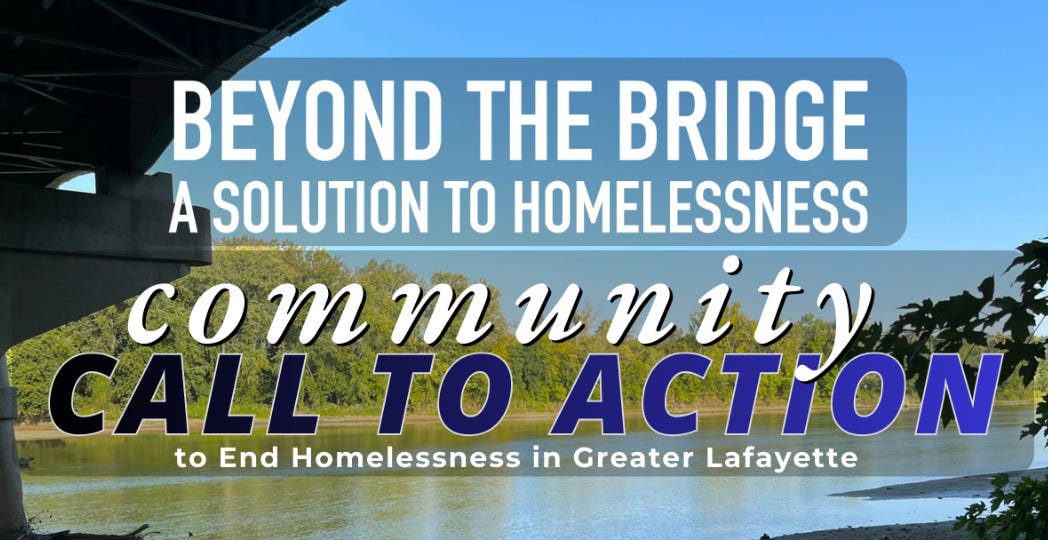
Pablo Malavenda: In 2024, a small group of local service providers, including myself, attended a screening of “Beyond the Bridge: A Solution to Homelessness” in Indianapolis. It was a powerful experience and an encouraging example of what was possible. As we left, there was a shared sense that this conversation was great news for Indianapolis, but it needed to happen in Greater Lafayette too.
I reached out to the filmmakers through social media and learned it would be possible to bring the film here. From there, I began conversations about forming a local steering committee. The response was immediate and enthusiastic – especially with the members of the Greater Lafayette Homelessness Prevention & Intervention Network.
Each step of the way, we set simple goals and hoped the community would respond. The initial goal was modest: form a steering committee, raise funds and host a screening during National Homelessness Awareness Month in November. The response exceeded expectations. Community leaders quickly stepped forward to serve on the committee, support the effort and help raise the necessary funds. Not only did we meet our goal, we surpassed it. More importantly, the community showed up — hundreds of people from across sectors came together, engaged deeply and demonstrated a clear desire to understand and be part of solutions.
The defining moment came at the close of the November 2025 screening. Instead of ending, the conversation continued. People stayed, formed small groups, asked questions and immediately began discussing what action could look like locally. The shift from awareness to problem-solving was unmistakable. That moment made it clear this was about more than a film screening. It marked the beginning of a broader community conversation that continues today.
That momentum carried into a Community Open Forum in March 2026, which brought together more than 150 participants. The forum focused on understanding the local homelessness response system, identifying gaps and strengthening coordination across sectors. It became a working session for the community — moving beyond awareness toward alignment, collaboration and next steps.
Question: How many people took the community pledge?
Pablo Malavenda: The Beyond the Bridge Community Pledge has been signed by nearly 200 individuals, with approximately 90% residing in Tippecanoe County. Signatories include elected officials, service providers, faith leaders, business leaders, university representatives, healthcare professionals and other community members who believe Greater Lafayette can do more to address homelessness.
Question: And what’s the expectation for those who signed on?
Pablo Malavenda: To clarify, the pledge serves a specific purpose, but if the question is, “What’s the expectation for those who signed on?” – the answer is simple: become more actively involved — this week and beyond. Signing the pledge is an important first step, but meaningful change will require ongoing engagement from individuals across the community.
The purpose of the pledge is to demonstrate community support for the formation of the Greater Lafayette Leadership Council on Homelessness. Homelessness is a complex challenge that no single organization, government agency, or sector can solve alone. If our community is serious about ending homelessness, the next step is clear: creating a Greater Lafayette Leadership Council on Homelessness that brings leaders together around a shared vision, common goals and coordinated action.
The proposed Leadership Council would be a cross-sector body of civic, business, healthcare, nonprofit, philanthropic, government, faith and lived-experience leaders dedicated to advancing a communitywide strategy to prevent and end homelessness. The council would not replace existing organizations or services. Rather, it would align efforts, identify priorities, remove barriers, strengthen collaboration and track progress toward measurable outcomes.
The steering committee has identified the formation of a Greater Lafayette Leadership Council on Homelessness as the logical next step in the “Beyond the Bridge” movement. The film screening, community open forum, pledge campaign and community conversations with James Mathy have all been building toward this moment. Greater Lafayette has the compassion, expertise and resources needed to make homelessness rare, brief and nonrecurring. The question is not whether we care. The question is whether we are ready to take the next step.

Question: Since those initial discussions, where do things stand? What has been accomplished so far?
Pablo Malavenda: The steering committee regularly brings together CEOs, executive directors, faith leaders, healthcare professionals, service providers, business leaders, and local and state elected officials. Just as importantly, the conversations have moved beyond awareness and toward solutions.
We have developed a shared understanding of the issues, common language for discussing homelessness and a set of emerging goals that unite people from very different sectors. Along the way, relationships have been built, partnerships have formed and several collaborative efforts have emerged outside of the committee itself. Participants now have a much better understanding of one another’s work and how their organizations fit into the broader community response.
We have also benefited from ongoing guidance from the filmmakers behind “Beyond the Bridge,” Don Sawyer and Tim Hashko, who continue to participate in meetings and provide encouragement and expertise. In addition, our network has expanded beyond Greater Lafayette to include valuable connections with leaders, service providers and advocates in Indianapolis and throughout Indiana.
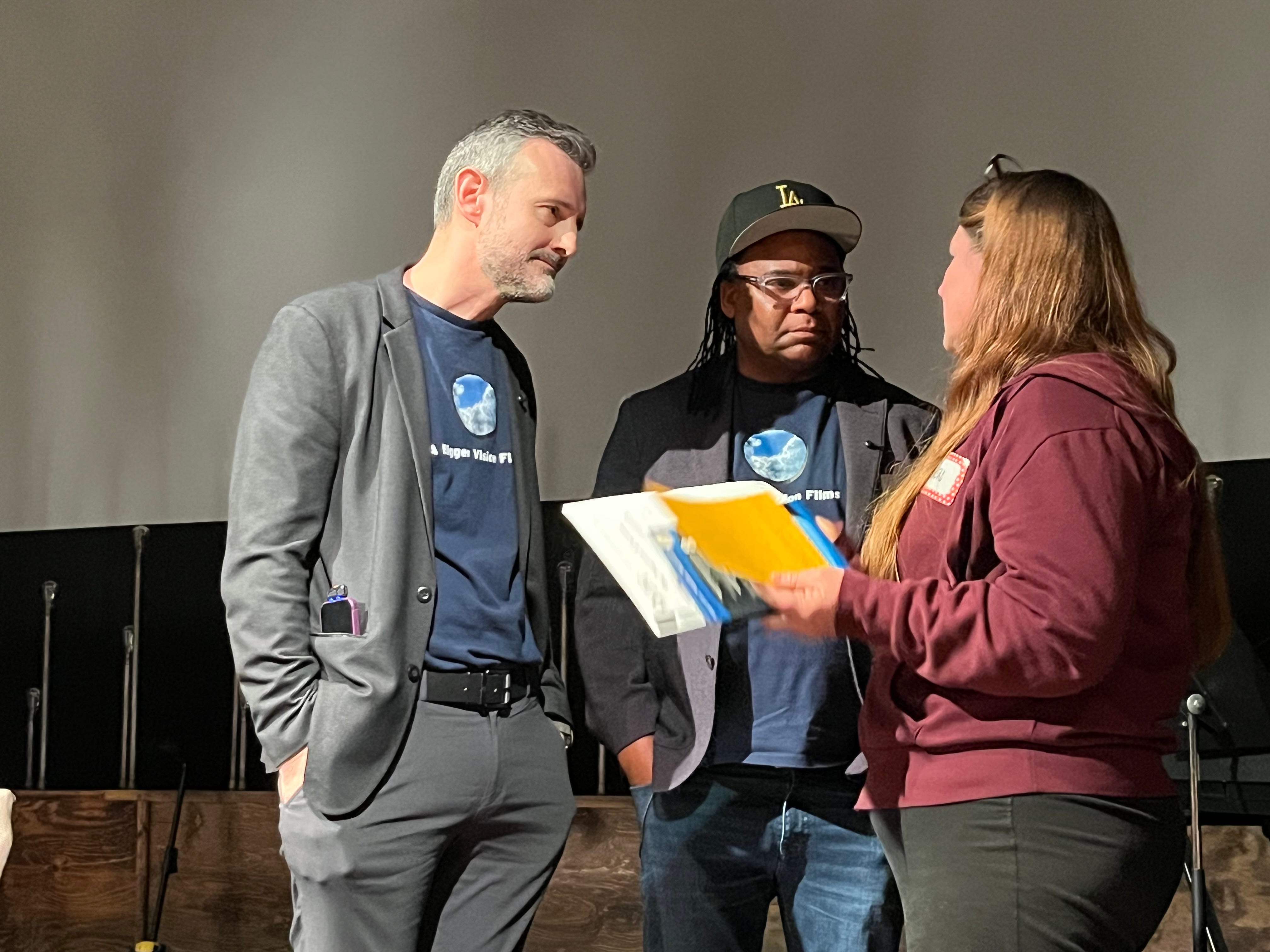
In many ways, the foundation is being built before the structure itself. While the Greater Lafayette Leadership Council on Homelessness has not yet been formally established, the relationships, trust, shared vision, and community support needed for its success are steadily taking shape.
Question: How does James Mathy’s visit this week fit in with that?
Pablo Malavenda: James Mathy’s visit is really about moving from conversation to action.
Over the past 18 months, the steering committee has worked to build awareness, relationships and community support. Now the challenge is engaging the broader community and bringing key stakeholders together around a shared strategy. If Greater Lafayette is going to make meaningful progress on homelessness, it will require support from across sectors — local government, the judiciary, housing providers, healthcare systems, businesses, faith communities, law enforcement, philanthropy and people with lived experience.
We are fortunate to have many outstanding programs and dedicated organizations already doing important work. The challenge is not a lack of compassion or effort. The challenge is coordination — creating a system that can rapidly move people from homelessness to stable housing while providing the support needed for long-term success. This can be accomplished with the formation of the Greater Lafayette Leadership Council on Homelessness.
James Mathy brings credibility because he has done this work. He has spent decades in the trenches, helping lead efforts in Milwaukee that reduced homelessness by 45 percent. He has also worked with communities across the country and has seen firsthand what works, what doesn’t and what it takes to build an effective, coordinated response.
In many ways, our message to the community is simple: don’t just take our word for it, and don’t rely solely on what you saw in a documentary. Come hear directly from someone who has achieved measurable results. Ask questions. Challenge assumptions. Engage in the conversation. If we are serious about ending homelessness in Greater Lafayette, there is tremendous value in learning from someone who has helped other communities do exactly that.
Question: What are your hopes for the conversation this week and where it will lead?
Pablo Malavenda: Like every stage of this process, our goal is fairly simple: bring the right people together and build the commitment needed to take the next step.
If Greater Lafayette is serious about ending homelessness, leaders from government, housing, healthcare, economic development, planning, philanthropy, faith communities and homelessness services must work from a shared strategy. Our hope is that these conversations create the momentum necessary to form a high-functioning, engaged Greater Lafayette Leadership Council on Homelessness.
We are seeing this model work in other communities, including Indianapolis, where strong partnerships among local government, philanthropy, service providers and faith leaders have helped drive meaningful progress. The lesson is that no single organization can solve homelessness alone.
There are still important questions to answer. What organization should convene or support the Leadership Council? What resources will be needed to sustain the work? How do we ensure accountability and long-term commitment? Those are exactly the kinds of conversations this week is intended to advance.
Success is not necessarily leaving with all the answers. Success is leaving with a stronger commitment from community leaders to move forward together. If these conversations lead to the formation of a Leadership Council and the beginning of a communitywide strategic planning process, that would be a tremendous step forward for Greater Lafayette and a clear signal that our community is committed to making homelessness rare, brief, and nonrecurring.
Question: How can people get involved, both this week and beyond?
Pablo Malavenda: There are several ways people can get involved, starting this week.
First, attend the Community Open Forum with James Mathy on Wednesday at 4 p.m. at Connection Point Church in West Lafayette. It is an opportunity to hear from a nationally recognized leader who has helped communities achieve measurable reductions in homelessness and to be part of the conversation about what is possible in Greater Lafayette.
Second, sign the Beyond the Bridge Community Pledge. The pledge demonstrates public support for a coordinated, community-wide effort to prevent and end homelessness.
Third, help spread the word. Invite colleagues, friends, neighbors, and community leaders to attend events, learn more, and engage in the conversation. Share information on social media and encourage others to get involved.
Beyond this week, we hope people will continue to elevate this issue in their spheres of influence. Talk about it at civic meetings, professional associations, faith communities, candidate forums, neighborhood gatherings and public meetings. Encourage elected officials, business leaders, university partners, healthcare professionals and faith leaders to be part of the solution.
One of the most encouraging things we have learned over the past 18 months is how many people believe Greater Lafayette can do this. Communities such as Houston, Milwaukee and Indianapolis have demonstrated that coordinated leadership and shared commitment can make a real difference. We believe Greater Lafayette has the talent, compassion, and resources to do the same. But it will take all of us moving from awareness to action.
Question: What other context should people know?
Pablo Malavenda: One thing people should understand is that this effort did not begin with a government initiative, a major grant or a formal organization. It started with a small group of people who traveled to Indianapolis to watch a documentary and came back convinced that Greater Lafayette could have a different conversation about homelessness.
What has happened since then has been entirely community-driven. A group of people came together voluntarily to form a steering committee, raise the necessary funds, and organize events that have been offered free of charge to participants. No one on the steering committee is being compensated for this work. Many of us do it in addition to our full-time jobs because we believe it is important for our community.
Another important point is that this effort is not about criticizing what already exists. In fact, one of the biggest lessons we have learned is how many outstanding organizations, programs and dedicated professionals are already working to address homelessness in Greater Lafayette. Our community has tremendous compassion, expertise and resources.
The conversation has always been about building on those strengths. The goal is to educate, raise awareness, strengthen relationships and explore how we can better coordinate our efforts around a shared vision. Along the way, organizations and leaders have set aside territorial interests and focused on what is best for the community.
Perhaps the most surprising thing has been the response. We hoped people would engage, but we did not anticipate the level of interest, commitment and optimism we have seen over the past 18 months. That tells us people believe progress is possible. They see examples from communities like Houston, Milwaukee and Indianapolis, and they believe Greater Lafayette has the potential to achieve similar results if we are willing to work together.
At its core, this movement is built on a simple idea: homelessness is solvable, and now is the right time for Greater Lafayette to take the next step.
If you go: For more details and free tickets for the Beyond the Bridge community forum, 4-6 p.m. Wednesday, June 17, go to: www.lumserve.org/beyond-the-bridge.
THIS AND THAT …
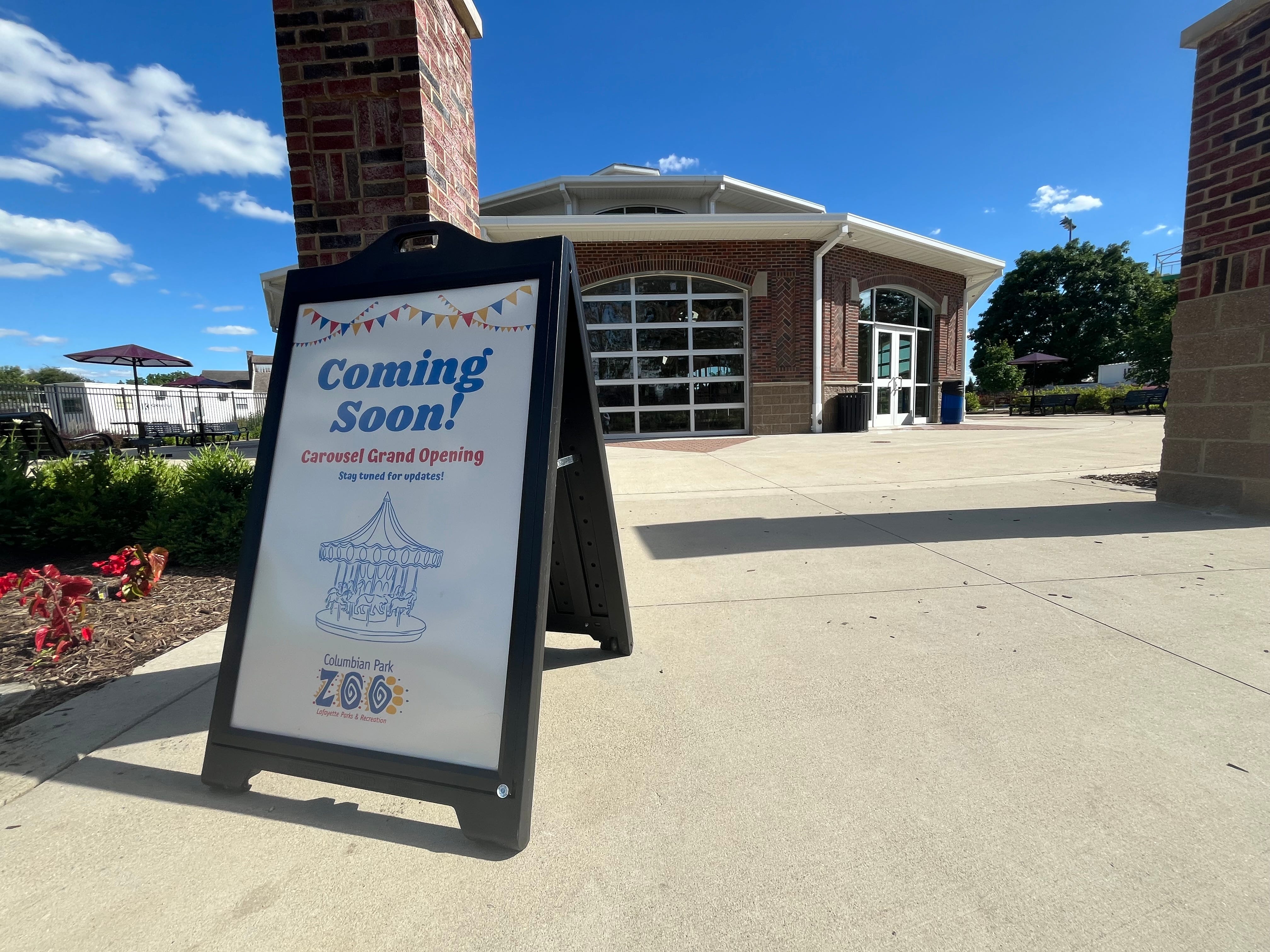
THE RETURN OF THE COLUMBIAN PARK CAROUSEL: The long-awaited carousel at Columbian Park will open Wednesday evening with free rides for its grand opening. Columbian Park will host the event from 5-8 p.m. at the recently built carousel building between the entrances to the Columbian Park Zoo and Tropicanoe Cove. The city will cut a ribbon at 6 p.m., with free rides after that. Starting Thursday, June 18, rides will cost $3, available from 10 a.m.-7 p.m. during the park’s peak season. The park has been without a carousel since 1998, when the original was removed for Columbian Park’s renovations. Designed by Barrango Carousels, the new carousel features 30 hand-crafted animal figures and two ADA chariot-style benches for riders.
EXTEND YOUR BASED IN LAFAYETTE SUBSCRIPTION BY CHIPPING FOR CASAs FOR KIDS FUND
The 2026 edition of the Subaru CASA Cycling Challenge, a 24-hour event held Aug. 8-9 at the two-mile Subaru of Indiana Automotive test track in Lafayette, will again have a version of Bangert Brothers team there to put in some laps in support to the CASAs for Kids Fund here in Tippecanoe County. Trust us, we’re still getting organized, but we’ll be there.
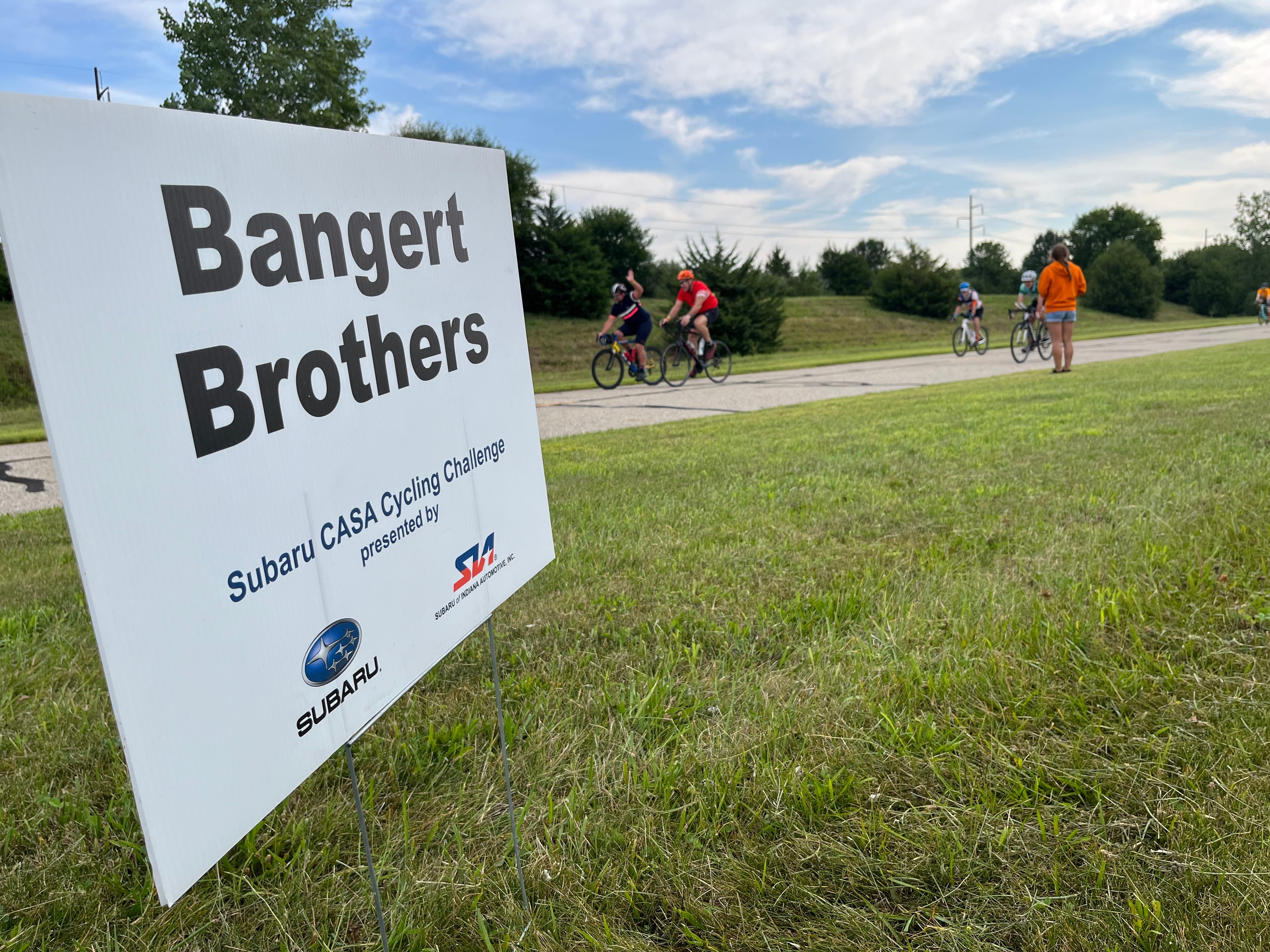
The CASAs for Kids Fund is set up for abused or neglected kids who wind up in the court system and in foster care, offering funding for clothing, bedding, school band instruments, field trip or summer camp fees, dance class, equipment to join sports teams and other things the system can’t provide. The CASAs for Kids Fund gets them that stuff and gets them that much closer to a normal life as a kid. And fundraising tied to the 24-hour ride gets the CASAs for Kids Fund geared up for the next year.
Just like last year, I’ll add a free month to your full-access Based in Lafayette subscription for a donation of any amount to the Bangert Brothers team or team members.
In 2025, Based in Lafayette readers kicked in more than $5,400 to CASAs for Kids Fund, via the Bangert Brothers team.
If that sounds like a deal for 2026, here’s the link.
For more information about the event, check here.
Thanks, again, for ongoing support from Based in Lafayette sponsor Long Center for the Performing Arts in downtown Lafayette. For tickets and details on all the shows and events, go to longpac.org.
Thank you for supporting Based in Lafayette, an independent, local reporting project. Free and full-ride subscription options are ready for you here.
Tips, story ideas? I’m at davebangert1@gmail.com.
Thanks, Dave. Does anyone know if there is there a good source for the homelessness data in Tippecanoe County?
I know there is the Point-in-Time data, but from what I have seen, the data does not answer the question of how long individuals have been in the area they are counted in.