

Support for this edition comes from the Art Museum of Greater Lafayette, presenting Art on the Wabash. The juried art fair will be 10 a.m.-4 p.m. Sunday, Sept. 27, at Tapawingo Park in West Lafayette. Admission is free. For more, check out Art on the Wabash here.

RICHARD ALLEN’S ATTORNEY TO COURT OF APPEALS: ABBY AND LIBBY’S ‘REAL KILLER GOES FREE’
An attorney for Richard Allen argued Monday morning to the Indiana Court of Appeals that evidence was tainted in a 2024 trial by a confirmation bias from investigators focused on the wrong suspect and by a judge’s decisions to make way for it all before and during a four-week jury trial, leading to his conviction and 130-year prison sentence for the 2017 murders of Delphi eighth-graders Abby Williams and Libby German near a trail close to the town’s Monon High Bridge.
Mark Leeman, Allen’s appellate attorney, argued during a 75-minute hearing before three Court of Appeals judges that the 2024 trial in Carroll Circuit Court had been “unfair and unreliable.”
Leeman argued that special Judge Fran Gull made mistakes by not holding a hearing into the circumstances that led to a 2022 search of Allen’s Delphi home, 5½ years after the 2017 murders; leaving him in an isolated unit at the Westville Correctional Facility for months before his trial in the name of safekeeping, despite signs of he was deteriorating mentally and physically; leaving out context during the trial about Allen’s mental state that called into question the credibility of dozens of times investigators said he confessed to the killings; rejecting use of police sketches of suspects during the trial; and blocking defense attorneys’ attempts to introduce a theory to jurors that other suspects, tied to Odinism, had murdered the girls in a pagan ritual sacrifice.
“We want to know that you got the right guy – we can’t live in a world where the real killer goes free,” Leeman argued Monday. “The jury heard only one story. The trial court systematically barred Allen from proving that he was not the man on the bridge, not the man in the woods killing the girls, and not the man who left that bizarre and deliberate scene. And unconstitutional because the state told the judge a false story to get the warrant for Allen’s house – the warrant its entire case was built on. This is not how a system should work; it is how a system fails.”
Deputy Attorney General Ellen Meilaender defended the trial court’s verdict and sentence, arguing it should stand. Meilaender argued that any errors in the trial were harmless in the face of accounts given of Feb. 13, 2017, on the Monon High Bridge Trail.
“It was Richard Allen himself who identified himself as Bridge Guy in his statements to police,” Meilaender said.
The Court of Appeals panel left Monday’s hearing with no comment about a timetable for a ruling in Allen’s request for a new trial.
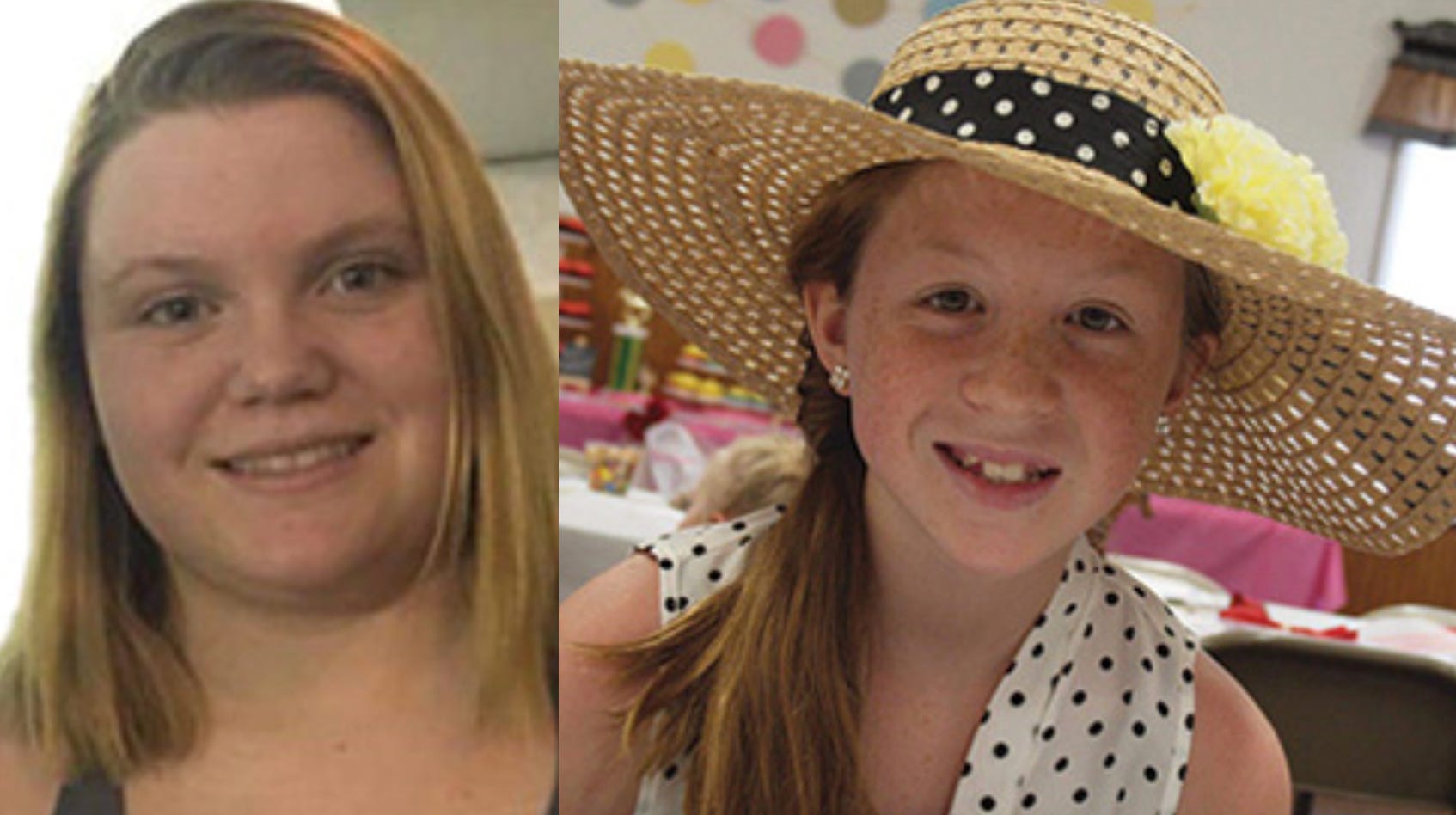
Abby, 13, and Libby, 14, students at Delphi Community Middle School, were killed after being dropped off to spend time during a day off from school on the Monon High Bridge Trail, part of Delphi’s trail system. They were found dead in the woods the following day, their necks slashed. Despite video found on Abby’s phone of a man following them on the Monon High Bridge, the case went without an arrest for more than five years until investigators zeroed in on Allen, who had gone to police in the days after the murders to tell about being the trail that day. Years later, he was left to deny that he was the Bridge Guy in the video or the one who killed the girls.
The trial was built around a prosecution case that said Allen was, in fact, Bridge Guy, linking him through dozens of admissions months after his arrest and – despite no DNA evidence at the scene or in a search of his house five years later – to an unspent bullet found at the crime scene that investigators say had been cycled through a gun later found in a search of Allen’s home.
A jury selected from Allen County deliberated four days at the Carroll Circuit Court in Delphi before finding Allen guilty in November 2024. Gull, an Allen County Superior Court judge appointed to the case shortly after Allen’s arrest in October 2022, sentenced him in December 2024 to 130 years in prison.
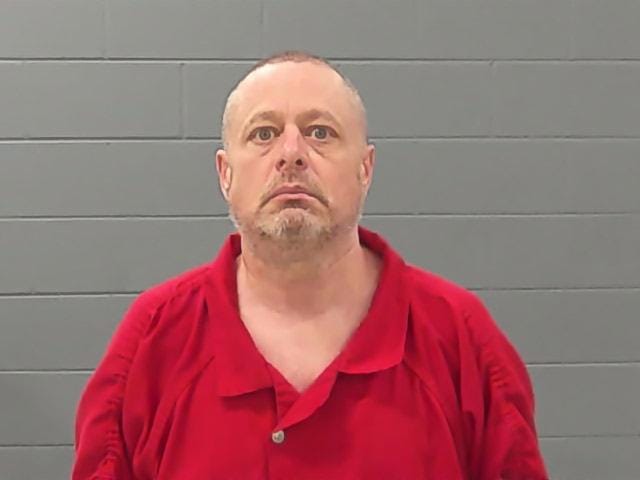
Allen’s appeal took issue with the warrant to search his home before his arrest; whether confessions should have been considered by the jury; and whether a series of decisions by Gull leading up to and during the trial allowed Allen’s attorneys room to present a complete defense.
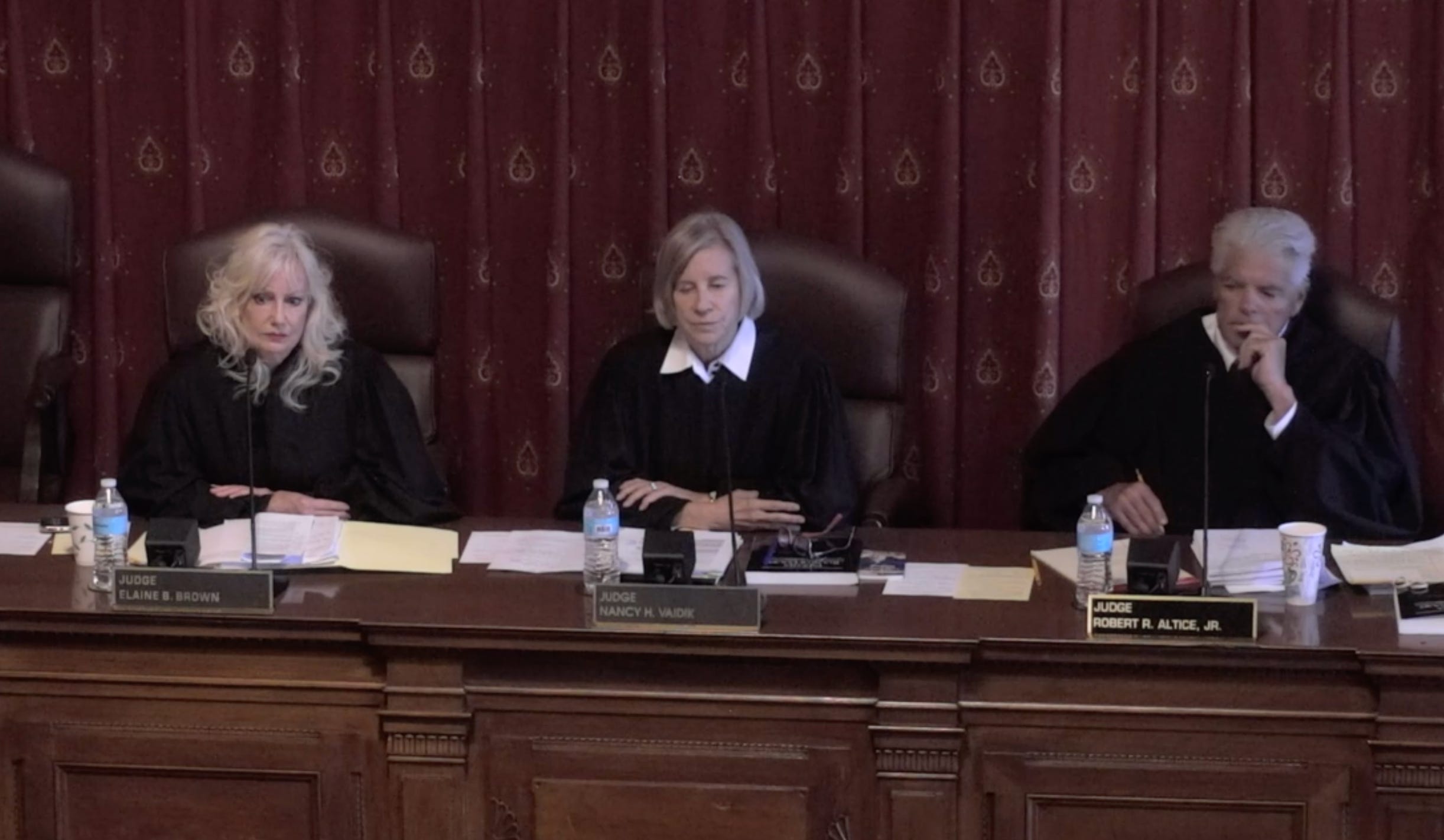
The Court of Appeals judges – Nancy Vaidik, Robert Altice and Elaine Brown – asked Leeman at the start what he thought the most significant argument was, before scattering questions across the full swath of Allen’s points.
Conditions and confessions: Moved from Carroll County Jail days after his arrest as part of a safekeeping order issued by former Circuit Judge Benjamin Diener, Allen spent 13 months in a state prison, largely in an isolated cell in a segregated portion of the prison, when Allen’s attorneys argued that prison policy suggests a 30-day limit on solitary confinement.
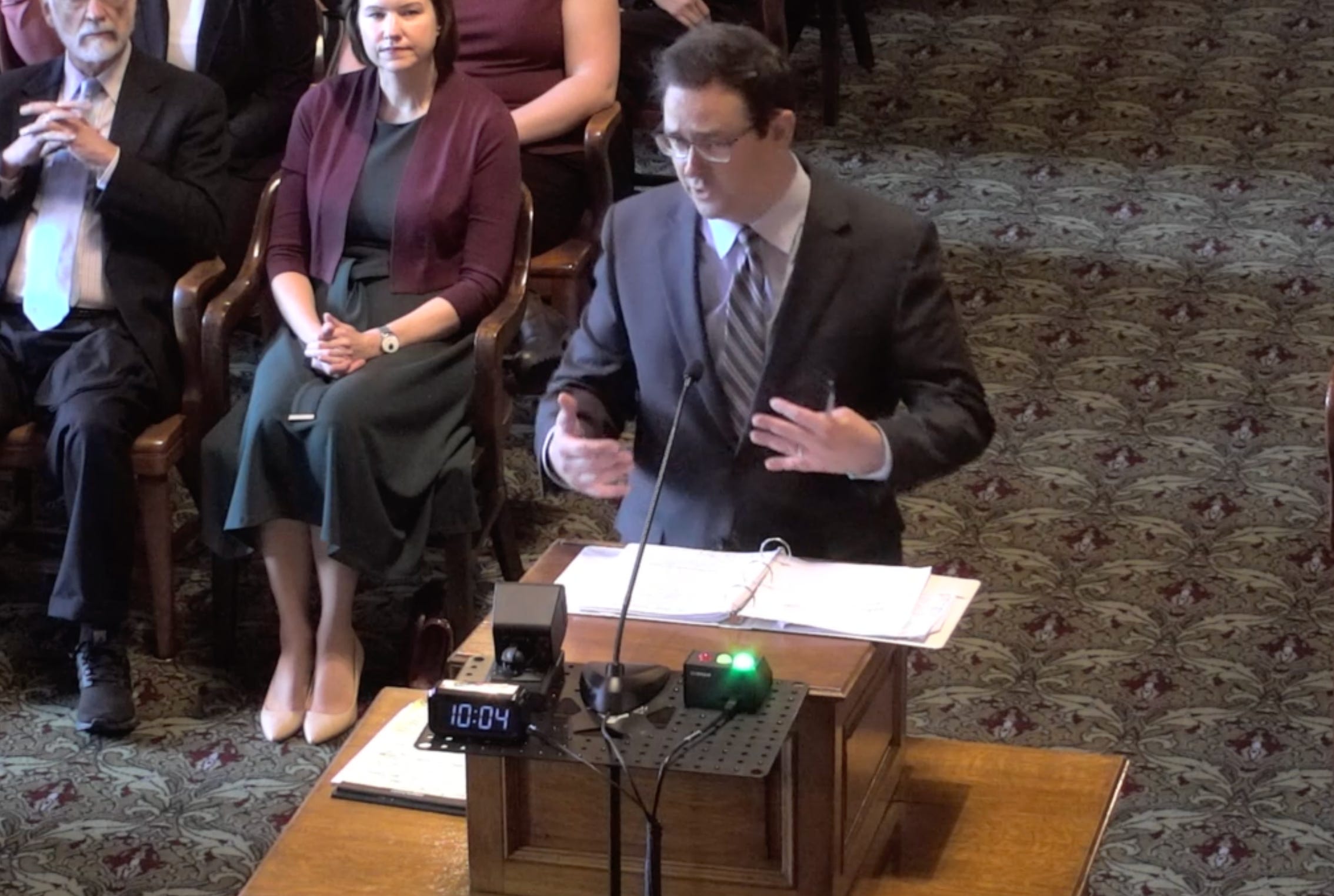
Leeman argued that the state “actively fought to keep him in solitary confinement,” even after a visit from a doctor, who “sees that he’s incommunicado on the floor, covered in feces, in filth, that he’s got feces coming out of his mouth, that he’s basically almost a vegetable,” leading to Allen being given doses of Haldol, an anti-psychotic medication.
Leeman argued that pretrial conditions call told judges were “unprecedented” brought on a psychotic state that led to admissions overheard – both by fellow inmates assigned to monitor what he said and in phone calls to his family – that he’d killed Abby and Libby.
Leeman argued that the conditions, while not an interrogation, amounted to coercion leading to Allen’s statements. Leeman argued that when Allen’s trial lawyers raised that point, it was brushed off by Gull.
Meilaender contended that Allen’s confessions were voluntary, pointing to ones that came before and after the diagnosis of psychosis. She said the record suggests that Allen, who had pre-existing mental health issues, started making confessions under “the combined psychological effect of his religious conversion and his confrontation with the legal discovery” while he was being held.
“It was this sort of psychological need of his own to know that his family would still love him and would still forgive him,” Meilaender argued. “That was very important to him. That’s evident in the calls that he makes to them. That’s why he has this need to tell them, ‘No, I really did do this.’”


Meilaender also argued that Allen had better conditions than other inmates being held in the segregated unit at Westville – despite Leeman’s reference to it as “the hole.” She said Allen had access to a computer tablet, TV and some visits that others did not.
Leeman said jurors did not get the full impact of Allen’s state of mind, when they were shown video of him being moved from one part of the unit to another. During the trial, Gull allowed jurors to see the video but not hear it in context with the audio.
“The screams for mercy or screams for his father – the videos undermine not just the credibility of his confessions, but every single witness that the state put on the stand to say that those confessions were cogent, coherent, clear,” Leeman said. “They had a man working full time, listening to him and saying that his confessions were true because he listened to them and felt like they were true. If the jury hears those videos … there’s no way that they reach the same conclusion that the paid guy who’s working full time to listen to Richard Allen and testify, and the conclusion he reaches. The jury’s going to say that state’s witnesses are liars.”
Vaidik said that “what really disturbs” her was that when the defense asked to get Allen out of Westville, that state said he was doing well and that everything was fine.
“And the court then doesn’t have a hearing and says, ‘We’re not going to move him,’” Vaidik said. “Isn’t that of itself coercion?”
Meilaender argued it wasn’t. She argued that those dealing with Allen’s mental health were telling him it wasn’t in his interest to say the things he was saying to them.
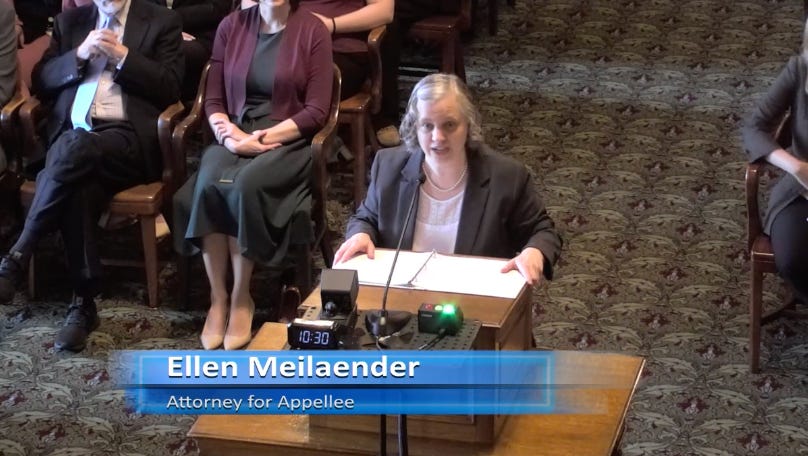
“During that time,” Meilaender said, “they were not attempting to exploit his mental health. They were not interrogating him at that time.”
Vaidik continued, recounting that Allen was being held in a cell eight-feet wide, without control of lights and with someone outside recording everything he said or did.
“And this happened for 13 months,” Vaidik said.
Meilaender said that Allen would have faced segregated conditions in any pretrial holding, whether in a state prison or county jail, given the high-profile nature of the crime.
“Have you seen the videos?” Vaidik asked Meilaender. “Is it your position that he was treated better, or at least the same, as other people in Westville?”
Brown added: “In a pre-trial detention situation, where he’s presumed innocent?”
“There had to be protections in place, again, to protect him and his own safety, and that was what was going on,” Meilaender said. “And our case law is clear that those ordinary conditions of even restrictive housing confinement are not coercive state action that renders a statement involuntary.”
Brown replied: “You protected him into psychosis.”
Brown also said she wondered whether the court “improperly placed the burden of proof” on Allen about whether his statements were voluntary, rather than the other way around.
The sketches and possibility of other suspects: Leeman several times retrieved a sketch investigators had shared widely in the years before an arrest but that were blocked from use in the trial. One of those sketches indicated that Bridge Guy had “brown ‘poofy’ hair … was in his 20s or early 30s, youthful and medium build.” Prosecutors successfully argued a day before testimony in Allen’s trial start that the sketches had been used as a tool for investigators only.
Altice said the sketch Leeman was showing “is hearsay and that there’s a plethora of case law saying that type of thing should not come in.” Vaidik said that “recent case law, though, is to say that the artist’s sketch is like a picture, and if someone says it’s a fair and accurate representation, then it comes in.”
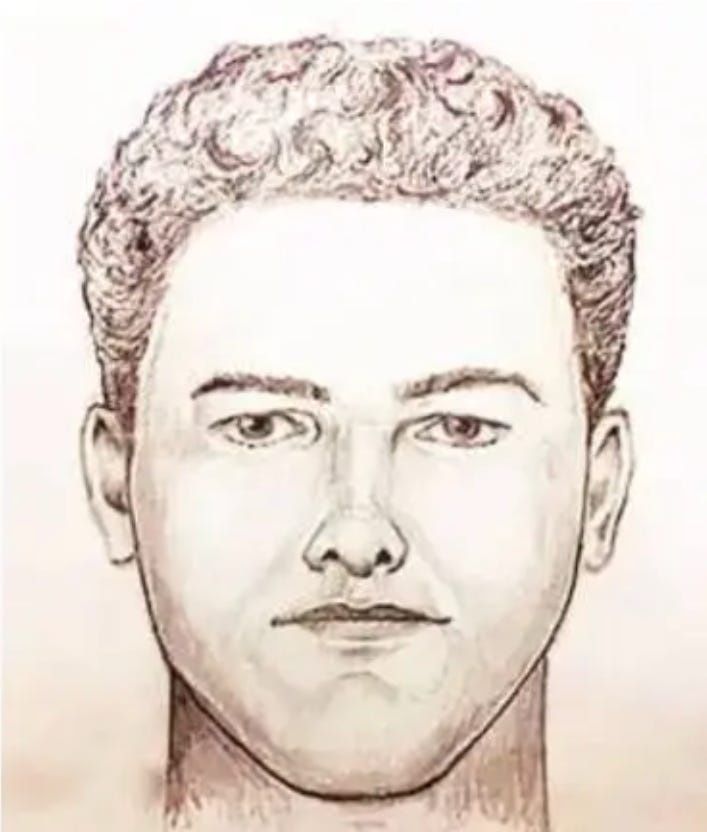
“(Witness) Betsy Blair identifies this man as Bridge Guy, and he’s not our client,” Leeman argued during Monday’s hearing. “There’s no DNA evidence. They want to make this case about when Richard Allen was on the trail system, rather than the better question, which was: Was he the only man there? The answer to that is no, he wasn’t the only man there. And you didn’t get to present the evidence of the other man who was there at the trail.”
Meilaender said Allen’s attorneys were allowed to present evidence at trial of Blair’s description and argue that it was not consistent with Bridge Guy.
“But the picture is worth a thousand words,” Brown said.
“Even so,” Meilaender said, “the defendant was trying to use it not for impeachment, but as substantive evidence that he was not Bridge Guy because it excluded him as being the suspect. And as the expert testified, that is not the proper use of the sketch. Just as the state couldn’t use it.”
Leeman argued that Allen’s attorneys were not able to show that other men were suspected of being Bridge Guy or tied to the crime – namely Odinists, headed by a Logansport man named Brad Holder, whose son knew the girls. The judges said the man in question had an alibi for that day, based on his work sign-out records at a landfill a half-hour away and a key fob check-in at a gym in Logansport. Leeman said Allen’s trial attorneys were blocked from refuting that alibi when Gull rejected the ritualistic murder theory.
Leeman said the way sticks were arranged on the girls – described by investigators during the trial as an attempt to hide their bodies – “was purposeful, intentional.” He said Holder posted on social media shortly after the murders a picture of a tattoo he had on his hand of a rune in a shape “that mirrors” the arrangement of sticks found on Abby in crime scene photos.
“That connection is unprecedented,” Leeman argued. “And the jury was entitled to weigh it.”
For more on the appeal, including filings from both sides leading up to Monday’s oral arguments, check:

Watch the Indiana Court of Appeals oral arguments here:

Thanks, again, for support for this edition from the Art Museum of Greater Lafayette, presenting Art on the Wabash. The juried art fair will be 10 a.m.-4 p.m. Sunday, Sept. 27, at Tapawingo Park in West Lafayette. Admission is free. For more, check out Art on the Wabash here.
Thank you for supporting Based in Lafayette, an independent, local reporting project. Free and full-ride subscription options are ready for you here.
Tips, story ideas? I’m at davebangert1@gmail.com.