

Thanks to Stuart & Branigin for continued support of the Based in Lafayette reporting project.

STICKING POINTS EMERGE IN RACE TO SET NEW SOLAR FARM REGULATIONS
The first in a series of public hearings on proposed regulations on large-scale solar installations in Tippecanoe County proved that finding the right balance might prove tricky, as the county faces a deadline on a one-year moratorium and hints that companies have projects in the works.
Before an overflow room with more than 100 people Wednesday, neighbors who successfully fought a 1,700-acre, 120-megawatt proposal in western Tippecanoe County in 2025 urged the Area Plan Commission’s Ordinance Committee not to produce new zoning codes that gave companies too much free rein.
They also warned that the first draft of the proposed ordinance – in the works since September 2025 – fails to contemplate battery energy storage that could be tied to solar installations, offer provisions for emergency responders and consider the views of the farming community and real estate professionals on issues of property values and other issues unaddressed in current rules.
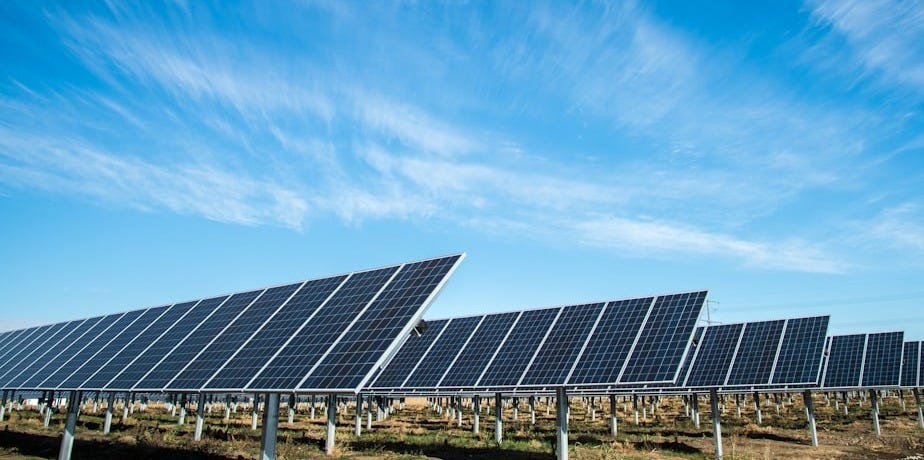
Renewable energy proponents, meanwhile, warned about efforts to plug in restrictions on property setbacks and more that essentially turned zoning codes into bans on large-scale solar.
“The APC group that met together essentially has run out of time to bring you a balanced, comprehensive and well-reasoned set of recommendations,” Kenny McCleary, a homeowner who was part of the task force assigned to help negotiate new solar rules, said. “As a committee member, I do not agree with all the conclusions tonight which are tagged as consensus. I think they’re good starting points, but there’s more work to be done.”
Jane Frankenberger, a Purdue professor of agricultural engineering and another member of the committee assigned to the solar issue, told the APC’s Ordinance Committee attempts to reach consensus “were not fully successful.” Frankenberger said that over the course of nine meetings, compromise on several key issues – including size limits on solar installations and the distance required between solar panels and neighboring properties – broke down in last-minute alternatives “that most believe are unreasonable and would function as a de facto ban on solar development in Tippecanoe County.”
“Unfortunately,” Frankenberger said, “the document before you presents a range of alternatives for several decisions, but some appear to be motivated primarily by a desire to deter large scale solar development disregarding the council’s well balanced approach to solar energy planning.”
The APC Ordinance Committee spent Wednesday going through those recommendations, sorting potential rules on setbacks, noise, size, glare and third-party reviews of utility-scale proposals. They acknowledged a time crunch to get an ordinance to the full Area Plan Commission by April 15 and then to county commissioners before a moratorium lifts June 2.
