

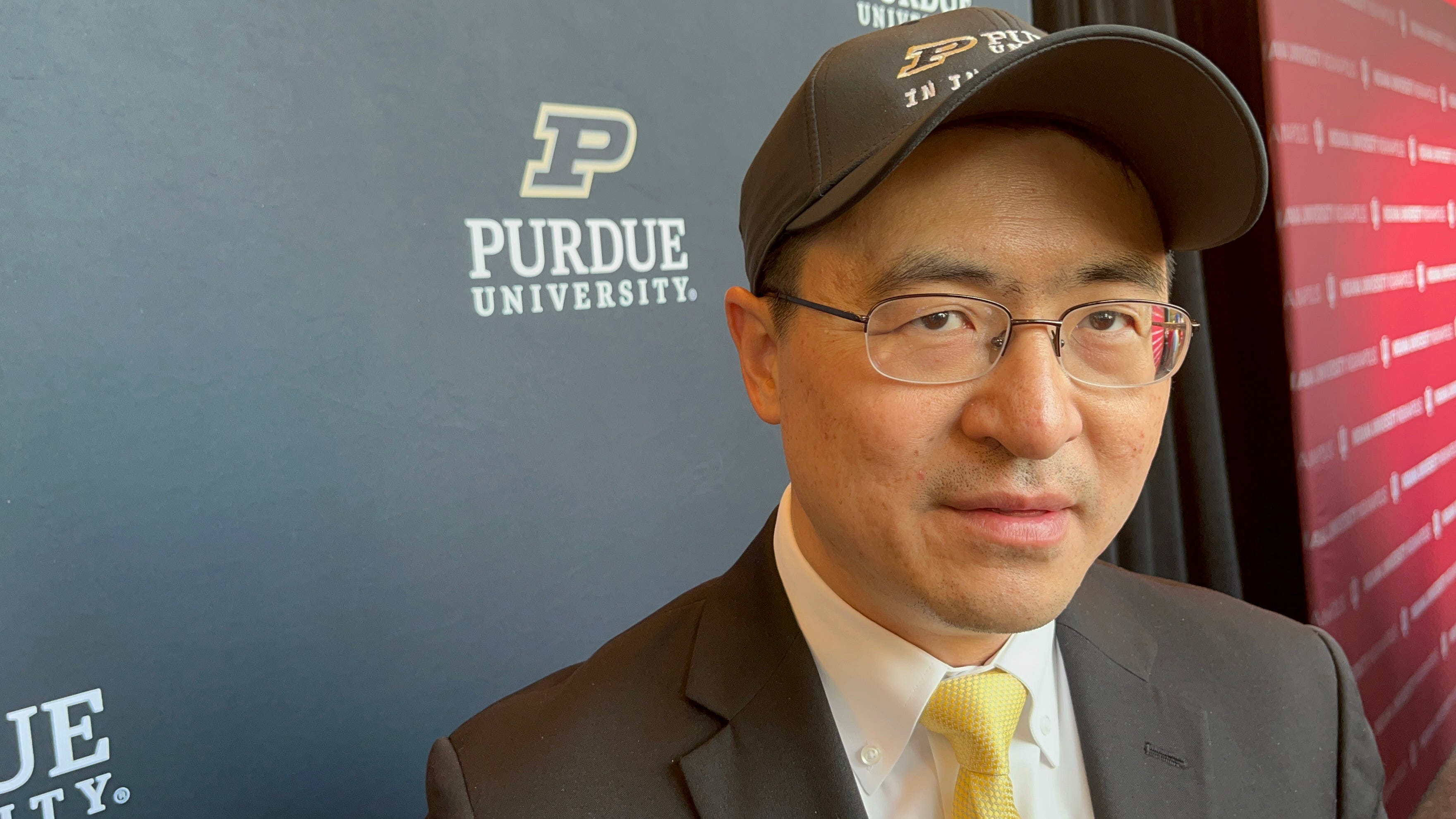
Sendoffs for Purdue presidents typically have more fanfare, more lead time, more chances to, say, consider a bust for the Purdue Memorial Union and naming opportunities – streets or recitation halls or student rec centers.
So, the days in the wake of Monday’s sudden announcement that Mung Chiang – president at Purdue since Jan. 1, 2023, and engineering dean before that – was heading to private Big Ten rival Northwestern University have been a bit, well, awkward.
Word of Chiang’s pending exit, announced via six paragraphs in a university email plus a follow-up letter from the outgoing president two days after the last of the spring 2026 commencement ceremonies, went out to a campus largely empty.
Purdue trustees, as of Wednesday, hadn’t added more about the departure due July 1, other than to say an interim president would be named “in the coming weeks,” with a search starting shortly after that for someone to fill the position.

Against that backdrop, here’s a Q&A with Julio Ramirez, the Karl H. Kettelhut Professor in Civil Engineering with 40 years at Purdue and the incoming chair of the faculty-led University Senate for the 2026-27 academic year.
As vice chair for the past year, Ramirez worked with Chiang and other top administrators on a range of campus issues in the faculty-led University Senate’s advisory role on campus.
These are excerpts from a conversation Wednesday about the news and expectations about what’s next for Purdue.
Question: How did that announcement come to you? And what are your thoughts about the university going forward? What’s your take?
Julio Ramirez: We’ve worked closely, especially since I became the vice chair with the administration. This includes both the president and the provost and other lead administrators in trying to do just that. It is not an easy environment in terms of the federal government and all those external pressures, but we try to do our best to make sure that our colleagues and staff and students are able to accomplish the goals while they are at the university, in a way that is not only productive, but, most importantly, satisfactory to the individuals here.
I have to say that President Chiang – I met and had interacted with him before, because he was our dean of engineering – is an extremely smart individual. My experience was always positive in regard to what he wanted to do to improve Purdue University. And I think the message from the board of trustees is very clear in that regard – he accomplished a lot in the short period of time that he was president of the university. And I can say the same while he was dean. …
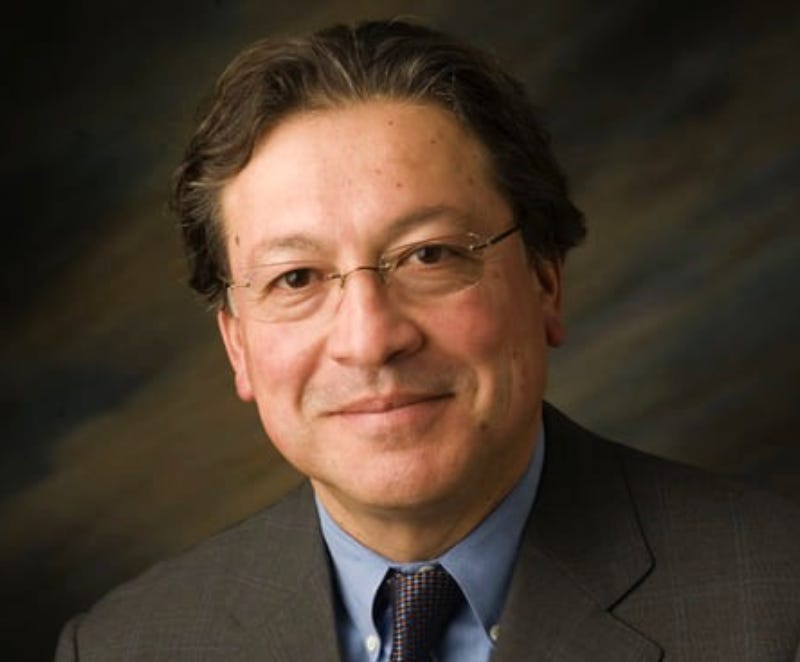
When I learned that he was leaving, it was a with mixed emotions. I was happy because he is going to his next challenge at a university like Northwestern – a private environment compared to the state university where he was. In that sense, I was happy for him. I was sad for us, because we lost a leader in a relatively short period of time. I honestly hoped that he would have stayed with us longer, but that is not under my control. That is something between him and the board of trustees and his family.
Question: People have always speculated that he might be going on to the next thing – including the trustees, as they gave him a new contract, saying they knew he was in demand. Were you surprised by the move this week?
Julio Ramirez: It’s not something, as you said, that was out of the realm of possibility. I mean, I followed his career after he joined Purdue, and it was clear that he is a man that likes new challenges. And I knew about his family situation, and the fact that his wife (Dr. YingKei Hui) wanted to exercise her profession. Obviously, Northwestern has a fantastic medical school. So, no, it was not like, Oh my God, I never imagined he would leave Purdue. I wish he’d stayed longer with us, but as I said before, many factors probably influenced in his decision and I respect it.
Question: Is it safe to say you were a fan of his?
Julio Ramirez: I wouldn’t go as far as saying I was a gung-ho fan. I enjoyed working with him. I understand that there are nuances in his job. Some of them I cannot even imagine, because I’ve maintained myself away from administration through my career of 40 plus years at Purdue. … I understood the fact that maybe some might disagree or not fully agree with what he planned. But I think my perception from his activities and what he did while he stayed at Purdue is he wanted Purdue to move up in the rankings. He wanted us to be the top university. And how can you blame someone for that?
Purdue is certainly one of the lead institutions, both public and private. I know that from experience when I travel abroad or in meetings, you can find people quickly that know Purdue and know about Purdue and the reputation. So, I understand the value of that desire. It does many things. It facilitates my work in terms of getting funding, because when I go to talk to NASA or (National Science Foundation), they don’t say, “What’s your university? Or what kind of resources do you have?” They assume we’re going to have the resources to do a large contract – and if you look at my record, I’ve gotten some pretty large contracts, which wouldn’t have been possible without the support from the administration. Once you get above a certain level of individual grants, even a small group grant, you can’t do it as faculty without the support from the institution. So, I can understand why he was always pushing to get our resources better, our facilities better, and then for us to improve the ranking of the university. In this business, it used to be, in the old days, if you had a fantastic lab and you were the sole professor, and you wrote papers, and your students did well, you were fine. But now, with the current challenges that we have, you can’t do it alone. It’s so multidisciplinary that you need the university as a whole – not for everything, but in various aspects to support your work. When the university moves up, it’s like a tide. It raises all boats. So I can understand his commitment to excellence. Yeah, like I said, I was not wearing a hat with his name, but I understand what he was trying to do and accomplishing them. Obviously, Northwestern thought that they wanted that, too.
Question: After 40 years, your time dates back to President Steven Beering. How would Mung Chiang rank or fit into that progression from Dr. Beering to Martin Jischke to France Córdova to Mitch Daniels then him?
