

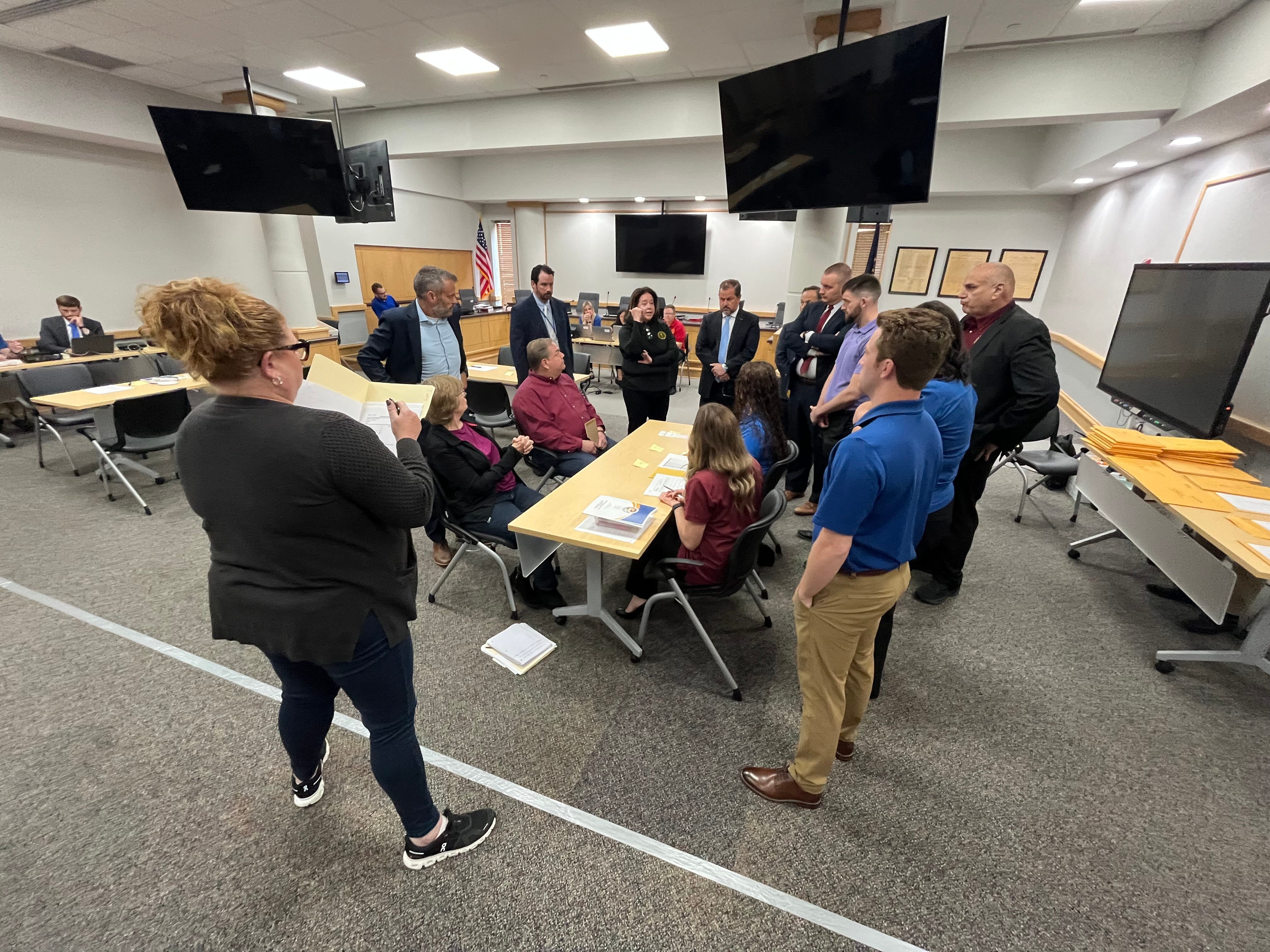
With the Indiana Recount Commission set Tuesday to review results of a two-week, six-county hand count of state Sen. Spencer Deery’s three-vote victory over Paula Copenhaver in the May GOP primary, the challenger’s attorneys doubled down in their demands to subpoena 11 voters she suspected tampered in the Indiana Senate District 23 race by illegally crossing over to pull Republican ballots.
Even without precedent in the state election history or a specific law pointing that way, Copenhaver’s attorneys argued in a 67-page, Friday night filing that the Indiana Recount Commission has power broad enough to fill in the gaps of state law and remove those votes for Deery and hand the victory to Copenhaver.
“The fact that the precise remedy that the Commission should afford (Copenhaver) in this case is not spelled out in the contest statutes is not a problem and does not prevent the Commission from shaping the appropriate remedy,” William Bock, attorney for Copenhaver as she contests the election, wrote in a filing sent to the recount director Friday.
Bock’s upshot: If the three-member Indiana Recount Commission is persuaded that enough of those 11 voters singled out and accused by Copenhaver did not adhere to a little-known provision of primary election law, she would have “received the most legal votes in the primary election, which would eliminate any need to conduct a special election in this case.”
An attorney for Deery’s side already called out that tactic, calling Copenhaver’s attempt to salvage a campaign backed by President Donald Trump by ordering a handful of voters about what they did at the ballot box unprecedented and egregious. Deery’s attorney called it an excuse “to abuse the process or conduct an open-ended fishing expedition to harass non-party voters.”
The Indiana Recount Commission is expected to consider the voter subpoena request for the first time Tuesday morning in Indianapolis.
That morning, Evan Norris, a Zionsville-based attorney assigned to oversee the recount process, is expected to deliver a report to the commission of the precincts with ballots disputed during State Board of Accounts reviews in June.
According to a filing Friday, that includes more than 250 disputed ballots in a race that stood at 6,337-6,334 in Deery’s favor across Tippecanoe, Fountain, Warren, Parke, Vermillion and Montgomery counties.
The Recount Commission also is expected to consider questions about single ballots that went Deery’s way and how they were handled by election officials in Tippecanoe and Parke counties.
A key, though, will be how the Indiana Recount Commission – including Secretary of State Diego Morales and members Paul Mullin and Michael Claytor – deal with subpoenas for the voters first called out in May in Copenhaver’s motion to contest the election.
At the center of Copenhaver’s complaint are voters who posted on social media or commented in news accounts – specifically, in a Based in Lafayette article after the primary – that they pulled Republican ballots despite typically voting for Democratic candidates.

In Indiana primaries, where residents aren’t required to register with a political party, voters are allowed to ask for either a Republican or Democratic ballot at the polling place. At issue here is a state election law that sets parameters allowing someone to pick a primary ballot if they voted for a majority of that party’s candidates in the last general election or, if they didn’t vote in the most recent general election, that they intend to in the upcoming election. That state law provides a way to challenge someone at the polling place looking to pull a crossover ballot. Copenhaver’s filing contends there are ways to challenge a crossover voter after the polls close, too.
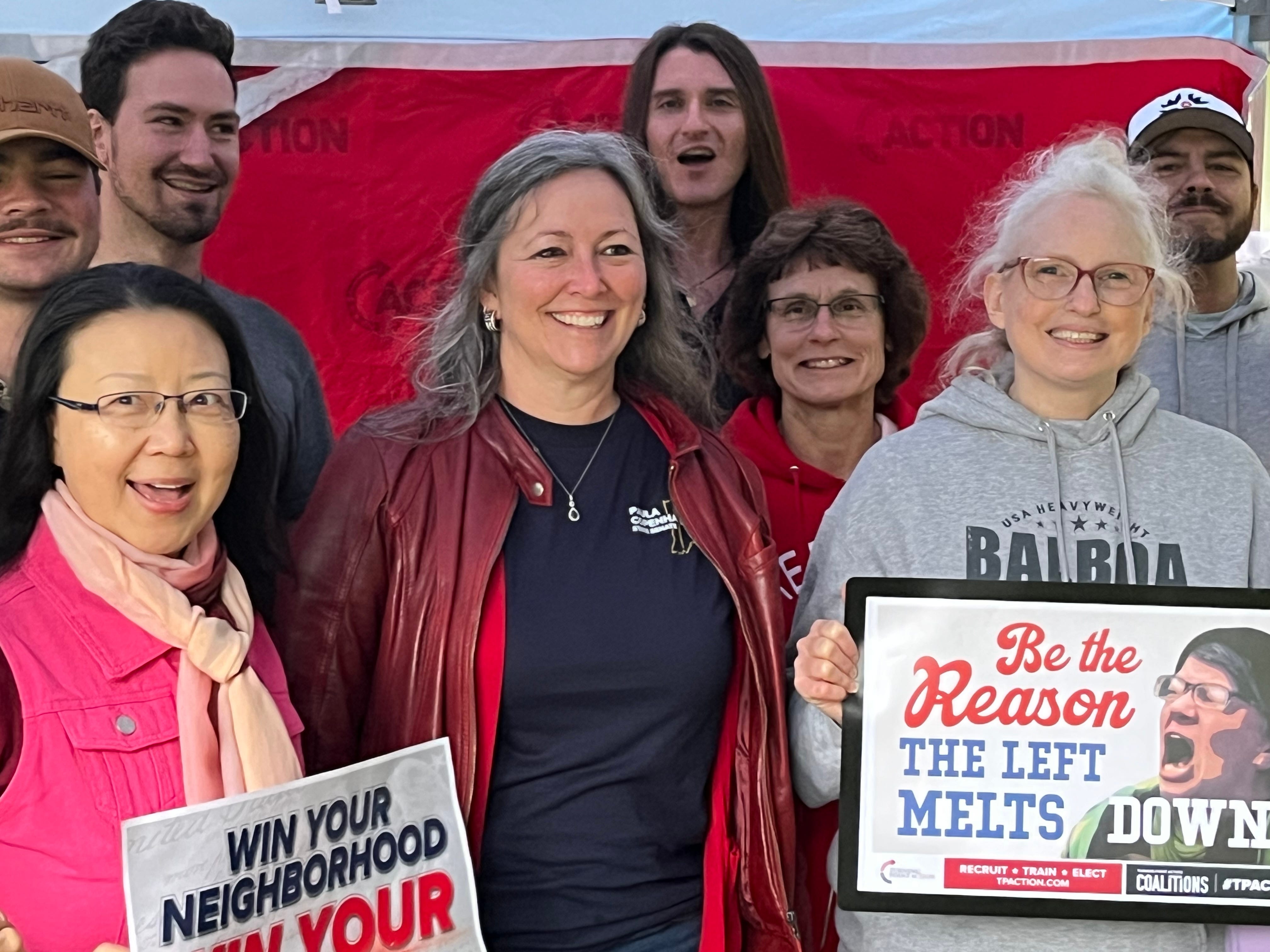
In Copenhaver’s petition, Bock argued that “as with most constitutional rights, however, ballot secrecy is not absolute,” that voters gave up that privacy when they “boasted” about their choices publicly and that statements harvested by Copenhaver’s side after the primary “are indicative of a purposeful effort by one or more individuals to personally cast and/or to encourage other to cast invalid votes for candidate Deery.”
Samantha DeWester, at attorney arguing the case for Deery’s campaign, wrote in filing earlier this month that “the (Recount Commission)’s power should not be used to harass or intimidate voters in an attempt to overturn an election.”
“There is no crime,” DeWester wrote, arguing to dismiss Copenhaver’s demand to contest the election. “There is no fraud. (Indiana Code) outlines who is eligible to vote in a particular party’s primary election. It is based upon past voting tendencies and future intentions. There is nothing illegal or ‘invalid’ about changing a party primary preference at any time.”

In his response Friday, ahead of the Recount Commission hearing, Bock contended that equating subpoenas to harassment was “self-evidently ludicrous.” He argued that it was an “unsubstantiated and shameful attempt to sully Paula Copenhaver’s public reputation and to inflame and incite the Commission and voters against her.”
Bock disputed Deery’s claim that Copenhaver had gone after “random, unknown voters,” saying that the campaign had the campaign had “unequivocally” validated that they were voters who said in the press or on social media that they’ve voted for Deery “although they were not eligible Republican electors qualified to vote in the Republican Primary.”
(Copenhaver’s initial request included 14 voters, scaled back to 11 after realizing that three people commenting on social media did not live in Senate District 23 and didn’t vote in that race.)
Bock argued in Friday’s filing:
“A voter cannot, consistent with the Indiana Election Code, vote for most of the Democrat Party’s candidates in the prior general election and then be a valid, eligible voter in the next Republican Primary. A person might wish they could change their party affiliation, or they might intend to vote for a majority of Democrat candidates in the upcoming general election but still want to pull a Republican ballot in the primary to try to influence weaker Republican candidates being nominated. However, under the Indiana Election Code an individual cannot legally do so. … Such illegal voting illegally dilutes the votes of eligible primary election voters and it disenfranchises the eligible voters if a sufficient number of illegal votes prevent a candidate with the highest number of legal Republican votes from being elected.”
Bock argued that while solutions offered by the legislature are vague, if voter are proved to have been cast illegally, state law gives the Recount Commission broad power to consider discounting those votes.
Bock also argued that “although lawful voters may invoke ballot secrecy, voters who cast votes illegally can be compelled to disclose how they voted.”
His filing also anticipated voters who, if called, decline to testify under oath.
Several of the voters named in Copenhaver’s motions – since sealed by the Recount Commission – recently told Based in Lafayette they were weighing how they would respond, including the weight of knowing that what they did might set a precedent for voter challenges in future elections.

Bock argued in his filing that criminal and civil hearings have different implications regarding Fifth Amendment protections against self-incrimination.
“Those subpoenaed in this civil proceeding should understand that if they refuse to answer questions, the Commission is entitled to consider the circumstances and determine whether it would be appropriate to apply an adverse inference based on their refusal to testify and surrounding circumstances,” Bock argued.

On Tuesday, the Indiana Recount Commission also is scheduled to consider several other motions by the campaigns, including:
A recent filing in which Bock pressed the Indiana Recount Commission to issue a subpoena for Tippecanoe County Clerk Julie Roush to testify about a ballot counted in Tippecanoe County for Deery the morning after the May 5 primary. Bock argued that the move was made “without an official meeting of the Election Board having been convened or noticed.” The morning after initial results were counted, election officials in Tippecanoe County recorded votes from five absentee ballots that had been dropped off at vote centers before polls closed at 6 p.m. May 5. They said at the time that those ballots should have been counted along with the rest that night. Among those five was one Republican ballot from Senate District 23, Roush said May 6, the day after the primary.
A request by Copenhaver’s campaign to use federal Safeguard American Voter Eligibility Act (SAVE) data to check whether voters had proof of citizenship and were eligible to vote. Deery opposed that motion, saying that Copenhaver offered no evidence that noncitizens voted in the election. “As (Copenhaver) desperately scrambles for votes, she attempts yet another fishing expedition,” Deery’s attorney wrote in a mid-July response.
An objection about the election certification process in Parke County, where Deery picked up one additional vote from provisional ballots counted in the 10 days after the May 5 primary. In question is how that vote was ultimately added to official totals May 21, days after the deadline and after ballots and election equipment were impounded by Indiana State Police for the recount, when Parke County Clerk Nicole Collins emailed the Indiana Election Division after discovering the vote “didn’t get saved when we added it to our totals and the election was certified.” Bock argued that the move, dubbed a “re-certification,” wasn’t covered by state law and that the hard deadline for election certification should apply and invalidate the updated results. In a response last week, DeWester argued that “a clerical, administrative, or transmission error does not change the underlying vote. Nor should such an error be transformed into a mechanism for excluding a lawful vote that the election records establish was cast and counted.”
A request from Deery’s campaign to subpoena Copenhaver to back up her “claims to have personal knowledge” about “unlawful” or ‘invalid’ votes in the primary. Copenhaver had not filed a response to that, as of this weekend.
The Indiana Senate District 23 race is the last remnant of an effort by Trump and White House allies to get revenge against Indiana Senate incumbents who did not back a push to redraw Indiana’s congressional maps to boost Republican chances to pick up seats in the U.S. House. Deery had been particularly outspoken in his opposition to mid-decade redistricting. Copenhaver picked up a Trump endorsement and had the support of more than $2 million in estimated dark money advertising the campaigning trying to upend Deery.
Five of the seven state Senate incumbents targeted by Trump allies already lost in the primary.
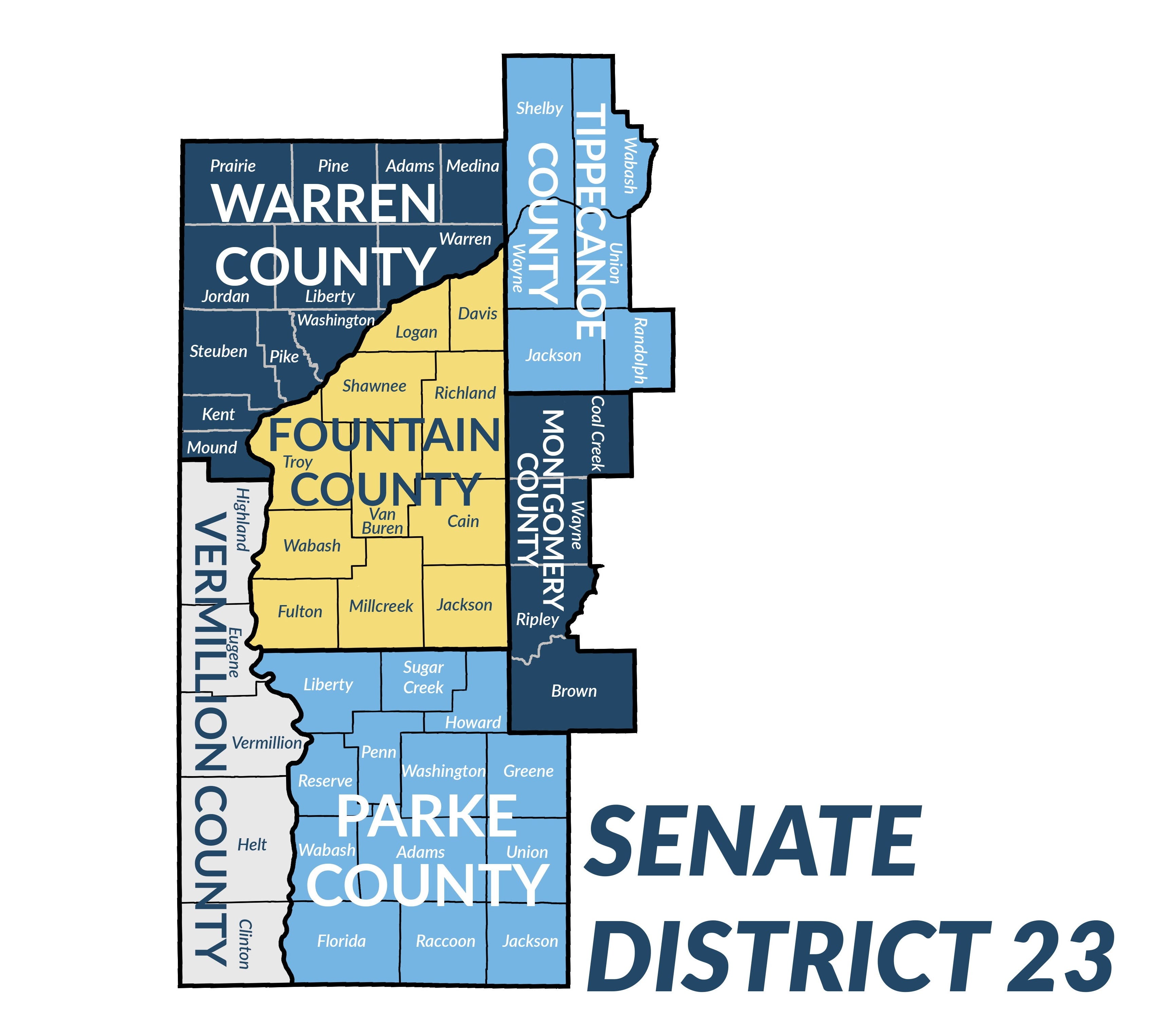
The winner of after the recount in Senate District 23 will face Democrat David Sanders and independent candidate Joshua Brant in a district that includes parts of Tippecanoe, Montgomery, Fountain, Warren, Parke and Vermillion counties.
What’s next: The Indiana Recount Commission will meet about the Senate District 23 recount at 9 a.m. Tuesday, July 28, in Conference Room B at Government Center South, 302 W. Washington St. in Indianapolis. The public hearing also will be available at www.youtube.com/@SOSDiegoMorales.
SECRETARY OF STATE CANDIDATES: WOULD THEY BACK VOTER SUBPOENAS?
Indiana’s Secretary of State is one of three members of the Indiana Recount Commission.
With the Indiana Recount Commission set to consider issued tied to the Indiana Senate District 23 recount, along with Republican challenger Paula Copenhaver’s effort to contest the election, how would candidates on the November ballot for Secretary of State approach things?
In particular, would they agree to subpoena voters to have them testify under oath about the ballot selections?
Based in Lafayette asked the the candidates where they stood.
