

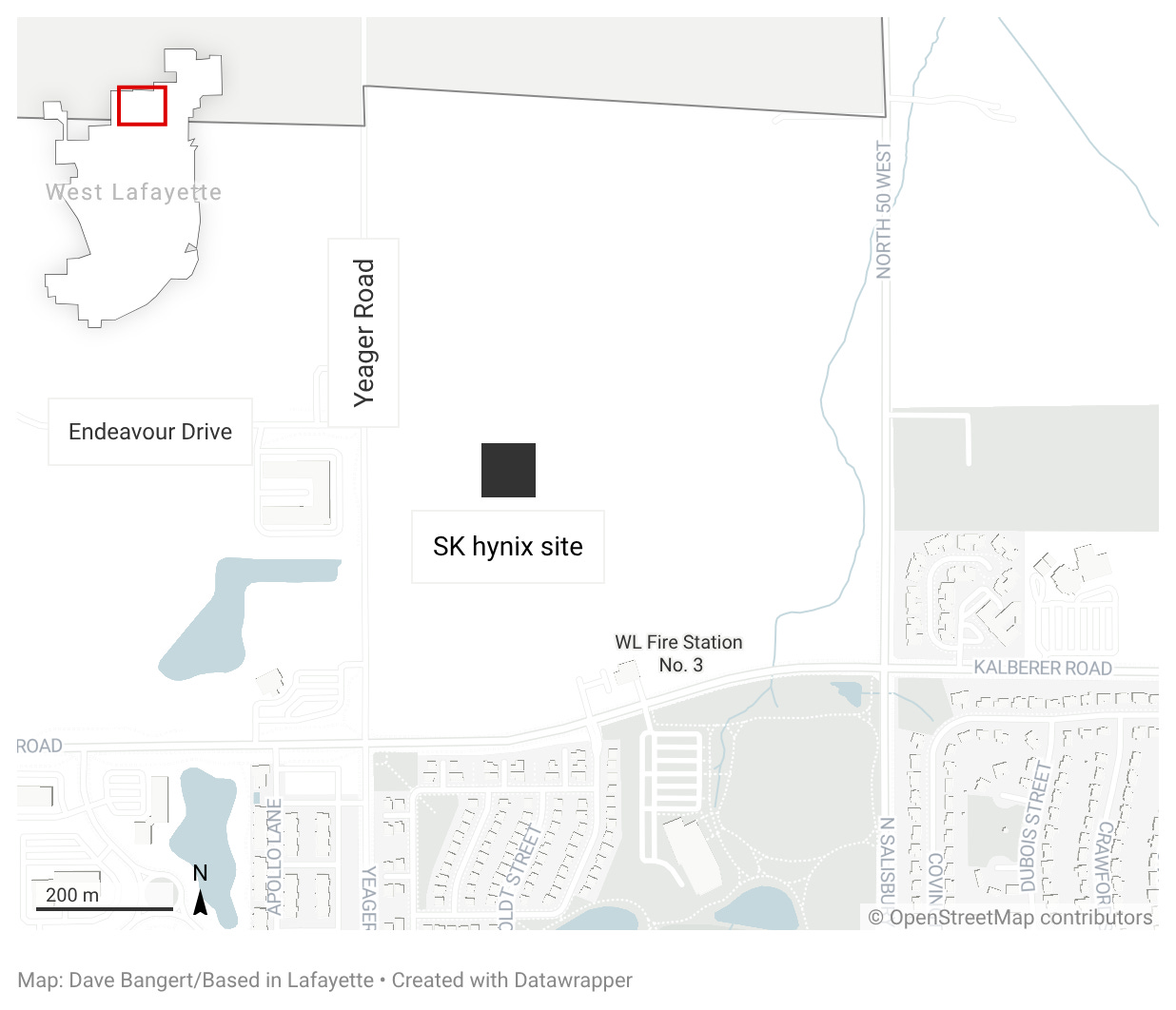
All sides on a pair of lawsuits challenging the location of a $3.87 billion SK hynix semiconductor facility under construction in West Lafayette spent most of Thursday morning sweating through some thick, pre-trial weeds in Tippecanoe Circuit Court.
A few takeaways in cases that have been dragging along for nearly a year, since being filed in June 2025.
Trial date set: Judge Sean Persin set aside Dec. 1-3 for a trial in the judicial review of the May 2025 rezoning that cleared the way for the South Korean company’s 340,000-square-foot high-bandwidth memory assembly plant and research facility north of Kalberer Road.
Persin repeated Thursday that he wanted to get a trial in by the end of 2026, something he’s been saying to all involved in recent months. The judge said he expected to make a ruling in January 2027.
In question are challenges – one filed by Lora Williams, another by Sean Sasser and Karl Janich, all of whom live about a mile from the SK hynix site – that a 6-3 vote a year ago by the West Lafayette City Council to rezone the 121-acre site was arbitrary and capricious, affected their home values and threatened their health, safety and welfare.
Their lawsuits – aimed at the city of West Lafayette, SK hynix and Purdue Research Foundation – argue that the city council overstepped its authority and ignored questions about the adequacy of roads around the site, the impact on property values, demands from residents to know what chemicals would be used in SK hynix’s facility, concerns about water supplies and wastewater processes, the lack of an environmental impact statement before the rezoning and an assessment of what sort of businesses would locate nearby as suppliers for the semiconductor plant.
They’ve raised questions about improper notice about the rezoning process, a general lack of study or evidence about the potential impacts on the environment and the neighborhoods, and allegations of backroom negotiations between the city and SK hynix that influenced what was a controversial decision. The lawsuits contend the city council should have either accepted a 9-5 vote in March from the Area Plan Commission to recommend denial or sent the matter back to the APC for further review.
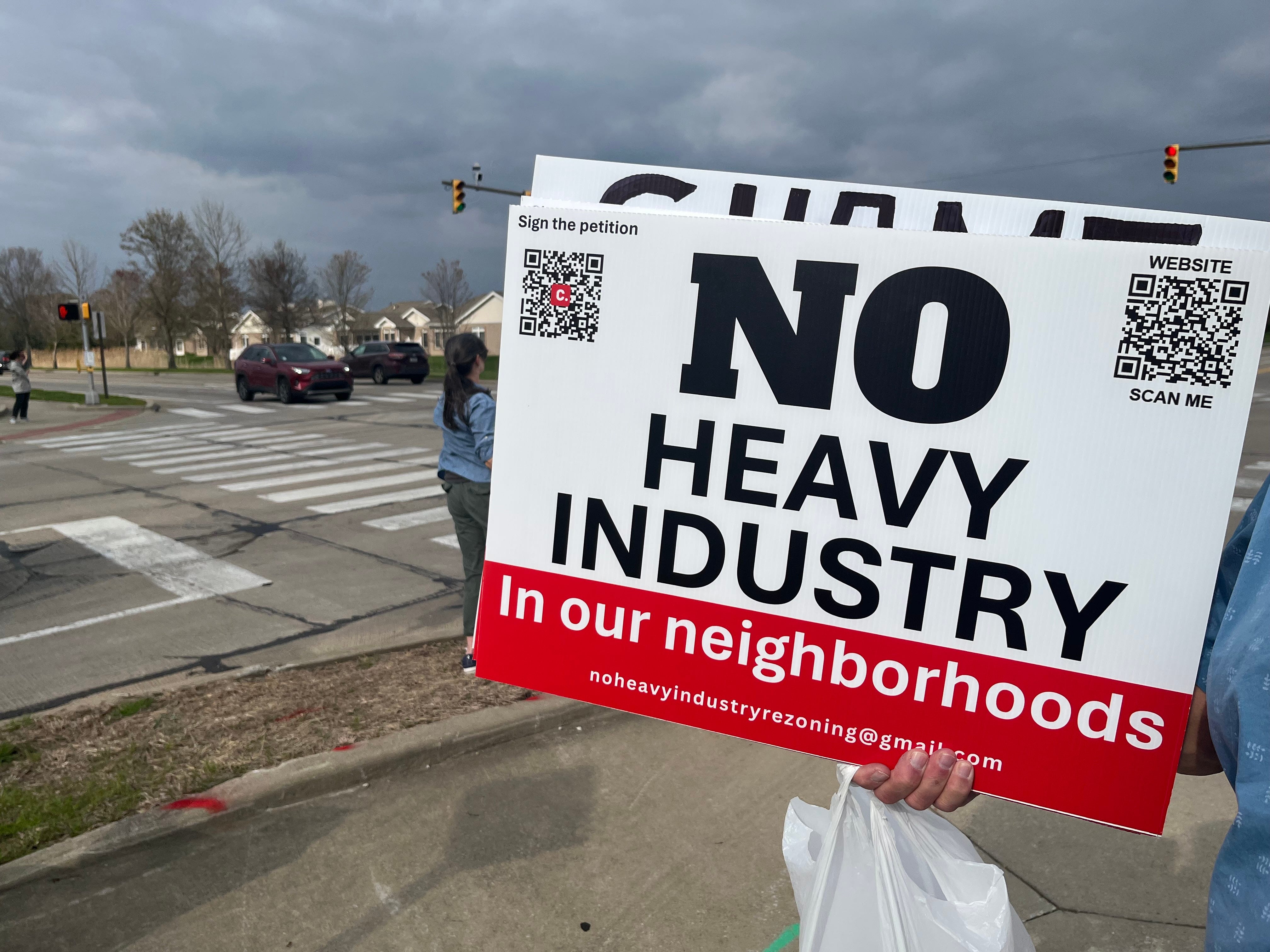
The West Lafayette City Council’s decision remains a lingering sore point and source of ongoing protest for those living in nearby neighborhoods about the sheer scope and risks of putting SK hynix’s project so close to residential areas.
Earlier this week, Persin kept things moving toward a trial, rejecting arguments from SK hynix, the city and PRF that Williams, Sasser and Janich didn’t have standing to bring the lawsuits. Persin ruled the three had sufficient evidence to get to trial, though he left open the question whether they could make the case that they’d been harmed by the city council’s vote.

Was legal notice of the vote enough?: Among the lawsuits’ claims is that a legal notice about a March 2025 Area Plan Commission hearing to consider the rezoning didn’t meet requirements in state law. The notice was the basis of a motion for summary judgment in the case, arguing that if the initial notice wasn’t sufficient, the rezoning couldn’t stand.
Tom Williams, an attorney representing his sister, Lora Williams, argued Thursday that a legal notice published in the Journal & Courier relied on “cryptic zoning code” – referencing a change from R1 to I3 – without explicitly explaining that it would reclassify the property from residential uses to heavy industrial ones. Williams argued that even adding the word “industrial” to the notice would have helped.
“There’s no change that’s more radical, and that augurs for a better notice, frankly,” Tom Williams said.
