

Support for this edition comes from Rat Pak Venue in downtown Lafayette, presenting Afroman at 9 p.m. Tuesday, March 24. The OG Afroman returns to Lafayette performing his hits like “Because I Got High”, “Crazy Rap (Colt 45)” and “Lemon Pound Cake.” And he’s bringing along his friends Graet Daeg and Bank Boi Money. Pre-sale tickets are available for $40. Limited table reservations available for purchase, also. Get tickets here.

FIRST DRAFT OF UTILITY-SCALE SOLAR RULES HEADS FOR PUBLIC HEARINGS
Recommendations developed in recent months by a Tippecanoe County-appointed Solar Study Committee – along with a range of things they couldn’t agree on – will go to the Area Plan Commission’s Ordinance Committee Wednesday afternoon for the first of two hearings pivotal in a rewrite of the county’s rules on utility-scale solar installations.
Pages of proposed changes to the current large-scale solar zoning codes were released Monday, looking at rules about how big solar installations could be, how far panels and other features of the energy system would need to be away from neighboring homes, vegetation management around solar fields, noise and glare levels, and decommissioning rules.

In 2021, the county approved zoning requirements – including those for decommissioning, setbacks and others for agriculturally zoned land – for solar projects of 10 acres or more. Commissioners since have questioned whether those requirements contemplated projects that were more than 100 times bigger. County commissioners imposed a one-year moratorium on large-scale solar proposals to allow a review.
The moratorium came after a proposal surfaced for a 1,700-acre, 120-megawatt Rainbow Trout Solar Project in western Tippecanoe County. That project was filed for required zoning exceptions before the moratorium went into effect.
That project was rejected by the Board of Zoning Appeals on a 4-3 vote in August, amid pushback by neighbors and despite pleas from renewable energy advocates.

RWE Energy and Geenex, the companies tied to the Rainbow Trout Solar Project, are in court now, asking for a judicial review of the BZA decision. That case includes a group of 11 neighbors who have been allowed by a judge to intervene in the case to make sure their objections to the proposed project are presented. After granting an extension until March 9 for Rainbow Trout to compile the record of the BZA case, the court hasn’t additional hearings in the case, as of Tuesday.
With that backdrop, county commissioners assembled a committee of homeowners, solar industry representatives, Purdue experts and others to help craft updates zoning rules.
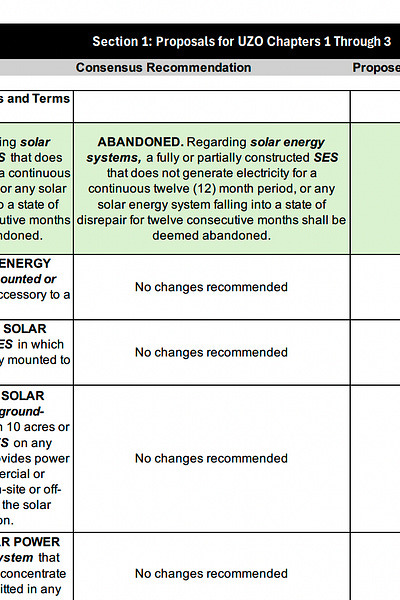
What the committee settled on – and didn’t settle on – are color-coded in a series of spreadsheets, Ryan O’Gara, APC executive director, said.
“Items shaded in green are elements that achieved consensus by the study group,” O’Gara said. “Items in yellow are elements that did not achieve consensus and multiple alternatives are offered. Items not shaded are elements where no change was recommended.”
The recommendations: The spreadsheets are available via APC’s site.
Here are PDFs breaking down the recommendations for definitions and permitted uses; zoning guidelines for solar energy systems; and the decommissioning process.
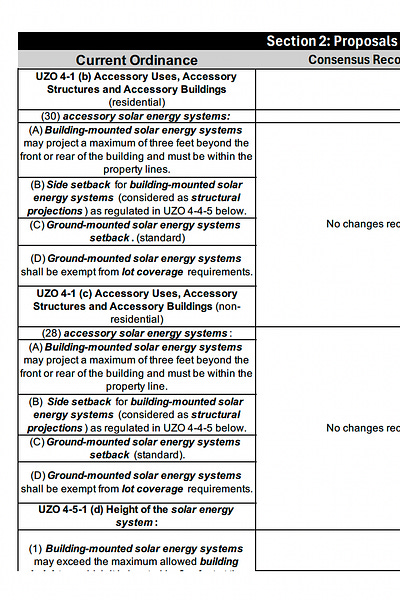

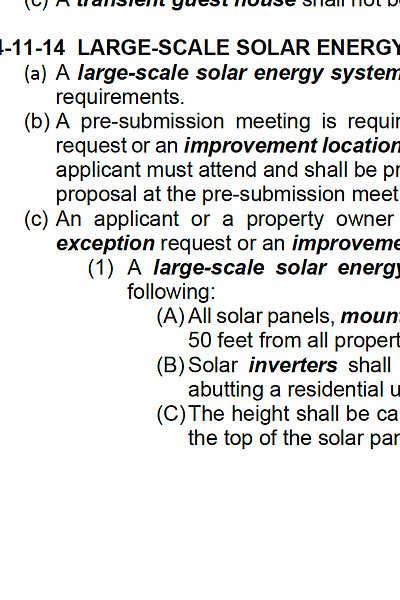
The current ordinance: This is what’s in the current Unified Zoning Ordinance for solar installations.
What’s next: The Area Plan Commission’s Ordinance Committee will hold two meetings – 4:45 p.m. Wednesday, March 4, and the same time April 1 – to take public comment and consider recommendations to send to the full APC for an April 15 meeting. A recommendation from the full APC would go to Tippecanoe County commissioners May 4. The county’s one-year moratorium on solar projects lifts June 2.
THIS AND THAT/OTHER READS …
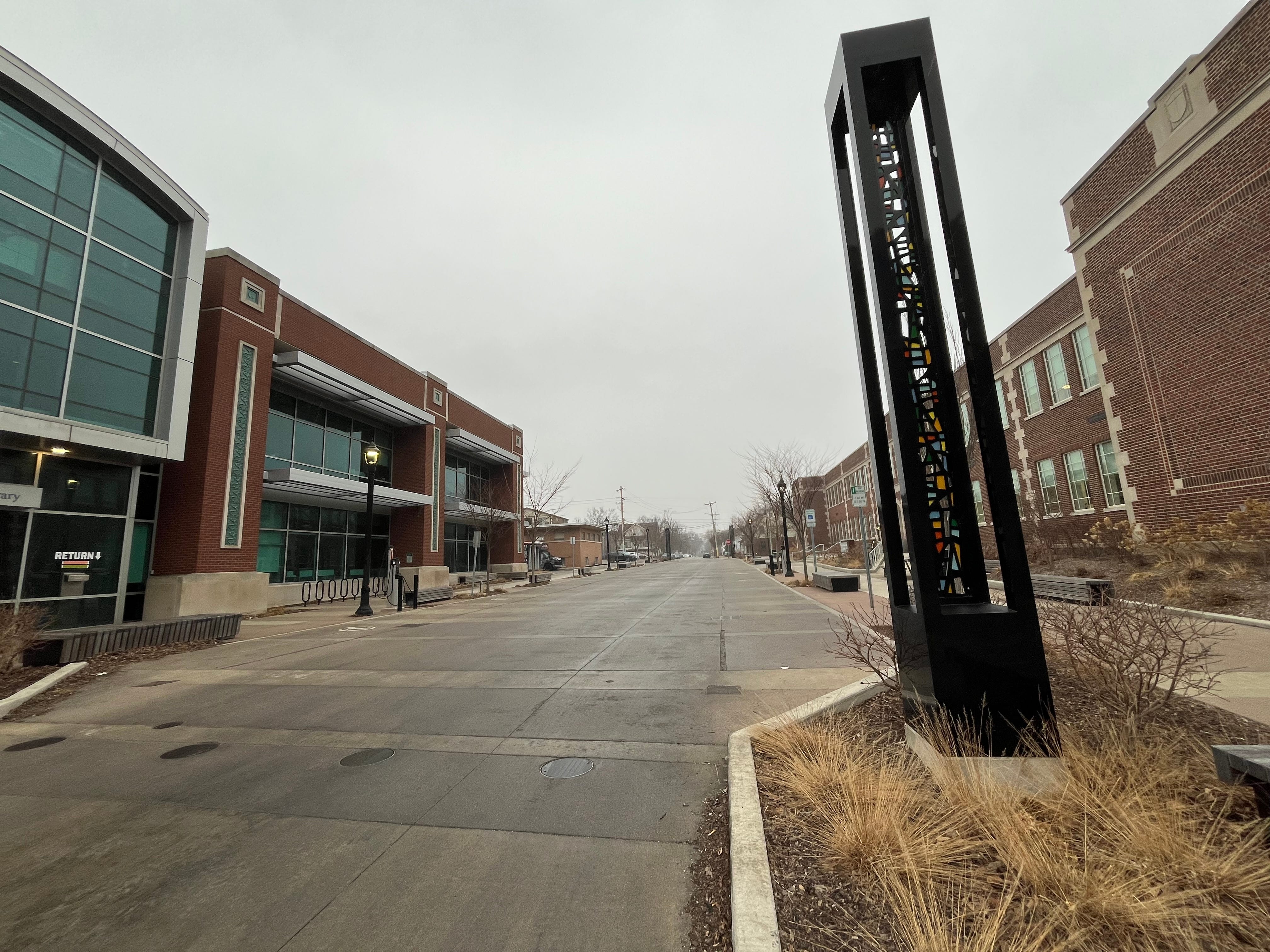
BLOCK IN FRONT OF CITY HALL TO HONOR FORMER WL CITY JUDGE: West Lafayette will honor Lori Stein Sabol, former longtime city judge, this month by dedicating one block of North Chauncey Avenue in her name. Signs in the 200 block of North Chauncey – which runs between city hall and the West Lafayette Public Library – will note that stretch as Lori Stein Sabol Way. Stein Sabol, West Lafayette’s city judge since 2001, died in May 2025. Stein Sabol was appointed as city judge by then-Gov. Frank O’Bannon and was elected to the seat for six terms after that.
The dedication ceremony will be 2 p.m. Sunday, March 22, in front of city hall, 222 N. Chauncey Ave. On Tuesday, the city’s board of works approved a street closure on that block from the morning of Friday, March 20, until 8 a.m. Monday, March 23.

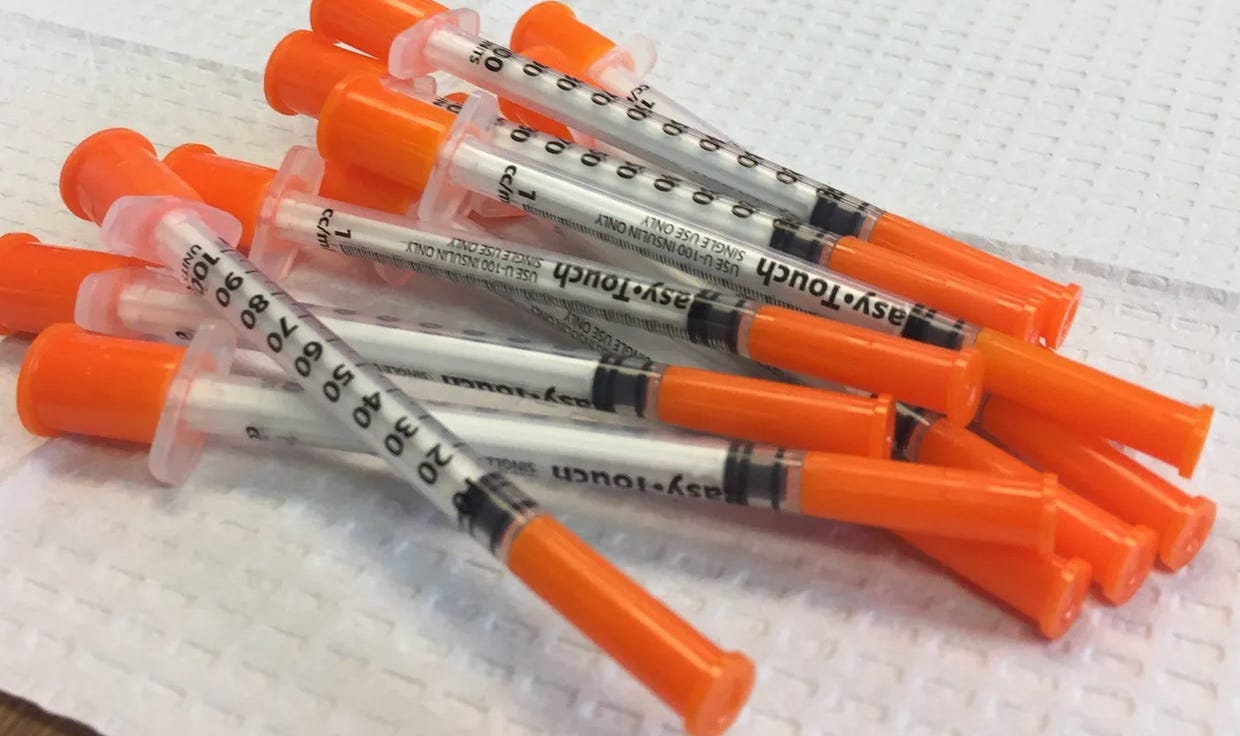
MONTH-TO-MONTH FOR COUNTY’S SYRINGE EXCHANGE: A renewed lease for Gateway to Hope, Tippecanoe County’s syringe exchange, moved this week from an annual contract to a month-to-month situation as state legislation authorizing the services awaits a signature from Gov. Mike Braun. The county has leased space at 2300 Ferry St., home of The Hive Recovery Hub, for a program started in Tippecanoe County in 2017. Gateway to Hope is one of six authorized programs in Indiana, according to the state Department of Health. Senate Bill 91, which would allow the continuation of syringe exchanges with some additional restrictions for another five years, cleared the Indiana House and Indiana Senate. “So, the legislation passed and it’s on the governor’s desk, but it’s uncertain whether he’ll sign it?” Commissioner Tom Murtaugh asked Monday. Stacie Rees, county health department administrator, that was the case and that she’d worked with the county attorney for a month-to-month lease “because the (syringe services programs) are undecided at the Indiana governor’s office.”
ACCESSORY DWELLING UNITS EXPANDED IN PARTS OF THE COUNTY: Lafayette and West Lafayette city councils rejected new zoning codes that would have allowed accessory dwelling units, which are smaller, secondary residences on a lot that already has a home. But Tippecanoe County adopted them for the unincorporated areas outside the cities. Ryan O’Gara, APC executive director, said those standards, designed initially for more urban settings, proved to be too small. On Monday, Tippecanoe County commissioners approved revised definitions that would bump the maximum size of so-called “granny flats” from 750 square feet to 50% of the gross floor area of the primary dwelling, up to 1,200 square feet. O’Gara said the new, larger standards would accommodate the sort of requests planners had received about ADUs on larger tracts outside the cities.
‘BEYOND THE BRIDGE:’ A FOLLOW-UP: A November 2025 screening of “Beyond the Bridge: A Solution to Homelessness” – a pair of filmmakers’ look at homelessness and solutions to get people housed – brought more than 300 people to Connection Point Church in West Lafayette. On March 10, local advocates will meet for what they’re calling Beyond the Bridge Community Open Forum as a follow-up and a conversation about solutions possible in Greater Lafayette. The forum will be 5 p.m. Tuesday, March 10, at Connection Point Church, 2541 Cumberland Ave. in West Lafayette. It’s free. To RSVP, here’s a link.

COMMUNITY CALLOUT: NICHES’ ‘WAR ON WEEDS:’ NICHES Land Trust is looking for help with its seventh annual “War on Weeds,” an effort to get rid of garlic mustard and aggressive invasives at the nonprofit’s natural preserves across several counties. The effort will be April 10 to May 10, with 15 volunteer shifts scheduled at NICHES properties located within a 10- to 50-minute drive from Lafayette. From NICHES on how garlic mustard pulls are key to the organization’s and stewardship program, which also includes prescribed fire and forestry mulching: “Garlic mustard is a highly damaging invasive species that has spread widely throughout Midwestern woodlands. Because it germinates early in spring, it easily outcompetes native plants that emerge later in the season. Infestations can alter soil chemistry, overwhelm the forest understory, and diminish the vibrant display of native ephemeral wildflowers.”
A schedule and registration information for volunteers are available at nicheslandtrust.org/war-of-the-weeds. (Looks like there’s a T-shirt involved, too.)
Thanks, again, for support for this edition from Rat Pak Venue in downtown Lafayette, presenting Afroman at 9 p.m. Tuesday, March 24. Get tickets here.
Thank you for supporting Based in Lafayette, an independent, local reporting project. Free and full-ride subscription options are ready for you here.
Tips, story ideas? I’m at davebangert1@gmail.com.