

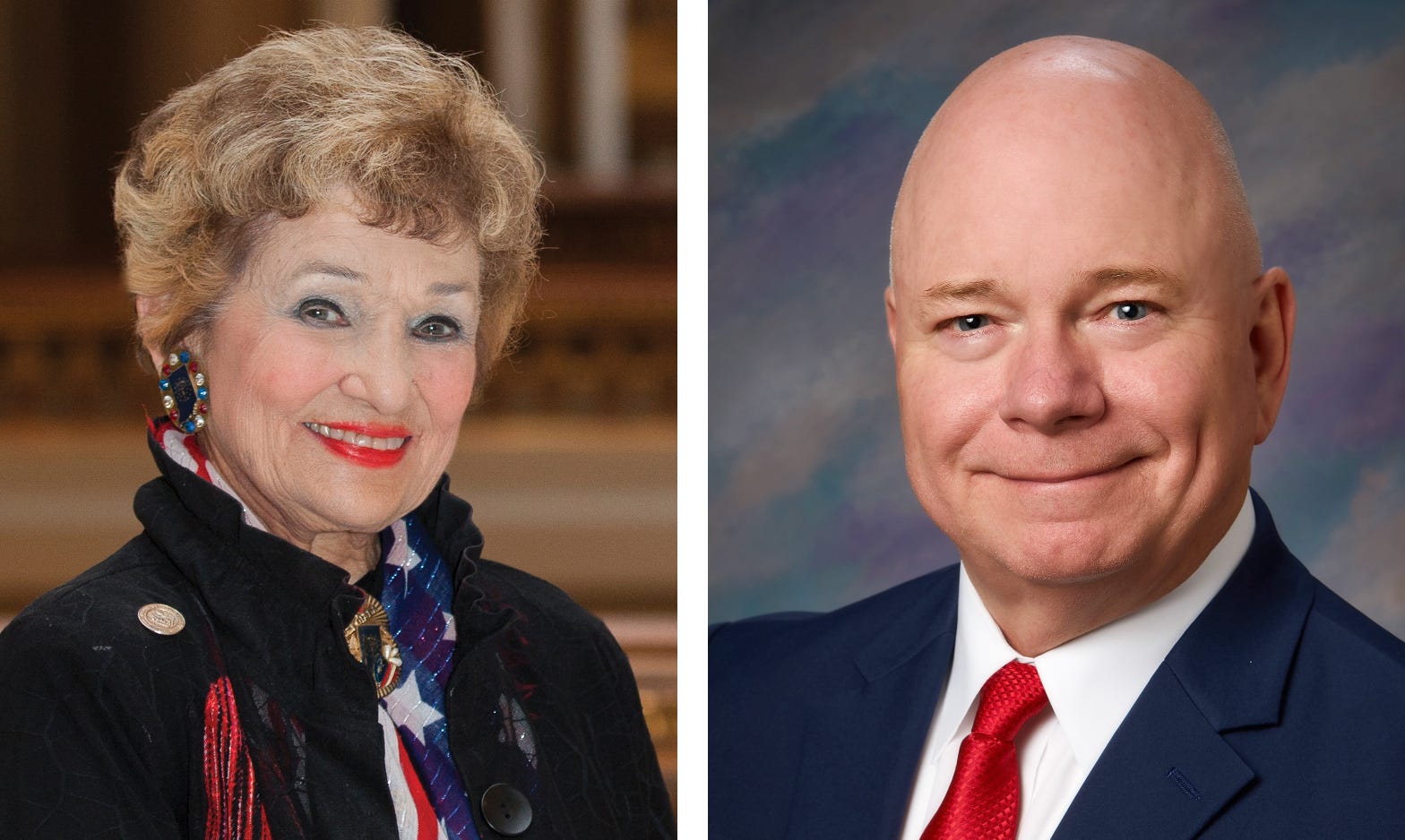
Republicans Tracy Brown and Oscar Alvarez will face each other in the May 5 primary for the party’s nomination to run in Indiana House District 27 against state Rep. Sheila Klinker, who was first elected to the General Assembly in 1982.
Brown is a Tippecanoe County commissioner and former county sheriff. Alvarez lost to Klinker in the 2024 election.
Indiana House District 27 includes Lafayette, and parts of Tippecanoe County.
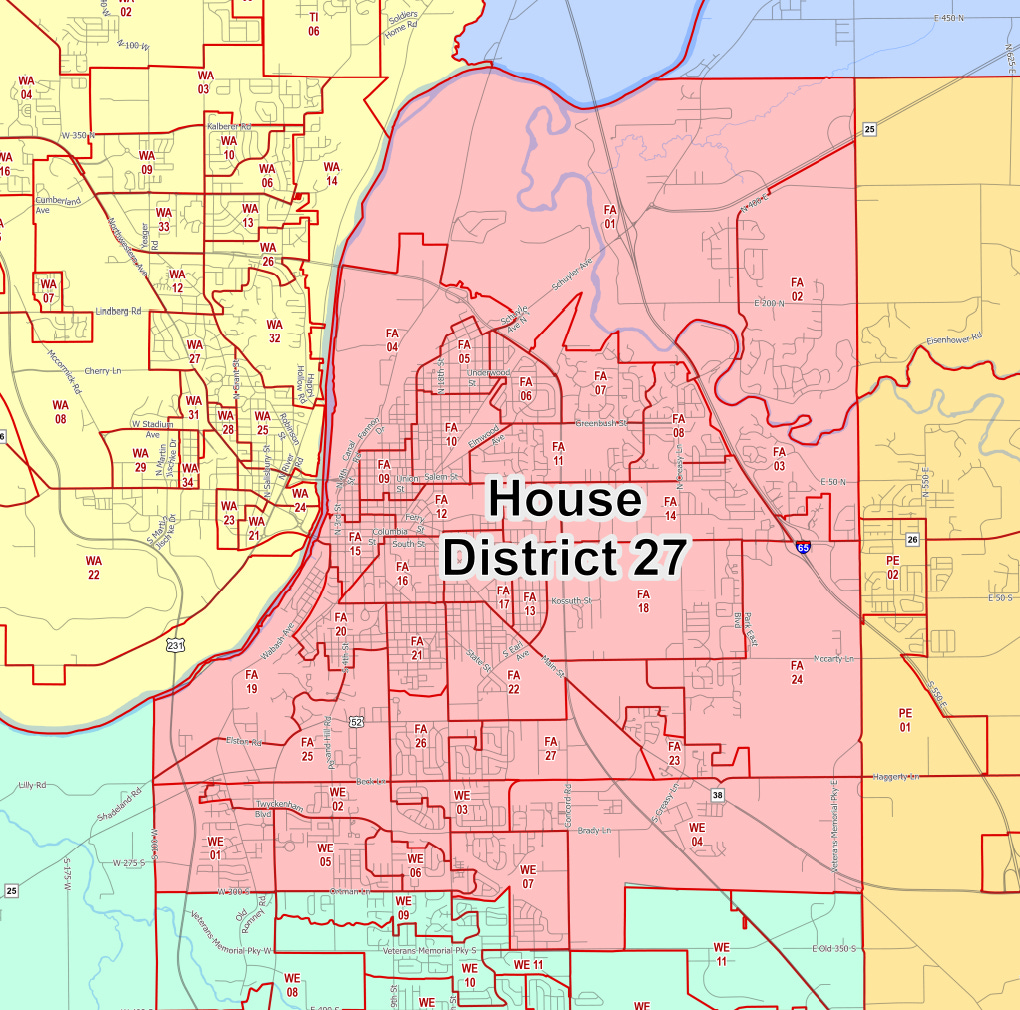
Here, candidates answer questions about their approach.
For more: Find bios of each candidate, along with information about where and when to vote, at the end of this article. Watch in the coming days for more candidate Q&As in other races on Tippecanoe County primary ballots.
Why do you want this job? Why are you running now for this position?
Democrats
Sheila Klinker: Help education at all levels, support veterans, provide for developmentally disabled folks, help fund healthcare and keep cost of living affordable.
Republicans
Tracy Brown: I am running for this position because service to my community has been the foundation of my life. From my years in law enforcement, to serving as county sheriff, and now as a county commissioner, I have had the opportunity to work alongside incredible people and be part of decisions that truly matter. Those experiences have shaped how I lead, how I listen, and how I approach solving problems. I am running now because our communities are facing real challenges that require experienced, steady leadership. Issues like property tax reform, access to healthcare, workforce shortages, and supporting working families are not abstract to me. I see their impact every day. I believe my background gives me the ability to step in, work collaboratively, and deliver results from day one. At the same time, I recognize that serving at the Statehouse will require me to continue learning. I will approach that responsibility with an open mind, a willingness to listen, and a commitment to working with others to find the best solutions. At the end of the day, this is about continuing to serve. I want to take what I have learned at the local level and be a strong, thoughtful voice for District 27.
Oscar Alvarez: Did not respond.
Name two of your top priorities for the position. And how will you handle them?
Democrats
Sheila Klinker: Constituent services and help increase teacher pay.
Republicans
Tracy Brown: 1. Supporting strong, sustainable communities. One of my top priorities is making sure the decisions we make at the Statehouse work for our communities. That includes responsible tax policy, supporting local governments, and protecting core services like public safety, infrastructure, and education. Having served at the local level, I’ve seen how these decisions play out in real time. I want to bring that perspective to the Statehouse and work with others to make sure we are getting it right for the long term. 2. Expanding opportunity for Hoosier families. My second priority is helping create more opportunity for families across Indiana. Whether it is access to healthcare, childcare, workforce development, or education, these issues are all connected. We need practical solutions that help people succeed and strengthen our communities. I don’t believe there is a one-size-fits-all answer, so I will focus on listening, learning, and working with others to find what works. I also understand that stepping into this role will require me to continue learning. I will approach it with an open mind and a commitment to building relationships and working collaboratively to serve District 27 well.
Oscar Alvarez: Did not respond.
How would you rate the property tax reform measures of Senate Bill 1, signed into law in 2025? What, if any, adjustments would you advocate in upcoming General Assembly sessions?
Democrats
Sheila Klinker: I rate it as incomplete. I understand people appreciate property tax cuts but not at the expense of education, healthcare, and public safety.
Republicans
Tracy Brown: I support the goal of Senate Bill 1 because taxpayers needed relief, and government at every level must be willing to live within its means. That said, we also must be honest about the impact. These changes will create real revenue challenges for municipalities, counties, and school districts that provide essential services. At the state level, Indiana has already taken steps in that direction, with agencies reducing budgets by as much as 10 percent. At the local level, we are working on our 2027 budget earlier than ever before. We are actively evaluating our future needs, prioritizing core responsibilities like public safety and infrastructure, and finding ways to operate more efficiently.
The General Assembly has already recognized the need to adjust Senate Bill 1, including efforts to phase in the impact over a longer period of time and provide more predictability for local governments. That is a step in the right direction, but we need to continue monitoring how these changes affect counties, municipalities, and schools. Going forward, I support maintaining tax relief while ensuring local governments have the flexibility and predictability to protect essential services. That balance is critical!
Oscar Alvarez: Did not respond.
What’s the best thing the Indiana General Assembly can do to improve access to quality health care? And how would you propose getting that done?
Democrats
Sheila Klinker: Continue to properly fund healthcare and mental health services.
Republicans
Tracy Brown: As a cancer survivor, I have seen firsthand the volume of care being delivered by outstanding providers in our community. There are simply too many patients and not enough providers, and that creates real barriers to timely access, especially in primary care, mental health, and specialty services. In our own community, we are adding two additional hospitals to the two we already have, and I am concerned about how those facilities will be adequately staffed. The best way to address this is by strengthening the healthcare workforce. That means expanding in-state training opportunities and supporting loan repayment programs tied to underserved areas. It also means taking a thoughtful look at current regulations to ensure they are not unintentionally limiting access to care, while always maintaining high standards. We should also continue to support solutions like telehealth and team-based care to extend the reach of providers and improve access across Indiana.
Oscar Alvarez: Did not respond.
What would be the best thing, if anything, the state could do to solve what has been reported as a shortage of available, affordable childcare in Indiana?
Democrats
Sheila Klinker: Need to pass and fund pre-K funding like all of our surrounding states have done.
Republicans
Tracy Brown: Affordable childcare is not just a family issue; it is a workforce development issue. Too many parents are forced to make difficult decisions about whether they can afford to work or must stay home due to the high cost of childcare. When that happens, it affects not only families, but also employers and the broader economy. It is also an education issue. Children who are not able to participate in quality childcare programs can miss out on early learning opportunities that help prepare them for success in K–12 education. The state can play a constructive role by supporting policies that expand access to affordable, high-quality childcare while giving local communities flexibility to meet their specific needs. That includes reviewing current regulations to identify and reduce unnecessary barriers that may limit access or drive-up costs, while always maintaining strong safety standards for children. Strengthening partnerships with providers and encouraging innovative solutions can help more families access care without sacrificing quality.
Oscar Alvarez: Did not respond.
Should the General Assembly do anything that makes it easier or more difficult, either one, for developers of data centers to find suitable places to build and operate in Indiana?
Democrats
Sheila Klinker: We need to make sure there will be no adverse effects to rate payers if these are approved.
Republicans
Tracy Brown: Local communities should play the primary role in determining where and how data centers are developed. These projects can have significant impacts on land use, infrastructure, utilities, and quality of life, so it’s important that decisions are made by those who know their communities best. That said, the General Assembly can play a helpful supporting role by providing clear, consistent guidelines and resources that assist local governments in making informed decisions. This could include best practices, infrastructure planning support, and tools to ensure developments are both economically beneficial and sustainable. In short, I don’t believe the state should make it easier or more difficult across the board. Instead, the focus needs to be on empowering local communities with the flexibility and support they need to make the right decisions for their residents.
Oscar Alvarez: Did not respond.
How do you rate the K-12 education system in Indiana? What’s one thing you’d advocate to make it better, and how would you get that done?
Democrats
Sheila Klinker: Very strong with room for improvement. We need to pass my legislation to increase teacher pay to continue to attract dedicated teachers and strengthen our transition to teaching programs.
Republicans
Tracy Brown: I hold our public education system in high regard, but I also recognize that the outcomes sometimes vary by school district. I am most familiar with our schools in our own local districts; I have witnessed how they work together. The Lafayette Career Academy is a great example of how schools can collaborate and share resources to benefit students and our community. Two issues that must be addressed are the shortage of new teachers entering the field of education and starting and current teacher pay. Those two issues create substantial obstacles to hiring and retaining the best teachers. Many years ago, finding physicians to practice in rural areas was a significant issue. To address the issue the Indiana State Loan Repayment Program was created. The program provided student loan repayment assistance for physicians who chose to locate their practice in designated areas. There are currently similar programs for our future teachers, but increasing the limits in the program and other enhancements might draw more candidates into the field.
Oscar Alvarez: Did not respond.
What, if any, changes would you make to loosen or tighten Indiana’s laws on hemp-based products?
Democrats
Sheila Klinker: People are traveling to all of our surrounding states, so it may be time to consider legalization.
Republicans
Tracy Brown: Indiana should take a more structured and responsible approach to hemp-based products. There is a place for legitimate businesses, but right now the patchwork of products and regulations is creating confusion and making enforcement difficult. Indiana has legalized hemp and CBD products with clear limits on THC and requirements for labeling and testing. However, newer hemp-derived products, especially those with intoxicating effects, have outpaced our current laws. That has created gaps in areas like age restrictions, product consistency, and enforcement, and that is where I believe the General Assembly needs to focus. From my background in law enforcement, I have seen how unclear laws can lead to real problems, especially when products are easily accessible to minors. Protecting young people must be a priority, and we need clear, enforceable safeguards in place. That means tightening standards around labeling, potency, packaging, and where these products can be sold, while also making sure responsible businesses have clear rules to follow.
Oscar Alvarez: Did not respond.
If elected, you’ll likely have to navigate a Republican supermajority in both chambers of the General Assembly when representing your district. How will you do that, and what makes your prospects for success better than those of your opponent?
Democrats
Sheila Klinker: I have a record of working in a bipartisan way and have significant legislative gains.
Republicans
Tracy Brown: 1. Navigating a supermajority starts with relationships, credibility, and results. I have already built strong working relationships through my years in public service, both as sheriff and as a county commissioner. In those roles, I’ve had to work with a wide range of stakeholders: local officials, state partners, and community leaders to get things done. I understand that progress doesn’t come from standing on the sidelines; it comes from being at the table, listening, and contributing in a meaningful way. That approach will allow me to be effective within a Republican supermajority.
2. What sets me apart is a proven ability to work within systems to deliver results. I’ve spent my career making decisions that required collaboration, accountability, and follow-through. I don’t just bring ideas, I bring experience in turning those ideas into action. My background in both public safety and local government gives me a practical perspective on how state decisions impact communities on the ground. That positions me to advocate effectively for District 27 and to earn the trust needed to move priorities forward.
Oscar Alvarez: Did not respond.
Name two specific things that separate you from your opponent and why those matter.
Democrats
Sheila Klinker: My background in education and record of working in a bi-partisan fashion.
Republicans
Tracy Brown: 1. Proven leadership across public safety and local government. My experience spans decades in nearly every aspect of law enforcement, including serving eight years as county sheriff and now as a county commissioner. These roles are different, but both require high-level problem solving, managing budgets, and making decisions that directly impact people’s lives. That matters because effective state policy should be grounded in real-world experience and an understanding of how decisions play out at the local level.
2. A collaborative, people-first approach to leadership. Throughout my career, I’ve worked with and listened to people from all perspectives, including those I may not agree with on every issue. My focus has always been on doing what is right and what benefits the people I serve. That matters because the best solutions come from open-minded leadership and a willingness to work together to get results for District 27.
Oscar Alvarez: Did not respond.
Bios
Sheila Klinker
Party: Democratic
Age: 87
Occupation: Retired Educator
Educational background: Purdue BS in Elementary Education,. MS Elementary Education, EDS in Elementary Administration
Past elected positions, if any: incumbent State Representative District 27
Community boards or other community leadership and service: Right Steps, Lafayette Citizens Band, Hanna Center, The Arts Federation
Immediate family: Three children, seven grandchildren
Your campaign site online: Tippecanoe Dems
Tracy Brown
Party: Republican
Age: 63
Occupation: Tippecanoe County Commissioner
Educational background: Delphi Community High School; Indiana Law Enforcement Academy; FBI National Academy
Past elected positions, if any: Tippecanoe County Sheriff (2007-2014); Tippecanoe County Commissioner (2015 – Present)
Community boards or other community leadership and service: Current Board Service: Lafayette Family YMCA Board of Directors; Camp Tecumseh YMCA Board of Directors; Indiana State-Wide 911 Board of Directors; Local Emergency Planning Committee; Community Corrections Advisory Board; Tippecanoe County Drainage Board; Tippecanoe County Area Plan Commission. Past Board Service: American Red Cross; Lafayette Adult Reading Academy; Indiana Sheriffs’ Association – Past President
Immediate family: Wife, Elizabeth. Children, Amber, Tiffany, Jared and Nathan
Your campaign site online: www.facebook.com/profile.php?id=100086590837897
Oscar Alvarez
Did not respond.
ABOUT THE MAY 5 PRIMARY
Early voting ahead of the May 5 primary election runs April 7 to May 4 with contested races on Tippecanoe County ballots for U.S. House, several Indiana General Assembly seats, Tippecanoe County commissioner and Tippecanoe County Council seats, township position and state convention delegates. Voters may choose a Republican or Democratic ballot, but not both, when checking in at the voting site.
Voter registration/ballots
To check your voter registration and to see candidates who will be on your R or D ballot, go to the Secretary of State’s portal at www.indianavoters.com.
Early voting sites
In Tippecanoe County, registered voters may cast their ballot at any vote center.
April 7 to May 4: Tippecanoe County Office Building, 20 N. Third St. in Lafayette. Weekday hours: 8 a.m.-4:30 p.m. April 7-10, April 13-17, April 20-24, April 27-May 1. Other hours: 9 a.m.-4 p.m. April 25 and May 2; and 8 a.m.-noon May 4.
April 18: McAllister Recreation Center, 2351 N. 20th St., Lafayette. Hours: 9 a.m.-1 p.m.
April 21: Córdova Recreation Center, 355 N. Martin Jischke Drive, West Lafayette. Hours: 10 a.m.-4 p.m.
April 23: First United Methodist Church, 1700 Mitch Daniels Blvd., West Lafayette. Hours: Noon-5 p.m.
April 25: West Point Fire Station, 4949 Indiana 25 S., West Point; Otterbein United Methodist Church, 405 Oxford St., Otterbein; and Clarks Hill Christian Church, 9510 Pearl St., Clarks Hill. Hours: 9 a.m.-1 p.m.
April 28-May 1: Tippecanoe County Fairgrounds, 1406 Teal Road, Lafayette; Wea Ridge Baptist Church, 1051 E. County Road 430 South, Lafayette; Eastside Assembly of God, 6121 E. County Road 50 South, Lafayette; and John Dennis Wellness Center, 1101 Kalberer Road, West Lafayette. Hours: Noon- 6 p.m.
May 2: Tippecanoe County Fairgrounds, 1406 Teal Road, Lafayette; Wea Ridge Baptist Church, 1051 E. County Road 430 South, Lafayette; Eastside Assembly of God, 6121 E. County Road 50 South, Lafayette; and John Dennis Wellness Center, 1101 Kalberer Road, West Lafayette. Hours: 9 a.m.-3 p.m.
Election Day vote centers
Voting on Tuesday, May 5, will be 6 a.m.-6 p.m. Registered voters in Tippecanoe County may choose any of these sites.
Lafayette
Tippecanoe County Fairgrounds, 1406 Teal Road
Lafayette Community Church of the Nazarene, 3801 Union St
The Grove Covenant Church, 3600 S. Ninth St.
Tippecanoe County Historical Association History Center, 522 Columbia St.
Wea Ridge Baptist Church, 1051 E. County Road 430 South
Eastside Assembly of God, 6121 E. County Road 50 South
Northend Community Center, 2000 Elmwood Ave.
West Lafayette
Faith West Community Center, 1920 Northwestern Ave.
Córdova Recreation Center, 355 N. Martin Jischke Drive
Connection Point Church, 2541 Cumberland Ave.
John Dennis Wellness Center, 1101 Kalberer Road
Outside Lafayette/West Lafayette
Shadeland Town Hall, 2485 Indiana 25 West, Shadeland
Tippecanoe Township Volunteer Fire Station No. 2, 448 W. County Road 650 North, West Lafayette
Dayton Gathering Point Church, 7201 Wesleyan Drive, Dayton
Battle Ground Fire Station, 112 North St., Battle Ground
On the ballot
Here are candidates who will be on Tippecanoe County ballots in the May 5 primary. (* = incumbent)
Tippecanoe County
Commissioner, District 1: Julie Roush and James Waters, R; Andrea Burniske, Travis Dowell, Justin Kendall and AR Lane, D
County Council, District 1: Ben Murray*, D; Trent Richter, R
County Council, District 2: Jody Hamilton* and Jonathan Chapin, R
County Council, District 3: Lynn Beck, R
County Council, District 4: Lisa Dullum*, D
County Clerk: Abby Myers and Carrie Sanders, R; Karan Benner, D
Assessor: Anthony Hustedt-Mai, R; Kaitlyn Butler, D
Auditor: Jennifer Weston*, R; Eric Grossman, D
Recorder: Kristy Martin*, R; Monica Casanova, D
Prosecutor: Jason Biss, R
Judge, Superior Court 1: Kevin McDaniel*, R
Judge, Superior Court 2: Sarah Wyatt, R
Judge, Superior Court 4: Matt Sandy*, R
Judge, Superior Court 5: Kristen McVey*, R
Judge, Superior Court 7: Dan Moore*, R
Indiana General Assembly
House District 13: Matt Commons*, R; Brenna Geswein and Ed Moyer Jr., D
House District 26: Chris Campbell*, D; Magdalaine Davis, R
House District 27: Sheila Klinker*, D; Tracy Brown and Oscar Alvarez, R
House District 38: Heath VanNatter* and Mark Hufford, R; and Nate Stout, D
House District 41: Mark Genda*, R; Jackson Hayes, D
Senate District 22: Ron Alting* and Richard Bagsby, R; Natasha Baker and Marlena Edmondson, D
Senate District 23: Spencer Deery* and Paula Copenhaver, R; David Sanders, D
Congress
U.S. House, District 4: Jim Baird*, Craig Haggard and John Piper, R; Drew Cox, Roger Day, Darin Griesey, Thomas Hall Jr., Robert Lovely, Joe Mackey, Jayden McCash, Paul McPherson and John Whetstone, D.
For a look at all candidates on Tippecanoe County primary ballots, including those for township trustee, township boards and state delegates, here are links to Democratic candidates and Republican candidates.
Thank you for supporting Based in Lafayette, an independent, local reporting project. Free and full-ride subscription options are ready for you here.
Tips, story ideas? I’m at davebangert1@gmail.com.
I find the lack of depth in Shelia’s responses concerning. It’s like she’s just rattling off the buzzword responses that any D would. Good to see Tracy but some thought and time into responding.
It's interesting to contrast Brown's answers here with the empty MAGA insult schtick of Bagsby and Copenhaver in their Q&As