

Support for this edition comes from Lafayette Urban Ministry, presenting the annual Hunger Hike Sept. 20. The walk starts at 1 p.m. Sept. 20 at Memorial Island at Lafayette’s Columbian Park. The Hunger Hike is a joint effort of Food Finders Food Bank, Lafayette Urban Ministry and St. Thomas Aquinas Haiti Ministry, bringing individuals, families, businesses, schools, and faith communities together to raise awareness and funds to address food insecurity both locally, regionally and globally. Sign up your team, support other hikers and start fundraising by going to www.hungerhike.org.

SK HYNIX REZONING LAWSUITS CHALLENGE BEHIND-THE-SCENES MOVES BEFORE 2025 CITY COUNCIL VOTE
Evidence turned over about a series of behind-the-scenes maneuvers leading up to a West Lafayette City Council’s rezoning vote that cleared the way for SK hynix’s landmark $3.87 billion semiconductor facility – including a closed session where officials from the South Korean company, land owner Purdue Research Foundation and the federal CHIPS Act office met privately with all nine city council members at the height of debate over the site – is enough to justify a trial on a pair of lawsuits challenging the validity of the zoning vote and process, attorneys for three West Lafayette residents argued in court filings last week.
The lawsuits, filed a month after the city council’s 6-3 vote in May 2025, are heading for a bench trial expected to start Dec. 1 in Tippecanoe Circuit Court.
But still hanging out there are unresolved issues after SK hynix, Purdue Research Foundation and the city of West Lafayette asked the court for a summary judgment. They argued in a November 2025 motion that the lawsuits looking to overturn the rezoning – and in effect stop construction of a plant that would assemble high-bandwidth memory – fall short of needing a trial to settle the matter.
In court filings last week, attorneys representing three residents who live roughly a mile from the site north of Kalberer Road argued that evidence turned up in the legal fight shows a lack of effort “to give reasonable regard” to the rezoning process and procedural deficiencies ahead of the city council’s vote that leaves plenty for a trial to sort out.
“(SK hynix, PRF and the city) ask this Court to hold, as a matter of law and without trial, that this was reasonable regard,” Tom Williams, an attorney representing his sister, Lora Williams, in one of the lawsuits challenging the rezoning, argued in one filing last week. “It was no regard at all.”
But of a closed-door meeting with the nine city council members – all Democrats – and a series of smaller, private gatherings in the weeks after the Area Plan Commission had voted 9-5 to recommend denial of rezoning 121 acres from R1/single-family residential uses to I3/heavy industry, an attorney representing the second challenge took it another step in a separate filing last week.
Arie Lipinski, an attorney representing residents Sean Sasser and Karl Janich, argued that “whether those private meetings, considered separately or together, involved receiving information or deliberation on the same public business and whether they met the statutory criteria” were enough to set aside the company’s request for summary judgment. Lipinski argued that evidence of the closed-door meetings could be enough to swing the case and void the rezoning.
“The Court could determine that a trial is not necessary and grant summary judgment in favor of petitioners due to the City Council’s violation of the Open Door Law,” Lipinski argued in a Sept. 1 filing.
As of the weekend, SK hynix, PRF and the city had not responded, according to the case’s online filings.
The parties are scheduled to be back in court Sept. 29 to deal with miscellaneous motions. Judge Sean Persin set aside three days for a bench trial, starting Dec. 1.
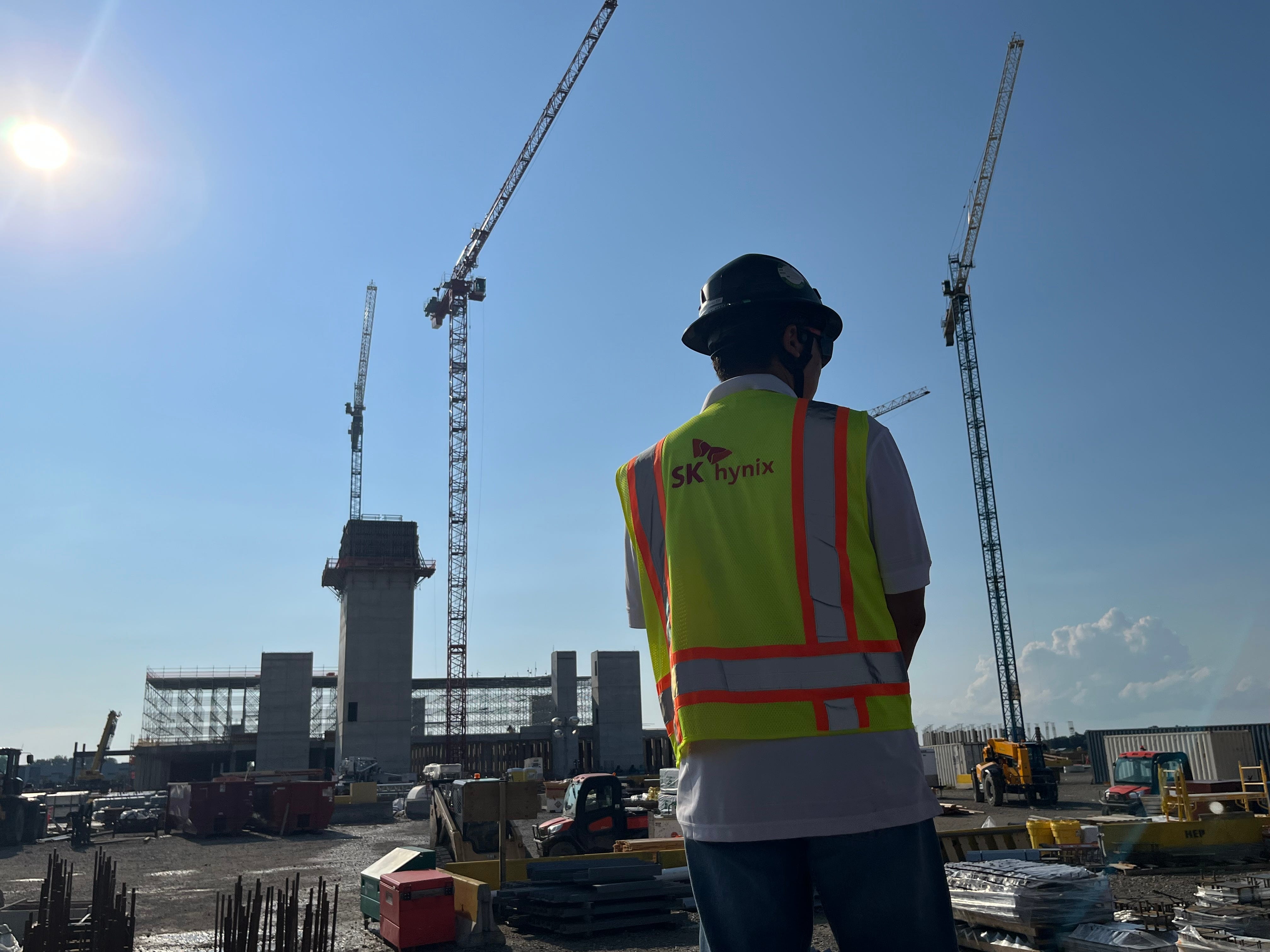
As the lawsuits play out, construction is seven months in at SK hynix’s site north of Kalberer Road, between Yeager Road and Salisbury Street/County Road 50 West. Company officials justified breaking ground, pouring footers and making headway on cleanrooms to stay on schedule for an opening slated for late 2028.


At the heart of the lawsuits, each filed in June 2025 and later consolidated and tracking together in Tippecanoe Circuit Court, Williams, Janich and Sasser argue that the city council overstepped its authority, ignoring warnings from local experts about health, environmental and other concerns in its vote to rezone the property. They initially raised questions about improper notice about the rezoning process, a general lack of study or evidence about the potential impacts on the environment and the neighborhoods, and allegations of backroom negotiations between the city and SK hynix that influenced what was a controversial decision. The lawsuits contend the city council should have either accepted a 9-5 vote in March from the Area Plan Commission to recommend denial or sent the matter back to the APC for further review.
In their motion to for summary judgement, SK hynix, PRF and the city disputed questions about open door and procedural violations, due process and conflict of interest claims and accusations that the city council had no rational basis to support its rezoning vote.
Persin already has dealt with portions of that motion, with each side claiming a victory.
