

Support for this edition comes from Imagination Station, Lafayette’s Children’s Science Museum. On Saturday, Sept. 12, from 10 a.m.-2 p.m., Imagination Station will be hosting its 25th annual “Hands On Transportation.” At this free event, children and families will have the chance to explore a wide variety of vehicles up close – from fire trucks and police cruisers to construction equipment, buses, a helicopter and more! It’s an unforgettable opportunity for kids to learn, explore and interact with a wide range of fascinating machines. There will also be food trucks, ice cream, arts and crafts, a racing simulator and a silent auction. For more information, visit www.imagination-station.org

INDIANA SUPREME COURT: BALLOTS COUNTY, DEERY WINS SENATE DISTRICT 23 PRIMARY
Six votes for state Sen. Spencer Deery, rejected Aug. 10 by the Indiana Recount Commission in a decision that flipped the results in the Indiana Senate District 23 Republican primary, should have counted despite election official errors, the Indiana Supreme Court ruled Thursday.
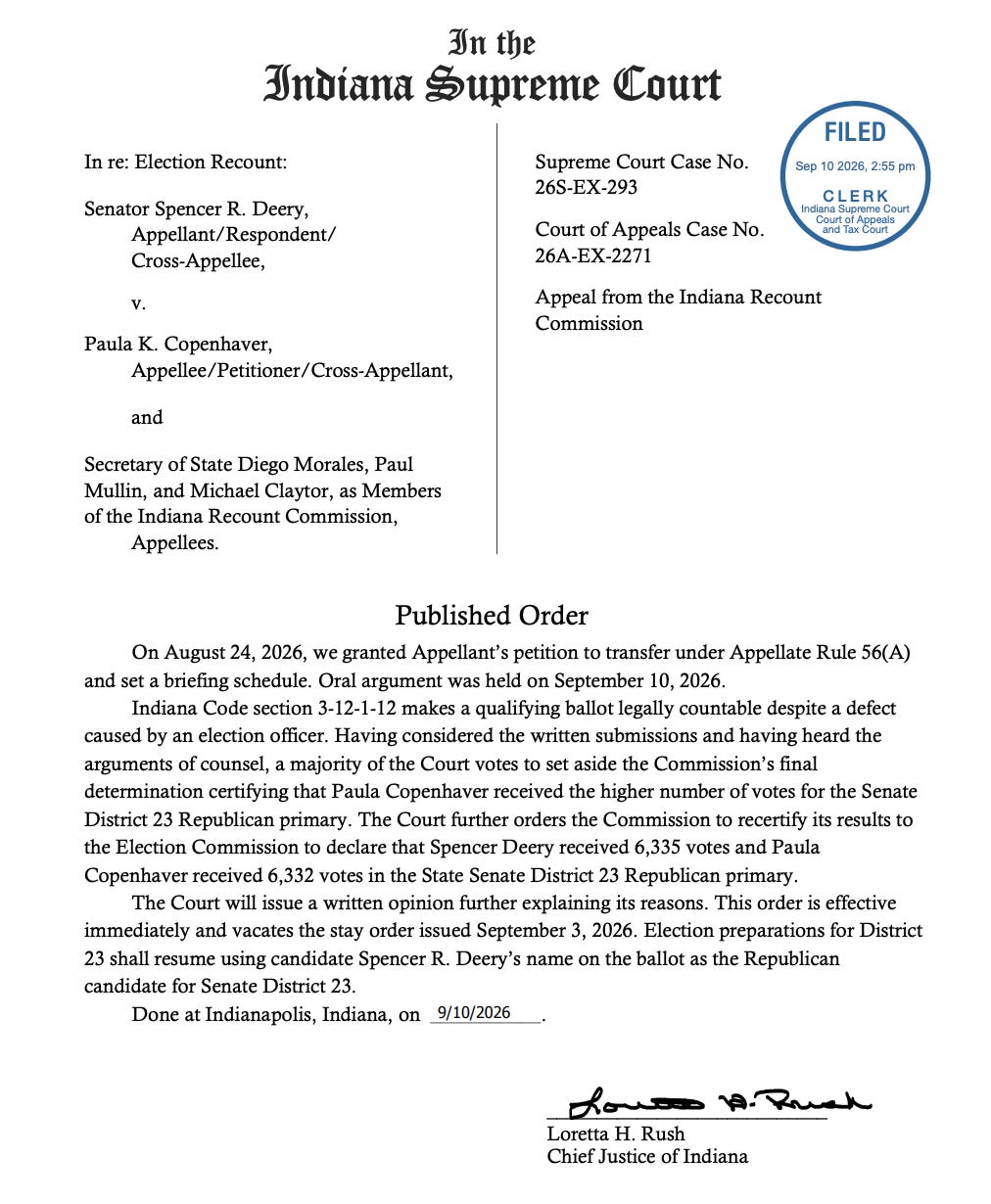
Less than four hours after hearing oral arguments in Deery’s appeal, the Supreme Court ordered the Recount Commission to recertify results, giving the West Lafayette incumbent a 6,335-6,332 victory over Republican challenger Paula Copenhaver.
The ruling directed election officials in the six counties of Indiana Senate District 23 to resume preparations for the Nov. 3 general election with Deery’s name on ballots.
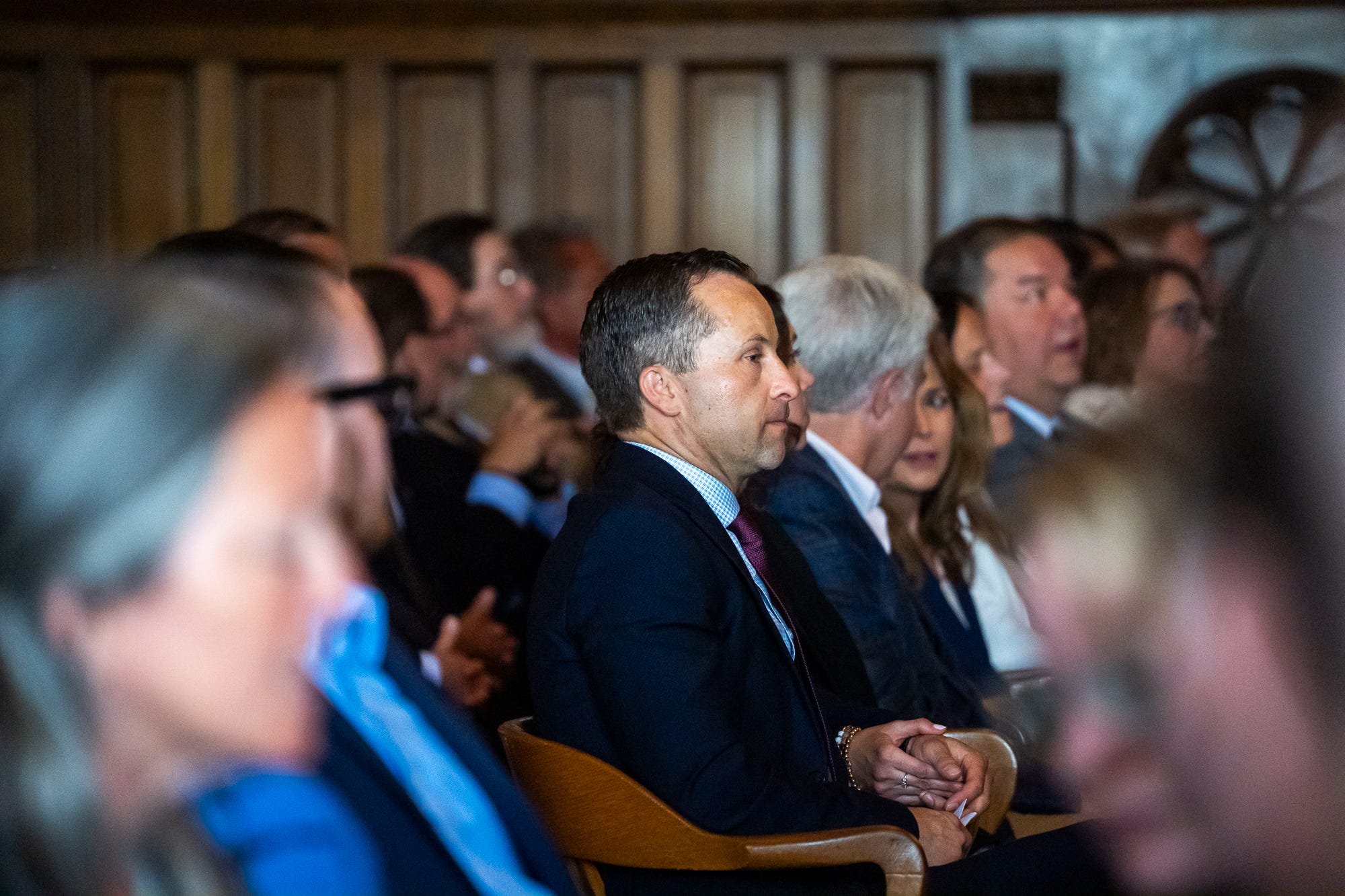
“I think it’s fantastic news that the court clearly agreed with the idea that your vote shouldn’t be dependent upon government doing its job,” Deery said Thursday afternoon, minutes after the ruling was posted. “And that if you do everything right, your vote should count.”
The ruling did not indicate whether there was a split among the five Supreme Court justices, only that a majority voted in Deery’s favor.
The order posted Thursday afternoon cited a provision in Indiana’s election code – one that had been at the heart of the recount case – that “makes a qualifying ballot countable despite a defect caused by an election officer.” The order signed by Chief Justice Loretta Rush – who left Thursday morning’s hearing saying that the justices would “be discussing this case quickly” – said the court would issue a written opinion “further explaining its reasons.”
But during Thursday morning arguments, justices returned several times to questions about state laws dealing with voter intent in cases when ballots contained clerical errors.
Why, they asked, did the Indiana Recount Commission reject six absentee ballots for missing clerk’s signatures or seals when election law leaves room to favor the voter’s ballot in the face of election workers’ error, as long as there’s no sign of fraud, tampering or misconduct?
“How can you blame the voter here?” Justice Mark Massa asked at one point.
Arguments in a 45-minute session in the Indiana Supreme Court courtroom at the Statehouse focused on how much discretion the Indiana Recount Commission had – and whether it should have used it – to keep the six ballots in play from the May 5 GOP primary.
Deery’s attorneys had argued in briefs filed with the court that absentee ballots of six voters – cast ahead of the May 5 primary, with two each in Warren, Montgomery and Vermillion counties – were tossed by the Recount Commission in error on Aug. 10.
The appeal conceded that four of the 10 ballots rejected by the Recount Commission – two for Deery and two for Copenhaver – because they didn’t include required bipartisan initials by poll workers were dealt with properly under state election law. The law, the Recount Commission had agreed, said ballots without those bipartisan initials must be rejected in a recount.
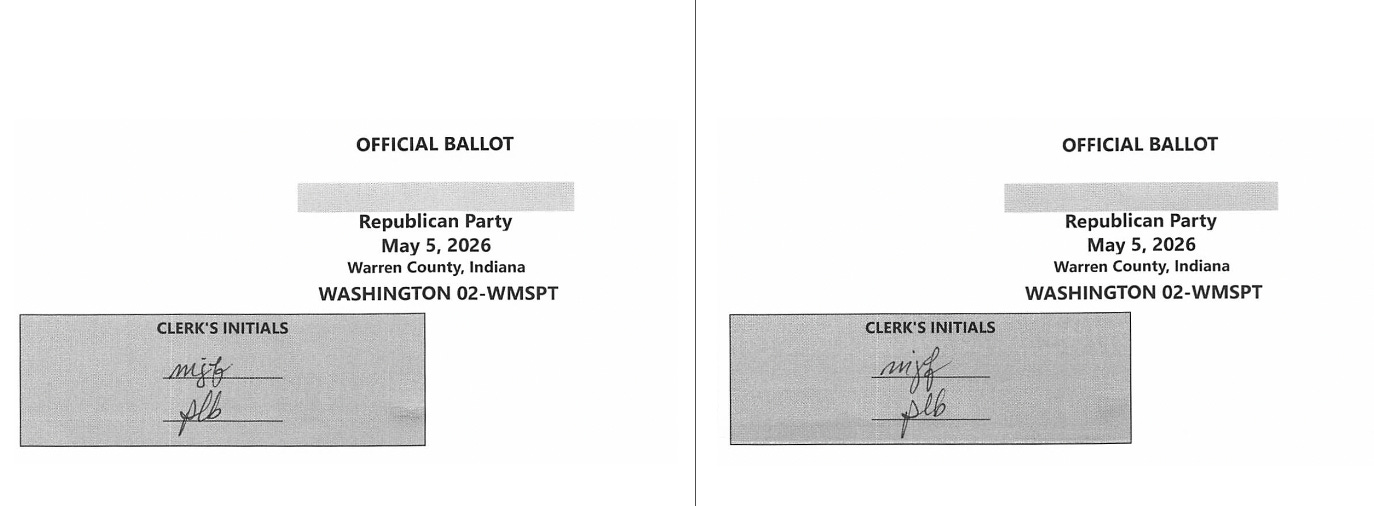
The six ballots in question were missing a clerk’s signature or seal, two other requirements for absentee ballots.
Deery’s team argued that “the voters’ intent was unmistakable” on those six ballots.
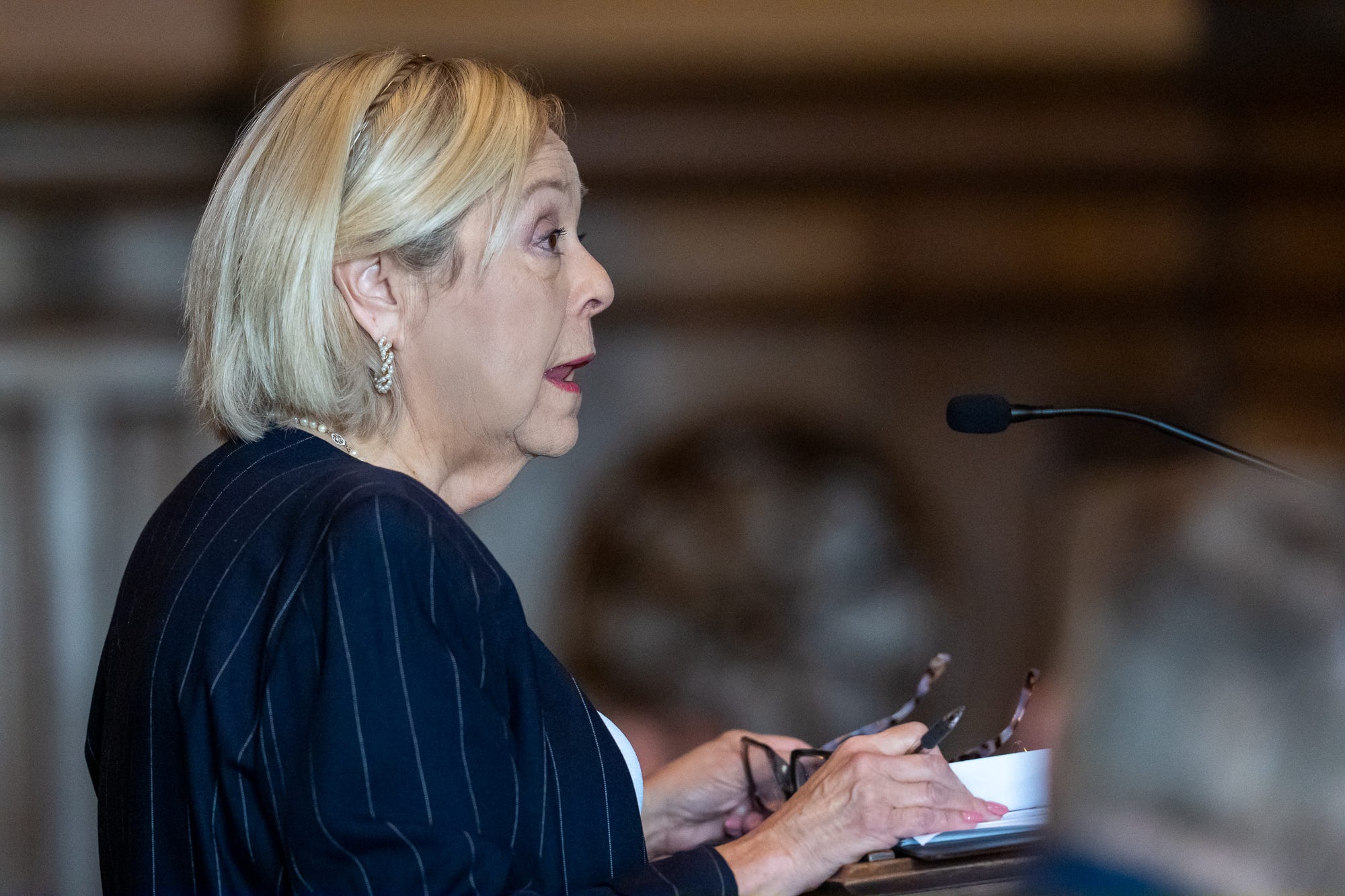
Karen Celestino-Horseman, one of Deery’s attorneys, leaned into Indiana Code 3-12-1-12, a “savings clause” providing that a ballot “may” be counted in cases of election official inaction, “unless evidence of fraud, tampering, or misconduct affecting the integrity of the ballot is presented by a party to the proceeding.”
Bill Bock, an Indianapolis-based attorney representing Copenhaver, argued that absentee ballots couldn’t be considered authentic unless they had all three marks the legislature laid out – including two sets of initials from bipartisan poll workers, a county clerk’s signature and the clerk’s seal.
Justices pressed Celestino-Horseman during Thursday’s oral arguments about whether the word “may” in the election code meant the Indiana Recount Commission was bound to count a ballot that contained a clerical error. Celestino-Horseman argued that it might not in other cases where other problems presented themselves, but for the six ballots in question, where there were no allegations of fraud, the discretion should have fallen in favor of voter intent.
The Indiana Recount Commission had voted 2-1 to reject the ballots, siding with Copenhaver’s strict interpretation of election law despite Democratic member Michael Claytor’s contention that he and fellow commission members, Republican Paul Mullin and Secretary of State Diego Morales, had discretion to abide by clear voter intent when it came to missing clerk’s signatures or clerk’s seals.
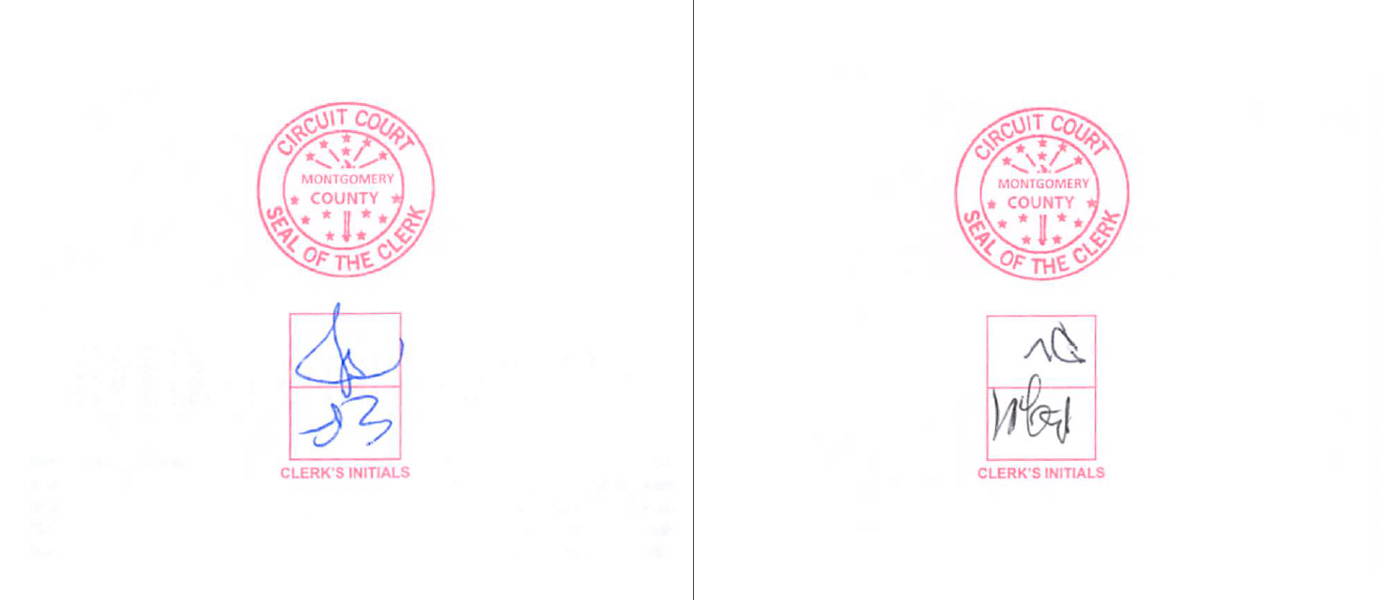
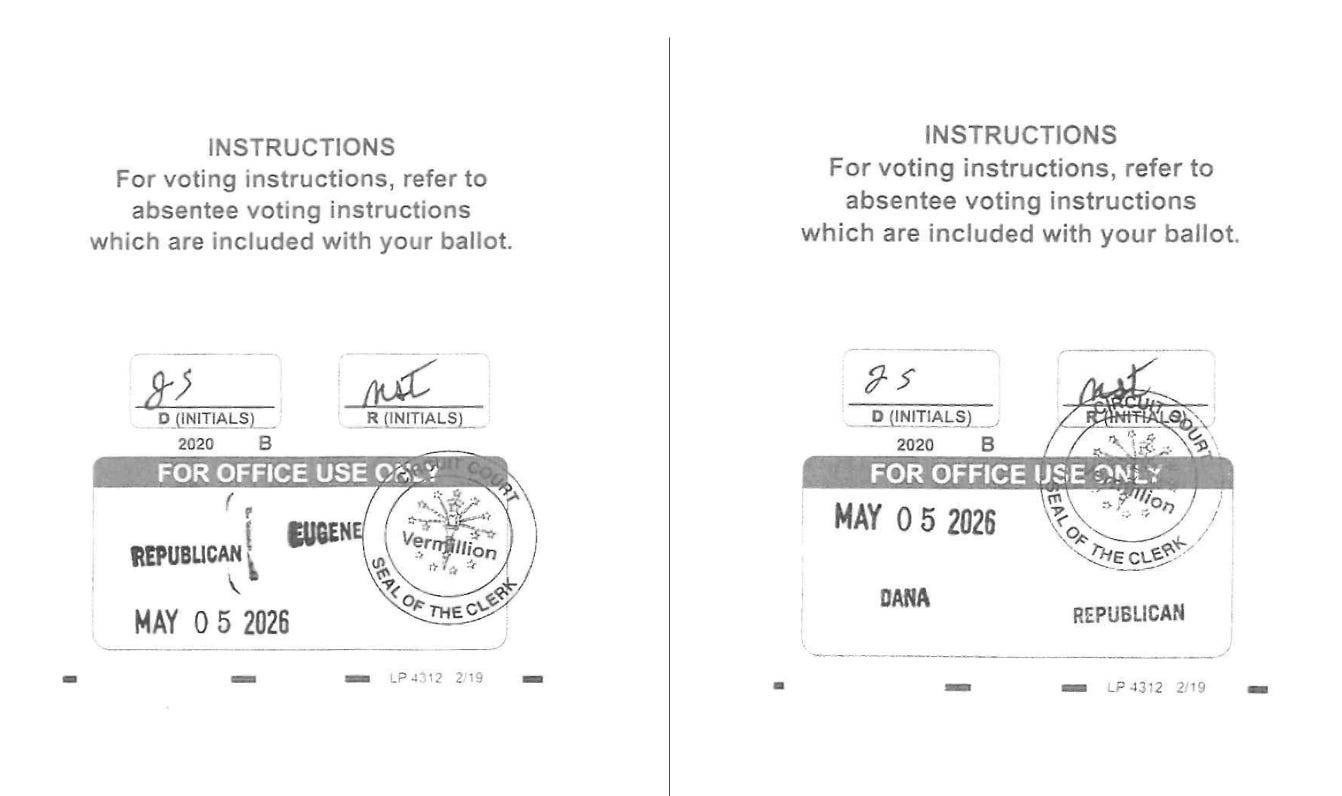
Justices pressed Bock and Benjamin Jones, an attorney representing the Recount Commission, on their arguments calling on the court to stick with strict compliance and that voters bore responsibility for knowing what should be on a complete and authentic absentee ballot.
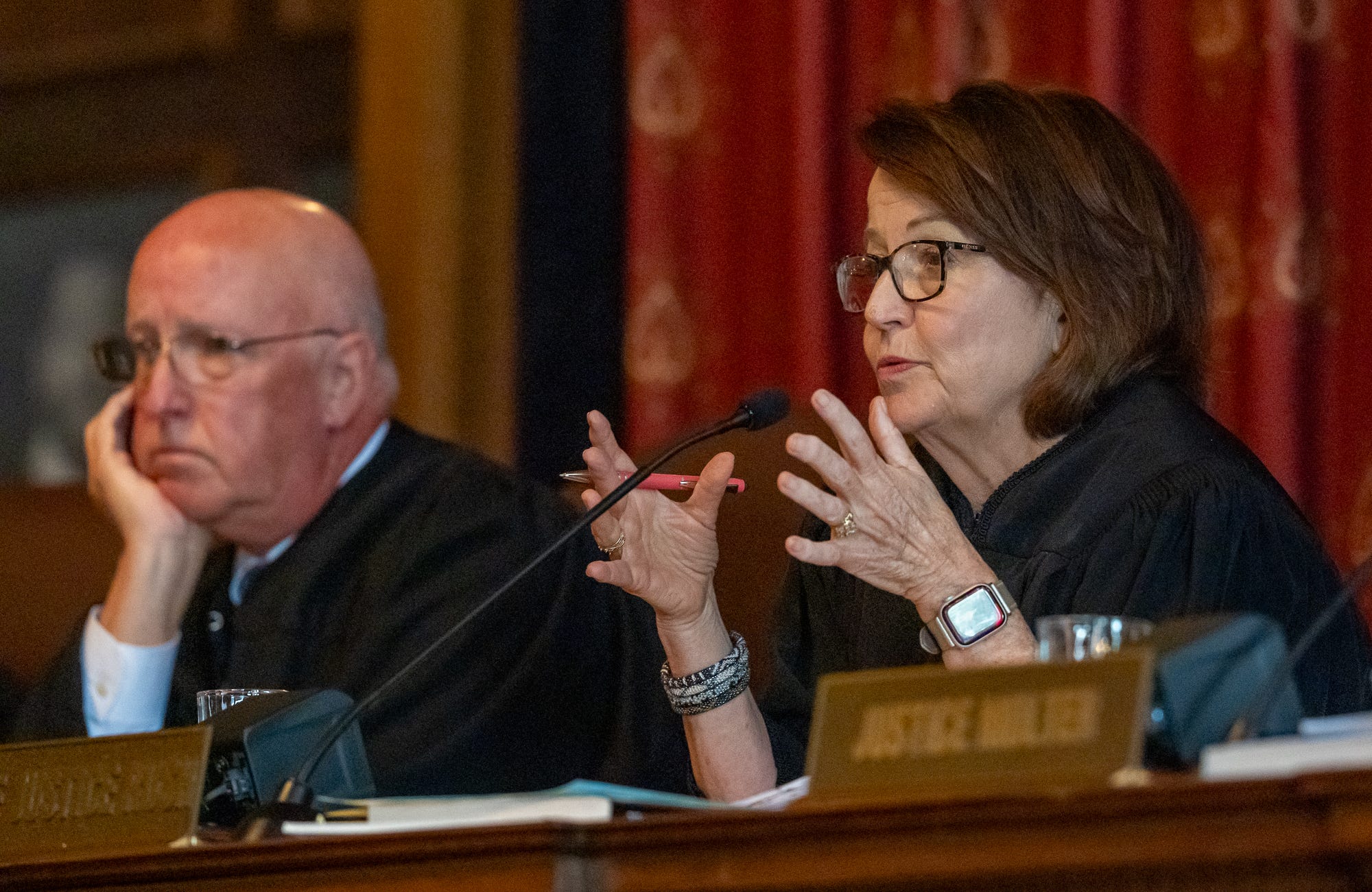
Rush said the legislature had made it clear that absentee ballots that didn’t have the two initials couldn’t be counted. She said the General Assembly could have gone that far on ballots that mistakenly left off the clerk’s seal or signature, but hadn’t.
“What should voters do?” Rush asked Jones. “What should a voter look for to make sure their vote’s going to count for the general election coming up?”
Deery’s side had argued that Indiana Election Division’s Absentee Voter’s Bill of Rights “specifically instructs voters to check their ballots for the required bipartisan initials, warns that a ballot lacking those initials cannot be counted, and directs a voter to request a replacement ballot if the initials are missing.”
Justice Derek Molter noted the Election Division’s document doesn’t tell voters they need to be sure the clerk’s signature and seal are on the ballot. He said that wasn’t necessarily the law, but “it is part of the background consideration for exercising discretion.”
“I read that as pretty clearly saying that you would count these ballots unless there’s fraud, tampering or misconduct,” Molter said during Thursday’s hearing. “So it seems problematic to me that you have the Secretary of State before the election saying, if this scenario were to arise, we will count the ballot. And it’s only after the election, when we know who that’s going to benefit, that that view flips. And then, on the Recount Commission, the Secretary of State says, ‘No, actually, I think we shouldn’t count the ballots.’ So, isn’t that just an inherent problem with the exercise of discretion, where you’re changing the rules, even if they’re not statutory rules, but you’re changing the rules after the election has happened?”
Bock said after Thursday’s ruling that he saw that his arguments weren’t getting the traction expected.
“It appears the majority of the court accepted that these were authentic ballots,” Bock said. “I’ll be interested in what they say on that point, what was persuasive to them about them being authentic ballots.”
Bock said he accepted the ruling as the final decision in the case.
Copenhaver said Thursday afternoon that a statement about the ruling would come later. Earlier, at the Statehouse, Copenhaver said her recount challenge was about following the rules and that Deery’s arguments were “playing on fears and emotions.”
“That your vote’s not going to count – you’re going to be disenfranchised,” Copenhaver said. “We can’t operate on the emotional things. We have rules in place for a purpose and a reason. And we, as a republic, need to educate ourselves in the voting process. … I think there is something that says ignorance of law is no excuse. So voters have a personal responsibility. And again, this is an educational opportunity to learn the process of voting.”
Copenhaver, who was endorsed by President Donald Trump and works in Lt. Gov. Micah Beckwith’s office, was recruited to run against Deery in the midst of his outspoken opposition to the president’s push for a mid-decade redistricting plan aimed as picking up more Republican seats in the U.S. House. Trump allies poured millions of dollars into a campaign targeting Deery.
“I think Paula is very resilient, she has strong moral compass and strong faith, and she offered herself for public service,” Bock said. “That’s not an easy thing to do. I think it was very important, from talking with her, to ensure that she stood by all the people that voted for her and insisted that the process be fully examined, given how close the election was. Now, I think we have our outcome.”
Deery said he hadn’t given up campaigning since May, heading to fairs, parades and community events across a Senate district that includes parts of Tippecanoe and Montgomery counties and all of Fountain, Warren, Parke and Vermillion counties. He said he was looking forward to campaigning for the next seven weeks without the recount hanging over the results.
“I think there definitely is a lot of confusion in terms of, wait, what happened? Did you win? Didn’t you win?” Deery said. “Overwhelmingly, I hear, Wait, I don’t want my vote to be at risk or be dependent on somebody else’s actions if I do everything right.”
Deery will face David Sanders, a Democratic member of the West Lafayette City Council, and independent candidate Joshua Brant for the District 23 seat in the Indiana Senate.
Watch the oral arguments: An Indiana Supreme Court recording of Thursday’s oral arguments are here.
How we got here


Thanks, again, for support for this edition from Imagination Station, Lafayette’s Children’s Science Museum, presenting its 25th annual “Hands on Transportation,” 10 a.m.-2 p.m. Saturday, Sept. 12. For more information, visit www.imagination-station.org
Thank you for supporting Based in Lafayette, an independent, local reporting project. Free and full-ride subscription options are ready for you here.
Tips, story ideas? I’m at davebangert1@gmail.com.
PRAISE BE TO GOD. There is justice. This is the time for all good men and women from the either party to fight for the Republic, for Justice, for Democracy. Thank you Sen. Deery for your courage to stand up to the demonic Trump. I'm a Democrat and I love a good patriot. Thank you Sen. Deery and thank you to the Indiana Supreme Court for standing up for the voters of Indiana.
Hooray for democracy! Votes count.