

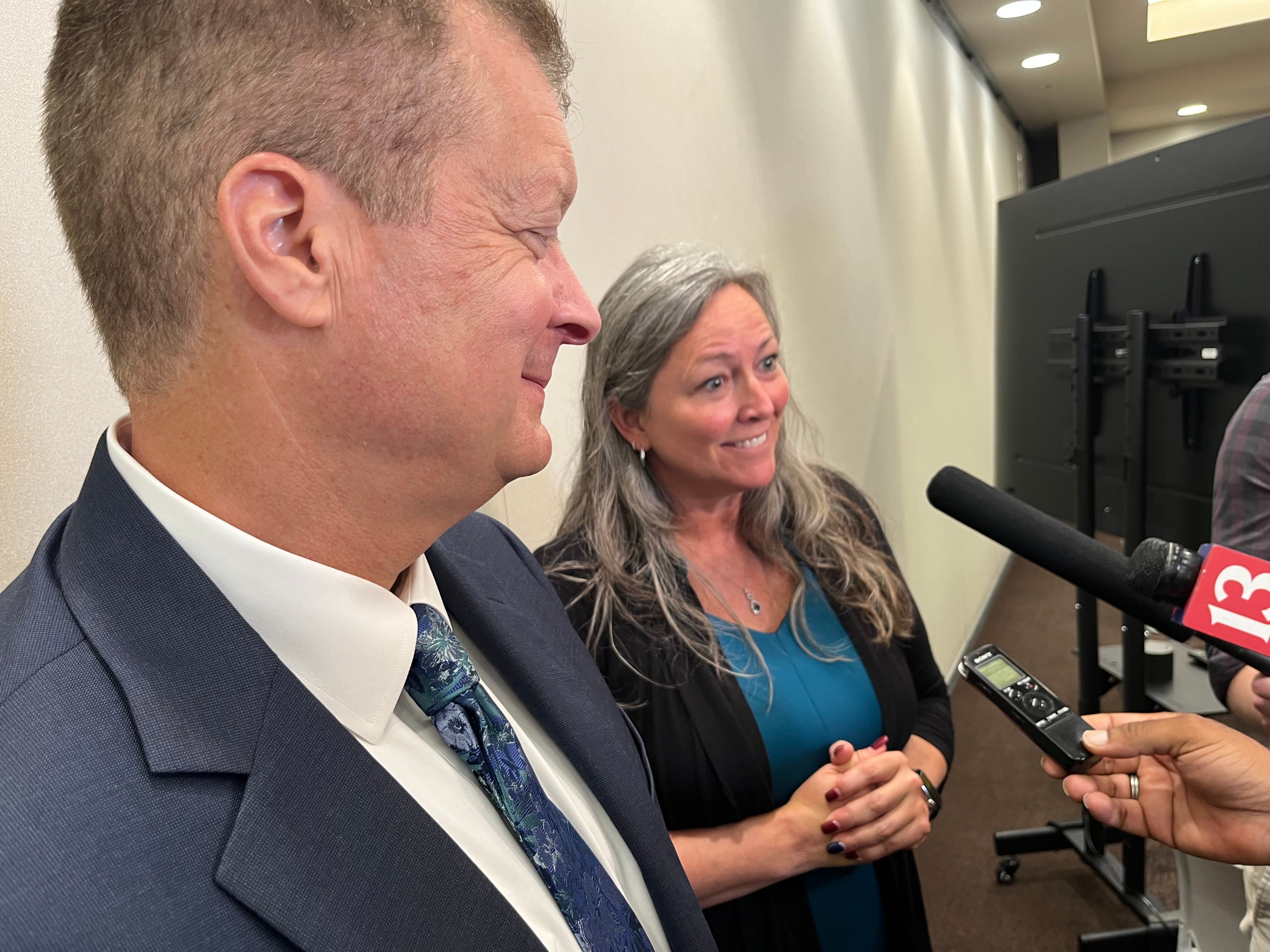
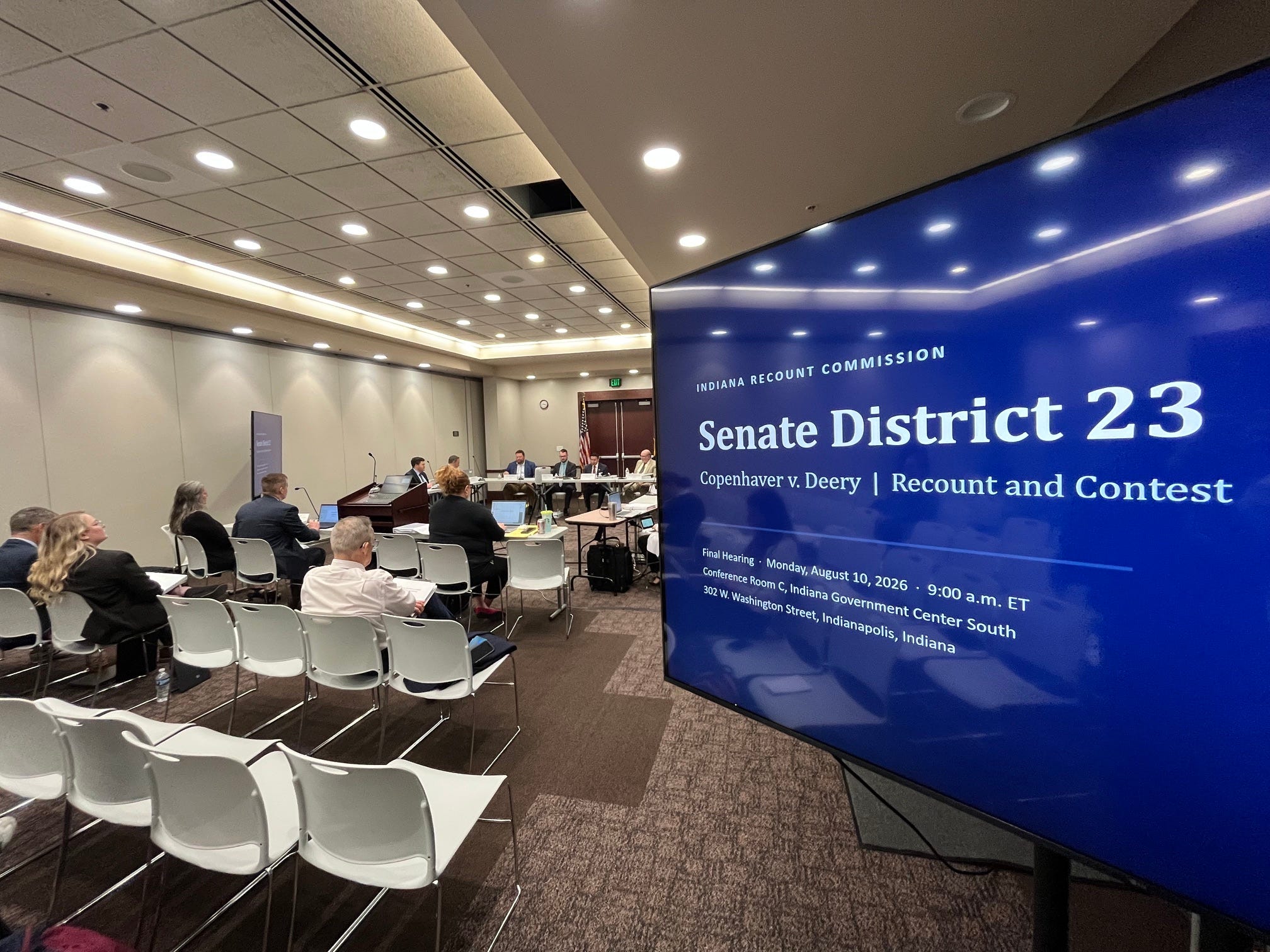
When the Indiana Recount Commission didn’t offer traction for Paula Copenhaver’s accusations that left-leaning, crossover voters had tampered with the election by pulling Republican ballots in the Indiana Senate District 23 primary in hopes of stifling her chances, her attorneys found success Monday in technicalities that wiped out enough votes for state Sen. Spencer Deery to swing a three-vote loss into a three-vote victory.
The last-minute shift in strategy leaned heavily into mistakes in how ballots were handled – whether they had required poll worker initials, or whether a county clerk stamped a seal or signature on a ballot – in what Deery’s camp vehemently argued took away votes by people cast in good conscience, never knowing that their ballots were challenged technicalities.
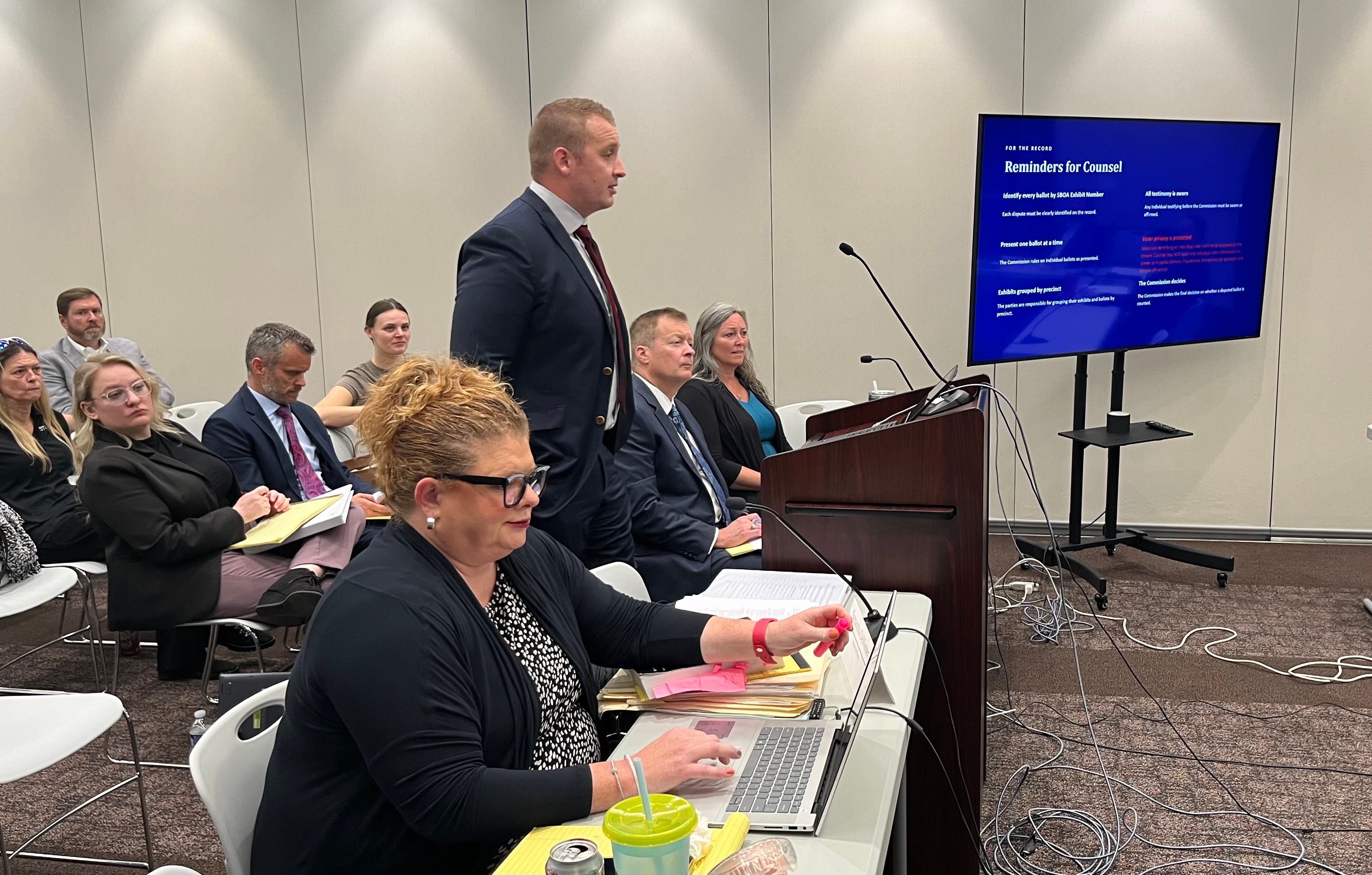
The three-member Indiana Recount Commission, often on 2-1 decisions, rejected eight of 12 votes for Deery that Copenhaver’s attorney, Bill Bock, challenged in a tense final hearing Monday in Indianapolis. The commission rejected two of four ballots cast for Copenhaver challenged by Deery’s attorney, Samantha DeWester.
That put the final count in the May 5 primary at 6,332-6,329 for Copenhaver.
DeWester said Deery would appeal the Indiana Recount Commission decision directly to the Indiana Court of Appeals, saying that Copenhaver hadn’t uncovered fraud, voter misconduct or some sort of conspiracy, only a lack of detail by election officials.
“I’m obviously not amused by what just occurred,” DeWester said. “It’s always been the intent of the voter, what the voter wanted, what’s in their best interest. … It says in (Indiana Code) pretty clearly that you shouldn’t take away a vote from someone just because a clerk or election official erred.”
Minutes after the four-hour hearing, Copenhaver considered it time to declare victory for real – something she’d done in anticipation on the night of the election when she was a handful of vote down to Deery, a first-term senator from West Lafayette running for re-election in the sprawling district that touches six counties.
During a Recount Commission hearing in July, Copenhaver had talked extensively about how it had been unfair to the system to have voters – 11 that her attorneys had targeted who “boasted” on social media and in and in a Based in Lafayette article about how they’d pulled GOP ballots to thwart her President Donald Trump-endorsed campaign – coming across to pick candidates in the GOP primary.
Was she comfortable, then, being a former Fountain County clerk, with the updated tactic that called out technical errors by county clerks and their election staffs across Senate District 23?
Copenhaver said she was.
“Unfortunately, being a former county clerk, I understand the due diligence that you have to do with the training and everything of your poll workers to make sure that every eligible ballot should count,” Copenhaver said “First of all, there’s no hard feelings. I don’t take things personally. I don’t make them personally. It’s about the better candidate. And so far, the better candidate prevailed.”
Barring a successful appeal, Deery would be the sixth of seven state Senate incumbents targeted by Trump who lost in the May 5 primary, after facing attack campaigns that ran into the millions of dollars. Trump and White House allies went all in to get revenge against Indiana Senate incumbents who did not back a push to redraw Indiana’s congressional maps to boost Republican chances to pick up seats in the U.S. House. Deery had been particularly outspoken in his opposition to mid-decade redistricting.
Through that, Copenhaver picked up a Trump endorsement in the primary. Monday afternoon, she offered thanks to Trump, along with U.S. Sen. Jim Banks, Gov. Mike Braun and Lt. Gov. Micah Beckwith, who is her boss and was active in recruiting her to run as things went sour on the redistricting plan.
Deery said Monday he trusted the courts to get things right.
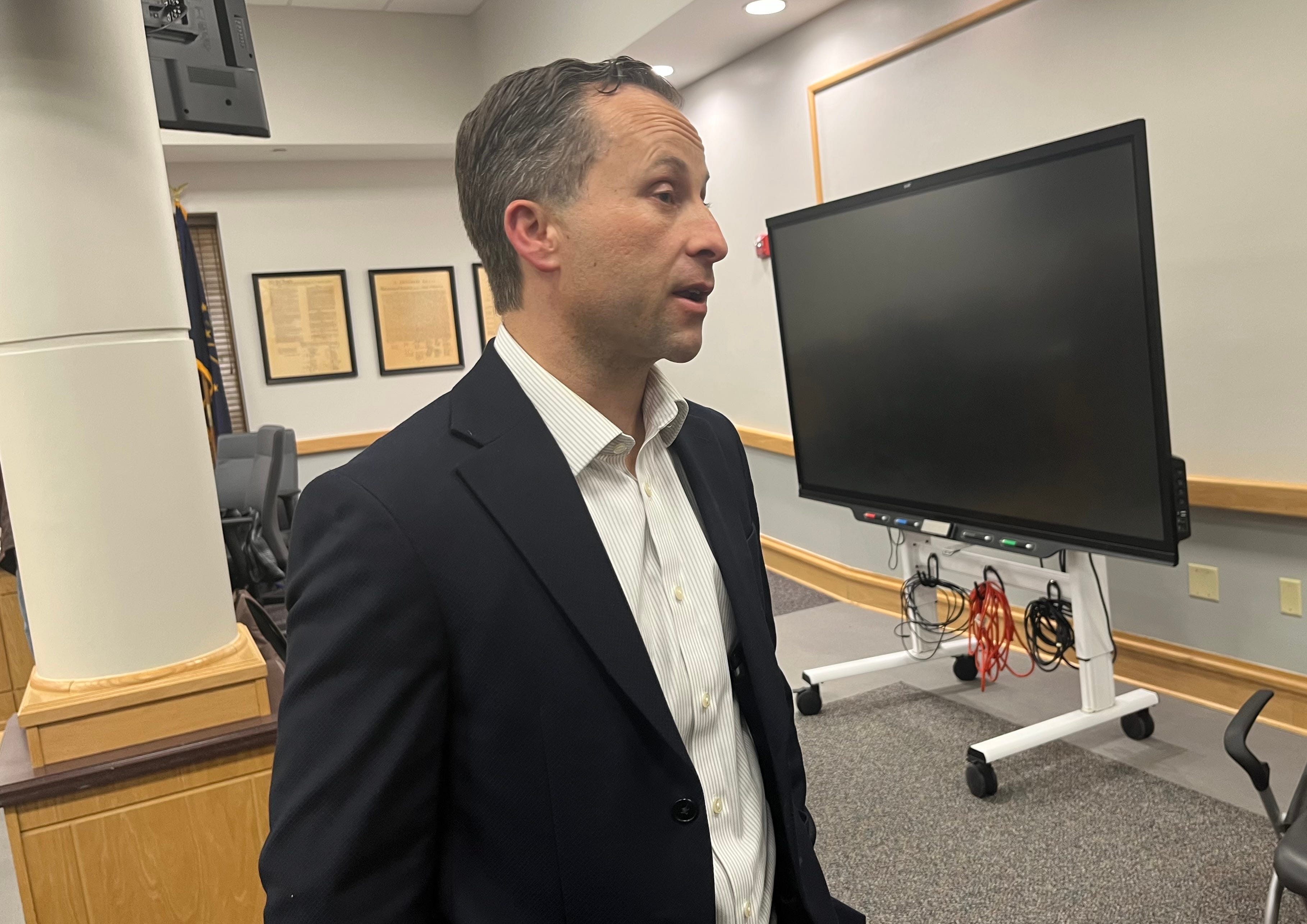
“Today, we saw members of the Indiana Recount Commission attempt to undermine the will of voters by treating ballots differently based on whether they furthered the president’s political goals,” Deery said in a statement Monday afternoon. “This was not a meeting intended to find fairness; it was designed to find votes. Indiana law makes clear that valid votes should not be silenced simply because of minor errors made by clerks — clerks who were supposed to be trained by the chairman of this very commission. Fortunately, this commission does not get the last word. We are confident Indiana’s appellate courts will restore the vote totals that have been counted and recounted, and reaffirm me as the choice voters made for the Republican nomination in Senate District 23.”
Bock said he was confident Monday that the Indiana Recount Commission decision would stand up in court.
“This recount was really about the integrity of the election on multiple levels, and that was our theme today,” Bock said. “That some of the absentee ballots had issues – they didn’t comply with Indiana law, and it’s important that voters feel secure about how absentee ballots are handled. So, I think in every case the Recount Commission made the right choice, and I’m confident that they will be upheld by the Court of Appeals.”
Only once during Monday’s hearing did Bock attempt to invalidate votes by one of the 11 voters singled out in Copenhaver’s initial rational to contest the election.
Indiana election law allows voters to request either Republican or Democratic ballots at a polling site during a primary. With an open primary system, there is no requirement for formally registering with a party. Bock had leaned on a provision in state election law that sets parameters that allow someone to pick a primary ballot if they voted for a majority of that party’s candidates in the last general election or intend to in the upcoming election.
During a July 28 hearing, the Indiana Recount Commission had voted 2-1 to reject Bock’s request to subpoena those voters to testify under oath, saying they’d lost constitutional protections of a ballot secrecy by talking up how they’d voted on social media and in the media.
Still, Bock focused on one of those Monday, referring to the voting experience of Sam Cody, a Warren County resident who posted on social media how he’d pulled a Republican ballot for the first time in his life, voted for Deery and left the rest of the ballot blank. He said he’d been motivated by the redistricting debate.
Bock didn’t use Cody’s last name during Monday’s hearing, but he did identify by his first name, where Cody worked and other aspects to identify him, leading to a ballot that fit the description offered after the election. Bock said Copenhaver wasn’t calling what Cody did fraudulent.
“He’s obviously a very active individual in the community and has strong opinions, and that’s great,” Bock said. “It’s just that he wasn’t entitled to vote in the Republican primary.”
DeWester pushed back, saying that the social media posts amounted to hearsay and not proof about the voter’s actions or intent.
“We can’t be in this place in Indiana,” DeWester said. “It’s unprecedented. … There’s no way she can disenfranchise someone because of what their comments are on social media.”
Michael Claytor, a Democratic member of the Recount Commission, said Copenhaver had missed the opportunity to challenge any suspected crossover voter at the polling place, as outlined in state election law.
“There are methods for challenging for fraud,” Claytor said. “This is not fraud. This is avoiding the weird ass process we have for eliminating people from primaries.”
Paul Mullin, a Republican member of the Recount Commission, said he was sympathetic to Copenhaver’s argument. But he said that with a deposition to speak with Cody, “we could have had more definitive results.” (Secretary of State Diego Morales had voted with Claytor July 28 to reject the attempt by Copenhaver to subpoena the 11 voters, saying that wasn’t “the right thing to do,” instead asking the General Assembly to fix things by closing primaries to party members.)
The Indiana Recount Commission voted 3-0 to accept Cody’s ballot cast for Deery. Bock declined to say he would have challenged the ballots of the other 10 voters if the Recount Commission had rejected Cody’s, saying he didn’t want to answer questions about his strategy.
Cody was watching the hearing remotely Monday.
“Glad my vote got spared but upset to hear they are trying to throw out the votes of others who made no fault of their own,” Cody said. “I’ll definitely be keeping my fingers crossed on the appeal. The sad part is those voters who had their votes tossed because of clerical errors don’t have any idea they are being disenfranchised. I feel like it opens up a whole new avenue for tampering with votes if you can get a clerk to purposefully make minor errors.”
Most of Bock’s approach Monday dealt with that sorts of errors on ballots that didn’t include county clerk seals, clerk signatures or initials of poll workers, specified in recent updates to state election laws.
Bock argued that without those elements on absentee ballots, there was no guarantee that the ballot was cast legitimately.
He said arguments that “every vote should count” or that “not counting the vote would disenfranchise the voter” were appeals to sympathy that ignored “that Indiana requires high standards to protect the integrity of absentee ballots because absentee ballots are more susceptible to fraud and potential manipulation.”
“Second, were the Recount Commission to relax the statutorily required reliability indicators for absentee ballots, it would risk diluting voters and disenfranchising voters,” Bock argued. “These risks are high in any election, but here in this election, the risk is even higher, where the candidates are only separated by a handful of votes, meaning that just a few invalid votes – perhaps only one or two – could swing the election.”
Bock also argued that voters were responsible for knowing an absentee ballot they were casting missed required initials, signatures or official seals.
DeWester argued that the move would, in fact, take away votes unfairly without giving voters a heads up that something was wrong with a ballot.
“You shouldn’t consider an error of the clerks or election officials to be on the voter,” DeWester said. “I can’t imagine a voter having to know, ‘Well, it’s missing a set of initials, I’ve got to send this back. I should have known better.’ That’s an absurdity. We don’t put the burden on the voters. The burden is on (Copenhaver’s team) to show why a vote shouldn’t count.”
Looking toward Morales, DeWester said, if anything, the issues raised by Bock might be a reason to review the Secretary of State’s training for election officials.
“I guess you could address that with them,” DeWester said. “But to tell someone their vote no longer counts … there’s going to be a whole slew of ongoing problems in the future.”
Claytor said a strict reading of the law was that if absentee ballots didn’t include the initials of two members of a county’s absentee voter board, the Recount Commission had no choice but to reject the ballot. But he said that when an absentee ballot was missing either the county clerk’s seal or signature, the commission had discretion.
When that time for discretion came, Claytor was consistently outvoted by Morales and Mullin to reject a vote.
Copenhaver’s team also took a run at tossing votes tied to how Tippecanoe County Clerk Julie Roush handled an absentee ballot counted the morning after the May 5 primary. Bock took issue with Roush’s explanation of a ballot that included a vote for Deery, saying comments she made after the election were misleading and didn’t line up with those as the recount unfolded. Bock argued that Tippecanoe County was trying to operate under its own rules for a ballot that didn’t make it to the County Office Building before the polls closed, meaning, he argued, it shouldn’t have counted. DeWester called it a “ticky tacky” attempt to reject a ballot.

The Recount Commission, saying they were unclear about which of the three ballots Bock said the disputed vote could be on, accepted the ballot and moved on.
Roush, who was not at the commission hearing, said she would respond to the accusations by Copenhaver’s team later.
Deery called that out the results after Monday’s hearing.
“The remarkable thing about the hearing today is that there was never any discussion about voter intent,” Deery said. “None of the ballots that were thrown out today were discarded because we didn’t know who the voter wanted to support. Instead, the disputes were all about technicalities caused by clerk errors. I am told that that standard is unprecedented and if that’s the new norm, we can expect election challenges to become much more common. I don’t believe that’s good for our Republic and why I will ask the courts to intervene.”
Copenhaver said she was prepared for an appeal.
“I think there was a mandate throughout the whole state regarding the redistricting, and what I have found is that a lot of people are afraid to vocalize their position,” Copenhaver said. “They don’t speak up for fear of retribution. I’m not afraid. I’m afraid of one, and that is my God.”
Asked whether her campaign was part of a larger retribution campaign, orchestrated by Trump and his allies, Copenhaver said she never considered it that way.
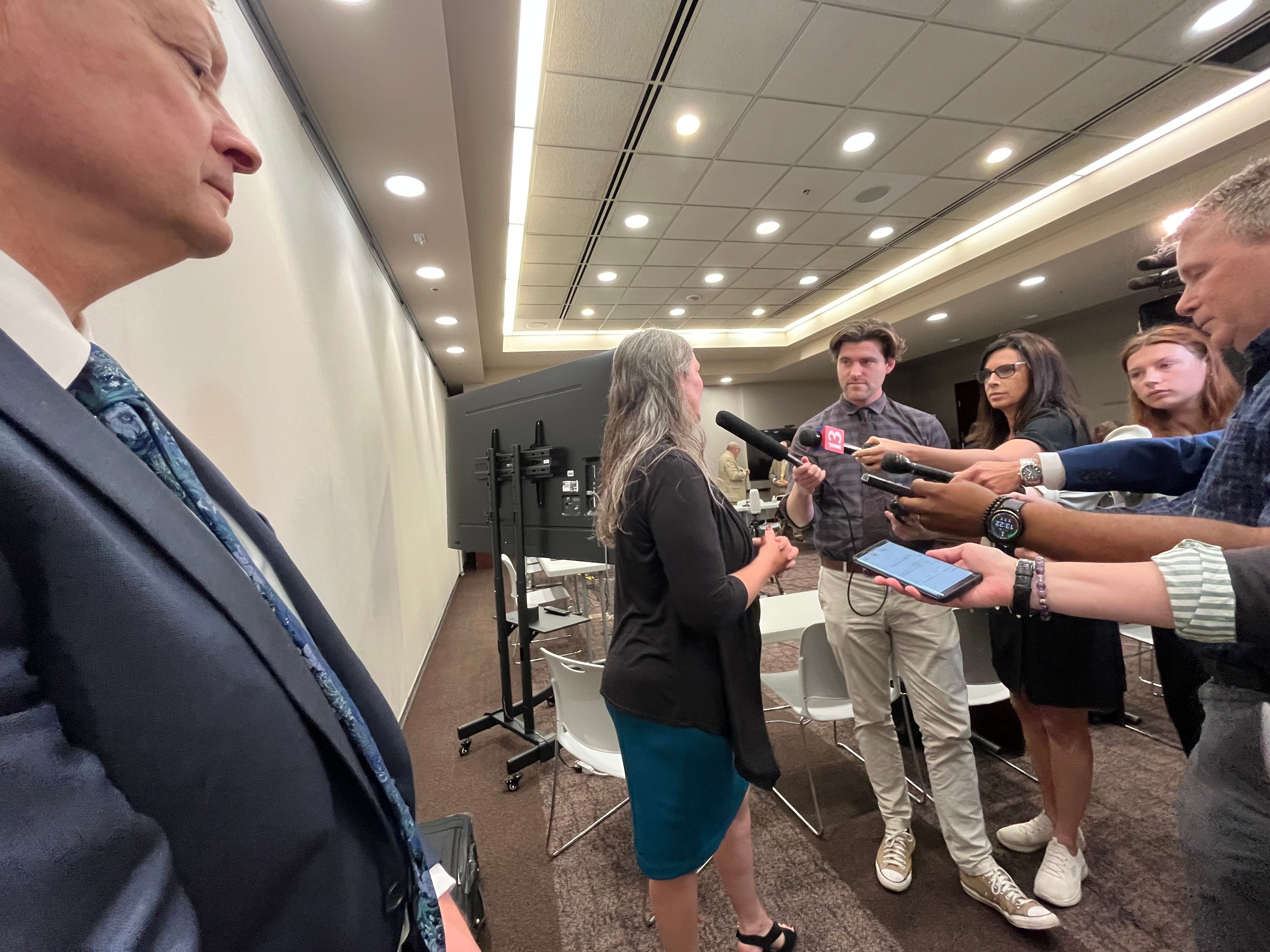
“That’s not who I am as a person, and I never will be,” Copenhaver said.
Copenhaver deferred on how much her legal team cost during the recount and contest of the primary. She said her campaign was not paying for it.
“I have some great, phenomenal supporters,” Copenhaver said. She didn’t say who those supporters were.
Bock declined to say who was paying his bills, too, saying it was privileged information. He also said it wasn’t decided whether he would continue if and when an appeal is filed.
“We just got the results,” Bock said, “so there’s nothing about the future that’s been discussed or decided,” Bock said.
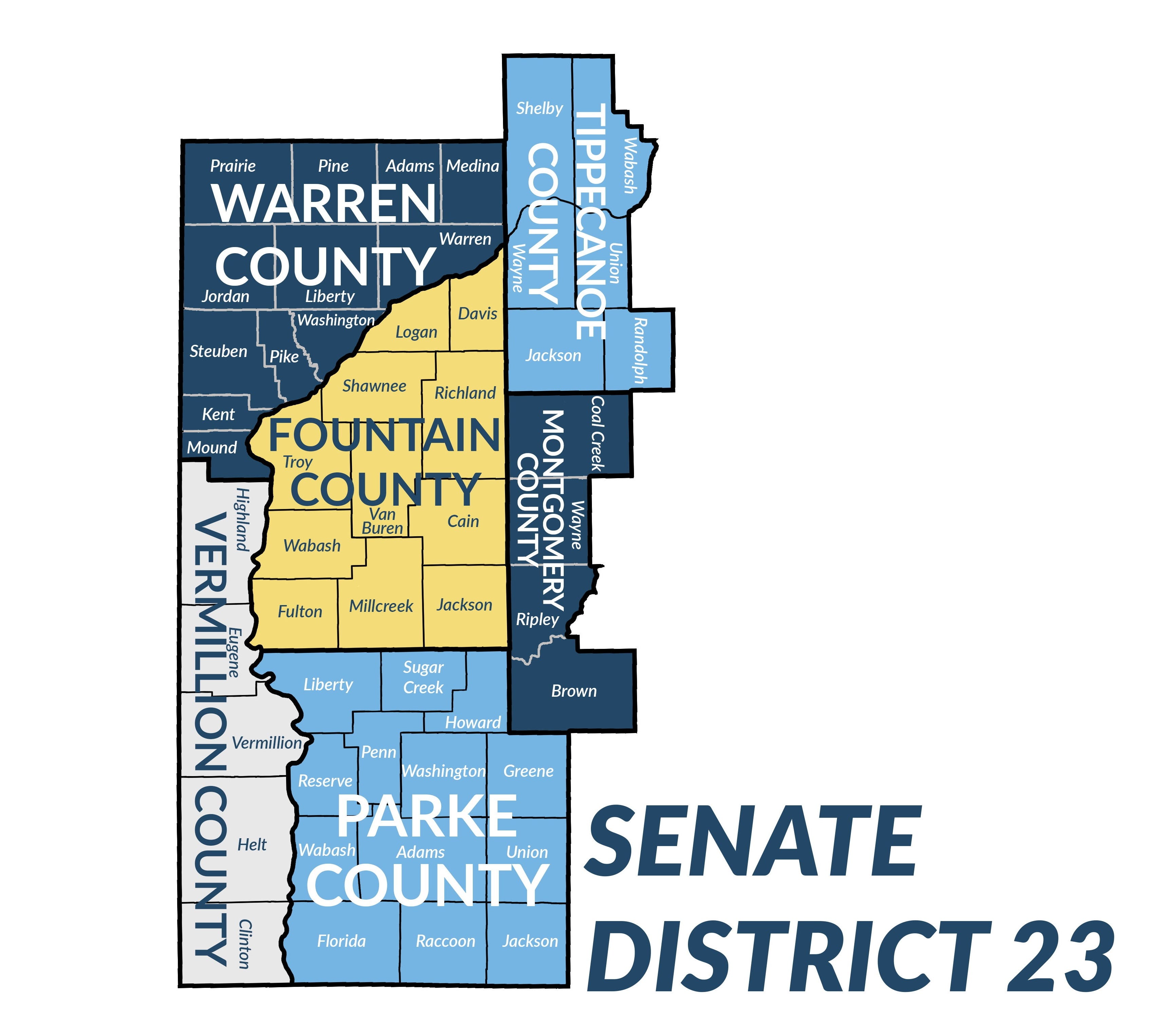
As of now, Copenhaver would be on the Senate District 23 ballot with David Sanders, a Democratic member of the West Lafayette City Council, and independent candidate Joshua Brant in a district that covers parts of Tippecanoe, Montgomery, Warren, Fountain, Parke and Vermillion counties.
Copenhaver on Monday called on Republicans to come together behind her campaign heading into November.
Sanders blasted her tactics after “the Indiana Recount Commission decided to award victory to Paula Copenhaver,” calling for what he called election integrity.
“More than four months ago, Paula Copenhaver prematurely declared victory in a race that was not decided until today,” Sanders said in a statement “It was not a prediction; it was a false statement at the time. Not only did she, with or without merit, attempt to get votes for Spencer Deery discarded, but she also wanted to subpoena voters, so that they would have to testify about the contents of their secret ballots, thereby endangering the privacy of our election process. The lawyer for Spencer Deery called that attempt ‘disgusting.’ A vicious and deception-filled advertising campaign was run by those supporting Paula Copenhaver against Spencer Deery. Paula Copenhaver sacrificed her integrity by becoming dependent on dark-money Political Action Committees without whom she would not have been close enough to achieve victory.”
Brant said: “Given the recount commission’s decision, my focus is on ensuring voters have confidence in the integrity of the process. I respect that election procedures exist for a reason, and I appreciate the officials who carry them out. What hasn’t changed is my commitment to the people of this district. I’m continuing my campaign because the issues that matter to families here remain just as important today as they were before the recount.”
Thank you for supporting Based in Lafayette, an independent, local reporting project. Free and full-ride subscription options are ready for you here.
Tips, story ideas? I’m at davebangert1@gmail.com.
Pretty obvious corruption here, right down to the "we took votes away from Copenhaver too" strategy.
Say what you will about Copenhaver but she's the epitome of the Republican Party, a party that believes Republican politicians should choose which voters count rather than voters choosing which politicians win. Deery chose to be a part of that party, a beneficiary himself of gerrymandering, and now he may lose because his party is what it is. It stinks for the rest of us, but the Republican Party doesn't believe in democracy and Deery is smart enough to have known that.