

Thanks for ongoing support from Based in Lafayette sponsor Long Center for the Performing Arts in downtown Lafayette. For tickets and details on all the shows and events, go to longpac.org.

TIPPECANOE COUNTY CLERK, ACCUSED BY COPENHAVER OF MISHANDLING SENATE DIST. 23 BALLOT, FIGHTS BACK
Tippecanoe County election officials pushed back Wednesday morning against allegations by Paula Copenhaver – who is contesting the results of her three-vote loss to incumbent Sen. Spencer Deery in Indiana Senate District 23 – that they mishandled a ballot counted in Deery’s favor the day after the May 5 Republican primary.
Tippecanoe County Clerk Julie Roush refuted Copenhaver’s claims made in the past week, including during a four-hour Indiana Recount Commission on Tuesday, that questioned the validity of the ballot and about how it was handled and tallied.
“It is deeply disappointing that a candidate for public office would make allegations that misrepresent our election process and undermine public confidence in the integrity of our elections,” Roush, a Republican in her second term as county clerk, said Wednesday morning during a Tippecanoe County Election Board meeting. “The public deserves facts, not misinformation.”
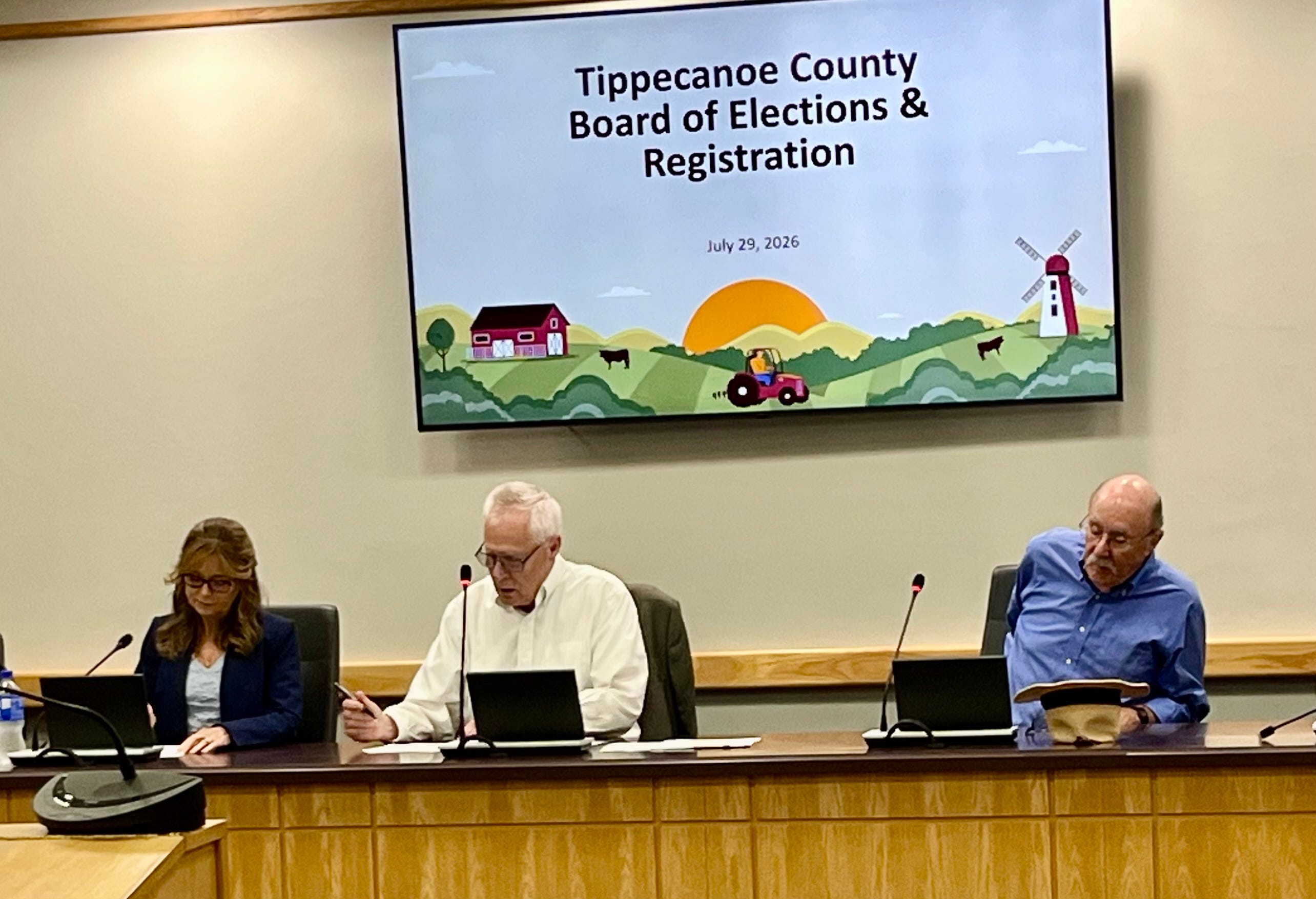
Roush’s comments came a day after the Indiana Recount Commission rejected an effort by Copenhaver’s attorneys to subpoena Roush and members of the election board to testify under oath about the ballot.
The vote is one of at least 13 in play across the six-county district – including one for the way it was handled during the certification process by the Parke County clerk and 11 by voters Copenhaver accuses of being crossovers who tampered with the election by not adhering to strict reading of state primary laws – that will be disputed and argued during an Indiana Recount Commission hearing Aug. 18.
Aside from the disputed ballots, a State Board of Accounts recount in the race found Deery’s victory stood at 6,337-6,334, the same as it was after six county election boards certified results in May.
The race was among those targeted by President Donald Trump and his allies after Deery and other state senators balked at his push for mid-decade redistricting in a bid to pick up more Republican seats in the U.S. House. Copenhaver, a former Fountain County clerk and staffer in Lt. Gov. Micah Beckwith’s office, received Trump’s endorsement and the backing of at least $2 million in dark money attacks on Deery during the campaign.
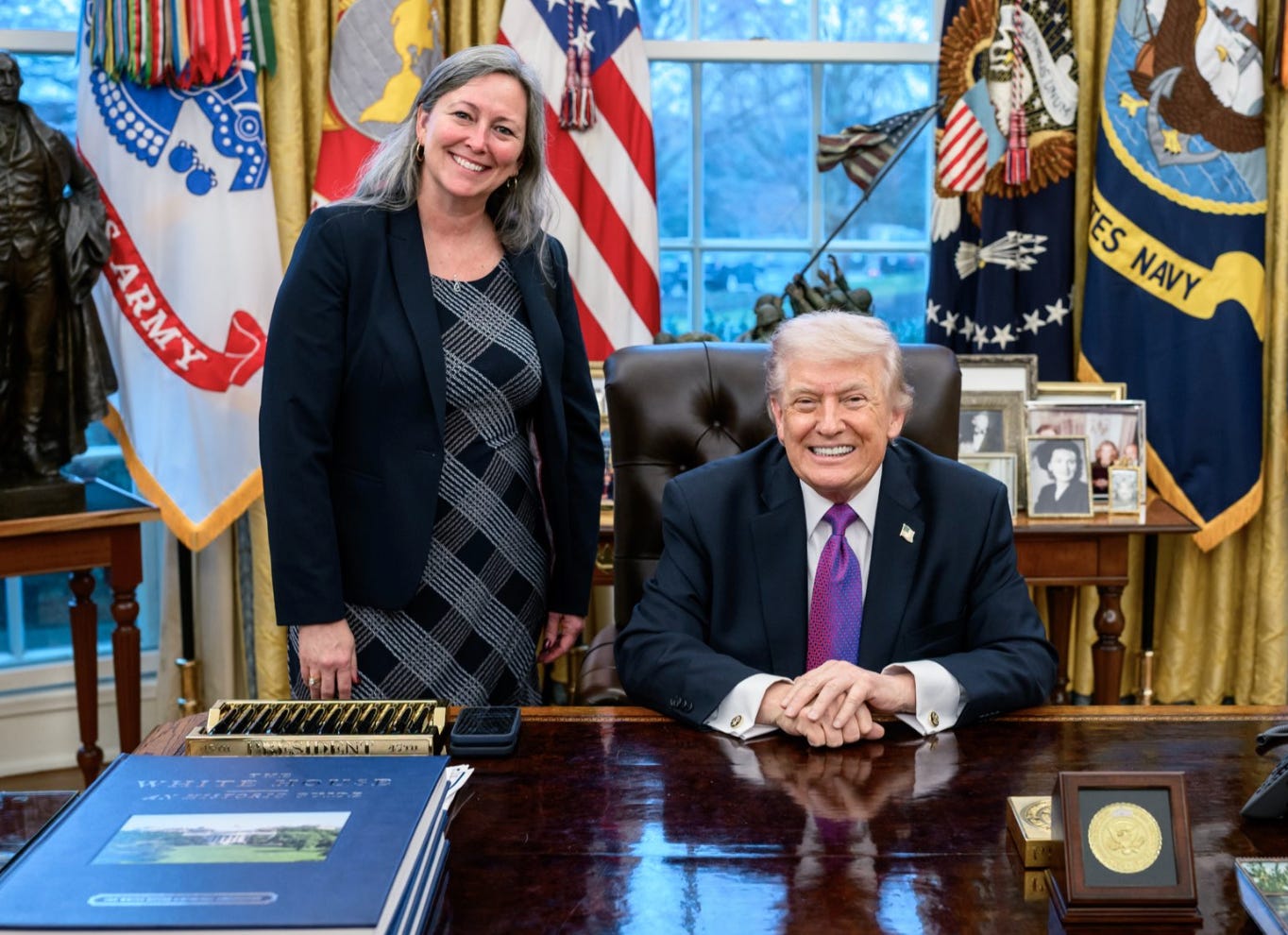
In a filing July 24 with recount officials and alleged again during Tuesday’s Recount Commission hearing in Indianapolis, Bill Bock, Copenhaver’s attorney, argued that they’d heard during the recount process in June that Roush had counted the ballot on her own, outside the confines of state law.
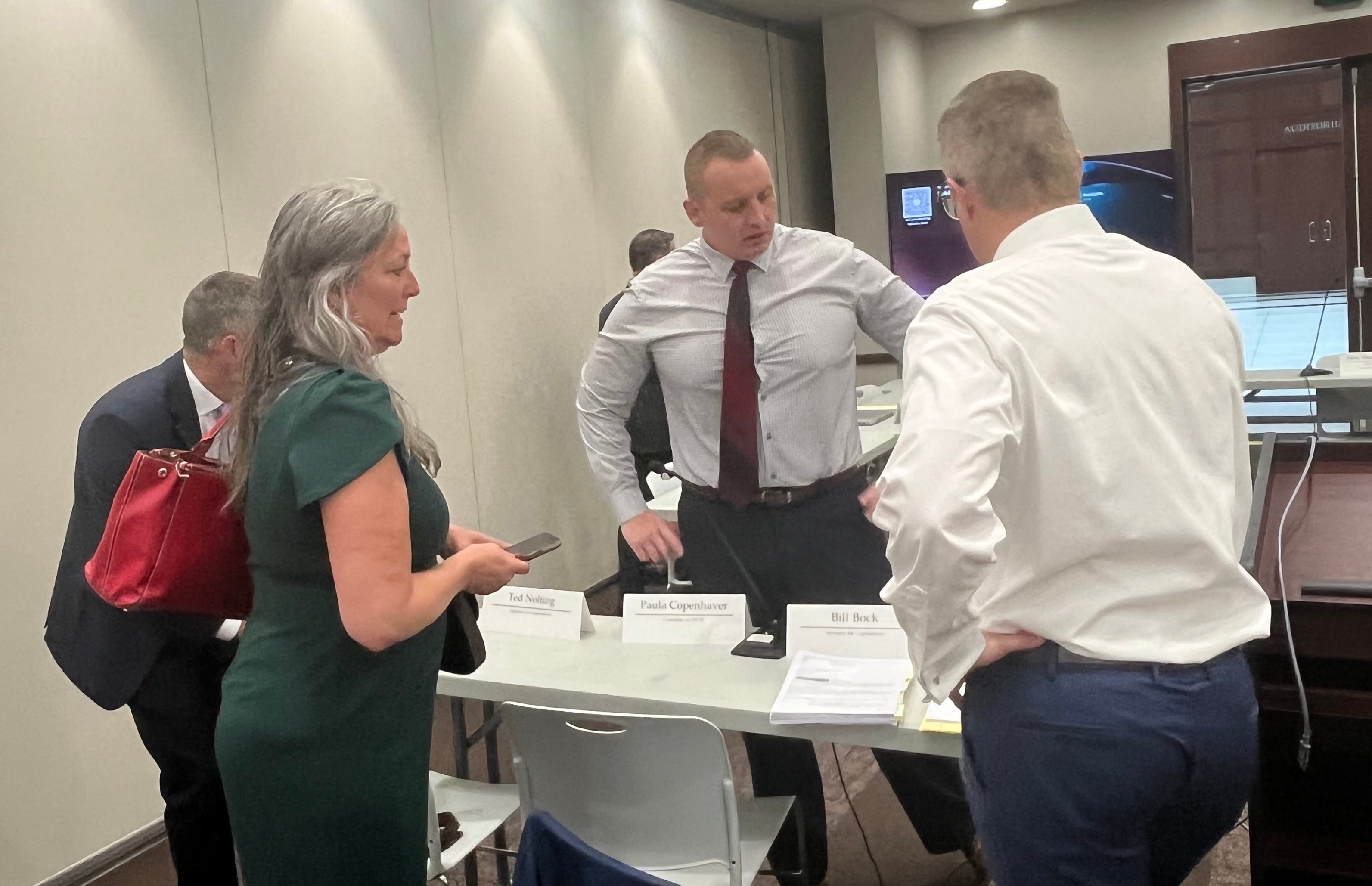
Bock wrote that Copenhaver’s side believed Roush had opened an “absentee ballot envelope that had been contained in the bag found in a corner of the Tippecanoe County Courthouse on May 6 and saw the absentee ballot was marked for (Deery) and then she ‘cast’ or ‘voted’ the ballot by asking the county election machine vendor to add the votes” to the Indiana Senate District 23 totals.
Bock, in the July 24 filing, that “this apparently unsecured and improperly transmitted mailed absentee ballot allegedly came about at the sole direction of the Tippecanoe County Clerk, who apparently personally opened the ballot envelope and ordered the voting technician to add the votes marked on the mailed absentee ballot to the County’s vote totals without the active involvement of other county election officials.”
The allegation doesn’t name who gave Copenhaver’s team that account of how the ballot was delivered to one of the county’s vote centers on May 5 and counted on May 6. But on Tuesday, Copenhaver and Bock stood by their contention that it wasn’t valid and shouldn’t be counted – essentially bringing the results to a two-vote margin.
“That’s not a legal way to return a ballot,” Bock said. “Which probably indicates that it was brought by somebody other than the voter themselves to the vote center. Because if it was the voter, they could have voted at the vote center. … The staff would have known, should have known, that you can’t do that.”
In Indianapolis on Tuesday, Deery’s attorney, Samantha DeWester, chided Copenhaver’s attempt to get Roush to testify under oath to get the full story on the ballot, asking whether Bock had bothered to pick up the phone and call Tippecanoe County to learn firsthand what had happened.
Back in Tippecanoe County, on Wednesday, Roush said Copenhaver and her attorneys had it wrong.
Roush acknowledged there were four absentee ballots dropped off at a vote center site on the day of the primary that were delivered to the County Office Building that evening, where votes were being tabulated. Roush said state law allows the Tippecanoe County Election Board to authorize poll workers supervising vote centers to transport absentee ballots received by 6 p.m. on Election Day, when polls close.
Roush said the ballots in question weren’t counted until the following morning but were handled with the same chain of custody other ballots had, kept under lock and video surveillance and had “remained under the supervision of a bipartisan team following established Indiana law and the procedures adopted by the Tippecanoe County Election Board.”
“First and foremost, I did not personally open or count any ballots,” Roush said.
Roush, who was on the Republican primary ballot for Tippecanoe County commissioner, said it was her standard practice not to open or count ballots when she’s running in an election “to avoid even the appearance of a conflict of interest.”
She said members of the election staff, represented by Republican and Democratic appointees, worked with MicroVote, the county’s ballot machine vendor, to go through the four ballots the morning after the election. (Only one of the four ballots came from Indiana Senate District 23.)
County election staff members Germany Harris and Mike Smith on Wednesday confirmed Roush’s account.
“At no point was any ballot delivered to the courthouse,” Roush said, refuting Copenhaver’s filing with the Indiana Recount Commission. “In fact, no absentee ballot is ever transported or handled outside the safeguards established by law and our bipartisan procedures.”
Roush continued during Wednesday morning’s Election Board meeting:
“Election officials and poll workers from both political parties dedicate countless hours to administering elections that are secure, transparent and conducted according to the law. They deserve the public’s trust and respect. Our office remains committed to counting every legitimate ballot received by the statutory 6 p.m. Election Day deadline. We also recognize that concerns about mail delivery sometimes lead voters to have a trusted family or household member deliver their absentee ballot in person. Indiana law is clear. Anyone delivering an absentee ballot on behalf of a voter must complete the required affidavit certifying that they are a family member or member of the voter’s household. Our office does not accept absentee ballots delivered by individuals who do not meet those legal requirements, nor do we accept ballots that are abandoned or left unattended, including those placed in locations such as the (county) treasurer’s drop box.
“Our bipartisan co-coordinators take the responsibility seriously. They faithfully follow Indiana law, adhere to established procedures and carry out their duties with professionalism, impartiality and integrity. The integrity of our elections depends on these safeguards, and the citizens of Tippecanoe County can remain confident that those safeguards are consistently followed.”
Other members of the three-member Tippecanoe County Election Board stood by Roush Wednesday.
“People are challenging the election integrity, and it’s unfortunate because it does undermine the public’s confidence in the process,” Randy Vonderheide, a Republican representative on the board, said.
Kent Moore, a Democratic representative on the board, called out Copenhaver’s accusations, particularly those she leveled at voters who chose Republican ballots. Moore said that while Copenhaver labeled them as illegal voters – those “boasting” on social media or in news accounts about how the Senate District 23 race motivated their voting decisions – he contended they were “unchallenged voters” and that she had missed her chance under state law to flag them as they asked for a ballot.
“This is my frustration,” Moore said. “I do not understand how you can say if I win the election, it was fair and honest and everything like that. But if I lose the election – the exact same election – well, then the other side cheated. That seems to me to be exactly what is going on here. And to be frank, I think it’s an insult to the hundreds of R’s and D’s that have come in and worked to make sure that our elections are fair and honest.”
Copenhaver lost her attempt to confront 11 voters under oath, when the Indiana Recount Commission rejected her motion to issue subpoenas to have them testify. The Recount Commission also rejected a motion from Copenhaver’s attorney to force those 11 – nine from Tippecanoe County, one from Fountain County and another from Warren County – to be at the next hearing on Aug. 18 to answer questions about the ballot they chose.

Even without the subpoenas, Bock is arguing that the Indiana Recount Commission has broad powers to wipe any of those 11 votes from Deery’s totals if they’re shown to come from independents or liberally-leaning voters who technically shouldn’t have been allowed to pull a Republican ballot.
DeWester argued Tuesday that Copenhaver’s claims were “disgusting,” based on hearsay, crossed the bounds of protections of a secret ballot and could set a precedent for future elections to drag in innocent people to explain their votes.
The Recount Commission has not set a time or location for the Aug. 18 hearing, though Evan Norris, the recount director, said it likely would be in Tippecanoe County.
Ballots across the state, including in Senate District 23, are scheduled to be finalized by Aug. 21.
The Republican winner of the recount in Senate District 23 will face Democrat David Sanders and independent candidate Joshua Brant in a district that includes parts of Tippecanoe, Montgomery, Fountain, Warren, Parke and Vermillion counties.
For more, including reaction from some of the 11 voters in question, here’s an account of Tuesday’s Indiana Recount Commission decisions:

Thanks, again, for ongoing support from Based in Lafayette sponsor Long Center for the Performing Arts in downtown Lafayette. For tickets and details on all the shows and events, go to longpac.org.
Thank you for supporting Based in Lafayette, an independent, local reporting project. Free and full-ride subscription options are ready for you here.
Tips, story ideas? I’m at davebangert1@gmail.com.
I'm sure Roush did her job cleanly and without corruption, but good grief it's something when the party of Donald Trump complains about public officials undermining public confidence in election integrity (I recall Deery made a similar comment). Strong vibes of the "We're all trying to find the guy who did this" meme.
I'm saddened by this new culture of undermining confidence in elections when the results don't go your way. I get legitimate scrapping, as in the Bush v. Gore election when the most powerful position on Earth came down to a few Florida votes, but, really, in this dispute, is it worth harming local democracy for such a fight ? will vote in ways that mostly satisfy his opponent's constituents, no doubt. Sometimes, when you lose out on a leadership position and you realize that your agenda will go forward, you just have to say, "Oh, I guess it doesn't have to be at the head of the ship." And then, you pick up an oar and help row. I offer this thought with no dog in the fight. I voted differently.