

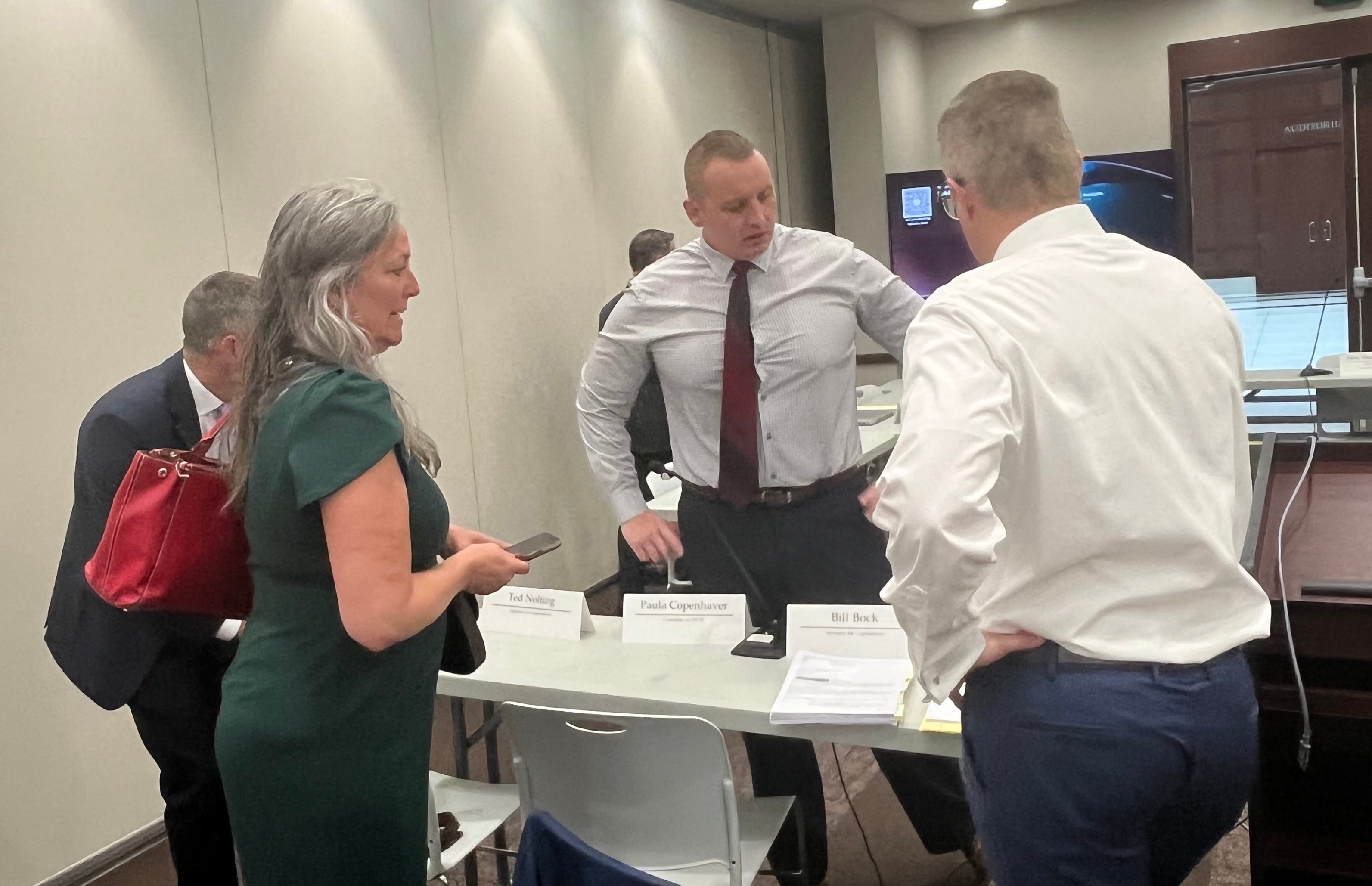
Eleven voters across three counties will not be forced to testify under oath about how they voted in the Indiana Senate District 23 race.
The three-member Indiana Recount Commission on Tuesday rejected Trump-endorsed Republican challenger Paula Copenhaver’s demand to subpoena those she accuses of crossing over in the May primary and tampering in what stands as a three-vote loss to state Sen. Spencer Deery.
Indiana Secretary of State Diego Morales cast the deciding vote in a 2-1 decision that was a blow to Copenhaver’s attempt to contest the election by proving that voters she found boasting on social media and in news reports cast illegal ballots – even if unwittingly – that she claims tipped the nomination process.
“I don’t think that’s the right thing to do,” Morales said. “I believe everybody has the right to vote, but they need to do it the right way. And the right way is, again, I encourage the General Assembly next session to close our primaries so we can avoid all of this.”
While getting 11 voters off the hook – nine in Tippecanoe County and one each in Fountain and Warren counties – the decision didn’t end Copenhaver’s election challenge.
The Indiana Recount Commission will meet again Aug. 18 and 20 – just before the Aug. 21 deadline to certify candidates for the November ballot – to consider a pair of votes in Tippecanoe and Parke counties that Copenhaver’s attorney Bill Bock argued weren’t handled properly by county election officials. Those could tighten Deery’s 6,337-6,334 victory.
Also in play: Even without sworn testimony by the 11 voters accused of tampering by Copenhaver, Bock is arguing that the Indiana Recount Commission has broad powers to wipe any of those from Deery’s totals if they’re shown to come from independents or liberally-leaning voters who technically shouldn’t have been allowed to pull a Republican ballot.
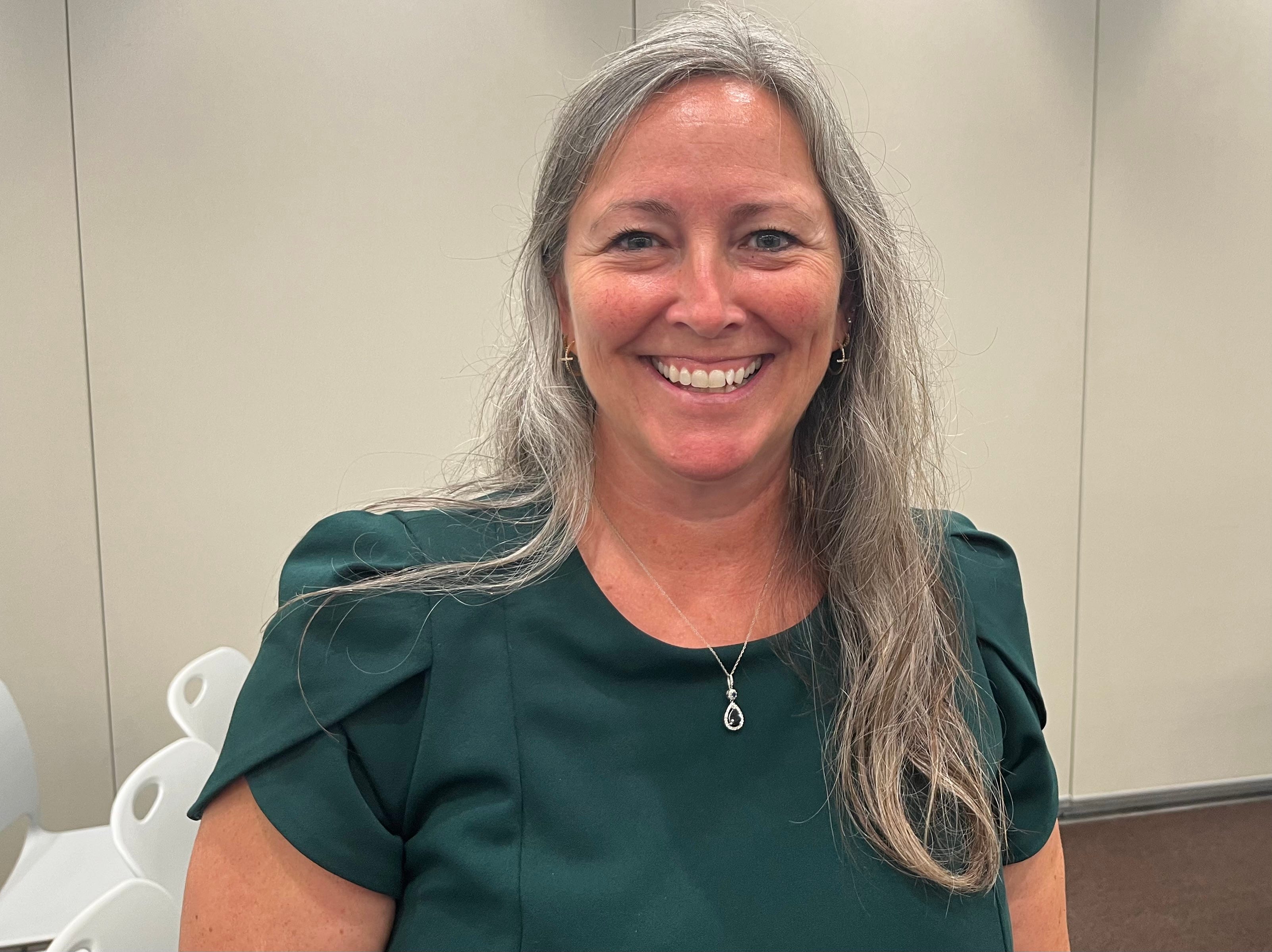
“I wouldn’t say I was surprised – nothing surprises me,” Copenhaver, Fountain County Republican Party chair and a staffer in Lt. Gov. Micah Beckwith’s office, said after Tuesday’s hearing in Indianapolis.
“I think we made a convincing argument,” Copenhaver said. “It should concern every single Republican that voted in the Republican primary that we have allowed Democrats to participate in our Republican primary. That’s the issue. … But this is a process. There’s still a lot at stake. The ballots still need to be gone through. So, we’ll go through the process.”
Back in Senate District 23, some of the voters who had been singled out by Copenhaver in the weeks after the May 5 primary were keeping up tabs on Tuesday’s hearing.
“I do believe it was a win for democracy today, in a small way,” Jes Johnson, one of the 14 voters initially named in a portion of Copenhaver’s challenge that has since been sealed, said.
Johnson, a West Lafayette resident, was singled out by Copenhaver’s campaign for talking on social media and in a Based in Lafayette article in May about pulling a Republican ballot to vote in Senate District 23. She said then, and reiterated Tuesday, that she voted for Deery for standing up against a mid-decade redistricting plan pushed by President Donald Trump and backed by Copenhaver. She said she’d been turned off by Trump-aligned groups who poured millions into races to defeat Republican state senators, Deery included, who voted against redistricting. She said she didn’t plan to vote for Deery in the general election.
“They’re just opening a can of worms,” Johnson said Tuesday. “I would have fought a subpoena, for the principle of it. Your vote is still sacred, isn’t it? … It’s the whole precedent setting thing. We’re just going to allow some mad politician to be like, I lost so now I’m going to subpoena everyone?”
The arguments by Bock and Deery’s attorney, Samantha DeWester, about the demand for voter subpoenas followed a similar track.

Indiana election law allows voters to request either Republican or Democratic ballots at a polling site during a primary. With an open primary system, there is no requirement for formally registering with a party. A provision in state election law sets parameters that allow someone to pick a primary ballot if they voted for a majority of that party’s candidates in the last general election or intend to in the upcoming election.
Bock argued that the fact that few people know about that provision didn’t mean it can be ignored.
Bock showed the commission a series of comments posted on social media or reported in the press, sharing stories about being typically left-leaning voters who bragged about crossing over, asking for a Republican ballot so they could vote for Deery. Or, in this case, against Copenhaver.

Bock argued that those 11 voters forfeited their right to ballot secrecy when they indicated they’d asked for a Republican ballot when they either hadn’t voted for GOP candidates in the most recent general election or didn’t intend to vote for a majority of the Republican slate in the November election. He also argued they didn’t qualify as Republicans as the party selected its nominees.
“There’s not a freedom under state law to do that,” Bock argued during Tuesday’s hearing. “That statute says you’re not free to do that. Now, they may be misinformed. They may not have intended to violate the law. That doesn’t change the impact on the integrity of the election. … If they’re not entitled to vote, they shouldn’t have cast that ballot.”
Bock argued that being asked about their ballots is something those voters should have expected would happen.
DeWester called that notion “disgusting.”
DeWester picked at Copenhaver’s attempts to identify voters by the names projected on social media profiles. How could Copenhaver’s attorneys be sure, given the nature of social media, whether they were tracking the correct person, she asked. DeWester highlighted that Copenhaver’s initial demand had been sloppy enough that it had to be scaled back from 14 to 11 voters, after realizing that three people commenting on social media did not live in Senate District 23 and didn’t vote in that race.
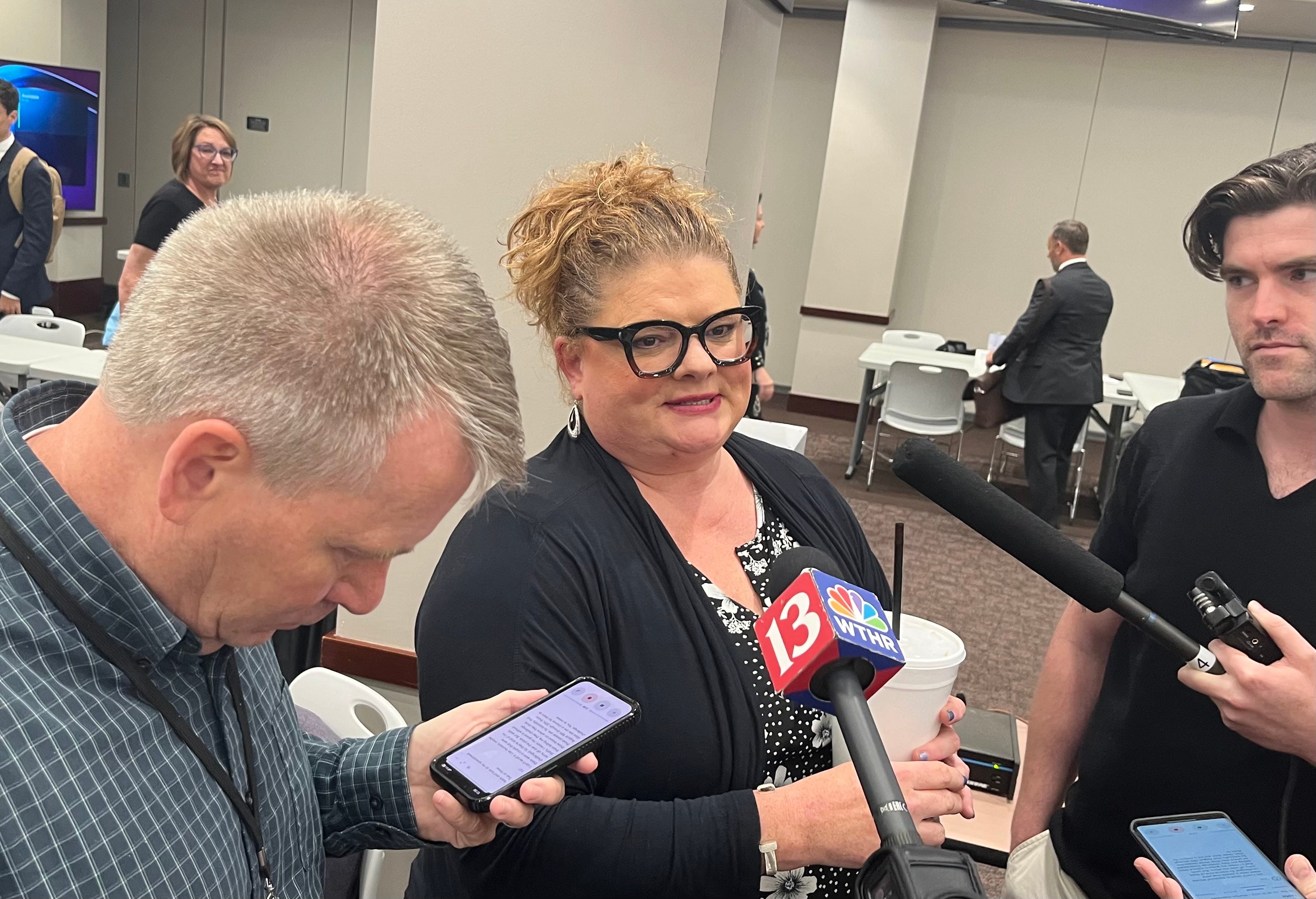
DeWester also shared a note in a post addressed to Copenhaver during the campaign from someone who professed to be staunch Democrat who pulled a Republican ballot to back her.
“Should we track down that person and maybe subject them to a deposition?” DeWester asked. “No, that’s ridiculous. We’re better than that. We don’t do that kind of stuff.”
DeWester said Indiana election law provides a way to challenge an accused crossover voter at the polls, but not afterward. She argued that Copenhaver was grasping at anything she could just to win an election, coming after voters’ right to ballot secrecy and free speech in the process.
“I mean, when will this stop?” DeWester asked. “This is unprecedented. It would set the precedent for future elections to drag in innocent people.”
Paul Mullin, a Republican member of the Indiana Recount Commission, was the lone vote in favor of Copenhaver’s request to have voters testify. Mullin said he found the request, “in this very narrow factual situation,” to be fair game.
Michael Claytor, a Democratic member, said Indiana’s system was a hybrid one “that statutorily closes the primary based on political party but does not clearly communicate that fact to potential voters.”
“Compliance is measured by a state of mind,” Claytor said. “It is at best a backdoor closed primary.”
Claytor said that was something the General Assembly would have to deal with. For now, he said, Copenhaver missed her chance to challenge voters at the polling place. Claytor also said the legislature could have defined crossover voters’ actions as a crime, “but it chose not to.”
After the decision, Bock asked the Recount Commission to consider subpoenas that would force the 11 voters to appear at the Aug. 18 and 20 hearings. DeWester challenged that, saying it was an attempt to reopen a question they’d just got done arguing and to force people into a room where they could be called to testify about their votes in Senate District 23.
The Recount Commission voted 2-1 against that request.
Sam Cody, a Warren County voter and one called out in Copenhaver’s election challenge, said Tuesday afternoon that he’d been prepared to tell how he’d pulled a Republican ballot for the first time in his life, voted for Deery and left the rest of the ballot blank. He said he’d been motivated by the redistricting debate, too.
“I think I would have welcomed the opportunity to defend myself, but I’m glad they didn’t, just for the precedent that would have set,” Cody said, after a friend kept him apprised about how the hearing was going Tuesday.
“That and, you know, potential intimidation of other independent voters who want to choose,” Cody said. “But part of me was interested if it did happen to be able to say my piece. … For me, I think it came down to, realistically, in my area, it’s probably going to be whoever the Republican is. And between those two choices, one was standing up for protecting the speech and rights of other people in the state by voting against redistricting, and the other one was kind of going just word for word, whatever her handlers were saying. And that’s what I’d rather not have representing me.”
If the Senate District 23 recount leads to the General Assembly going with a completely closed primary system, Cody said he was ready for that, too.
“I would probably register as a Republican just because I live out in Warren County, and that’s how my voice would matter out here,” Cody said.
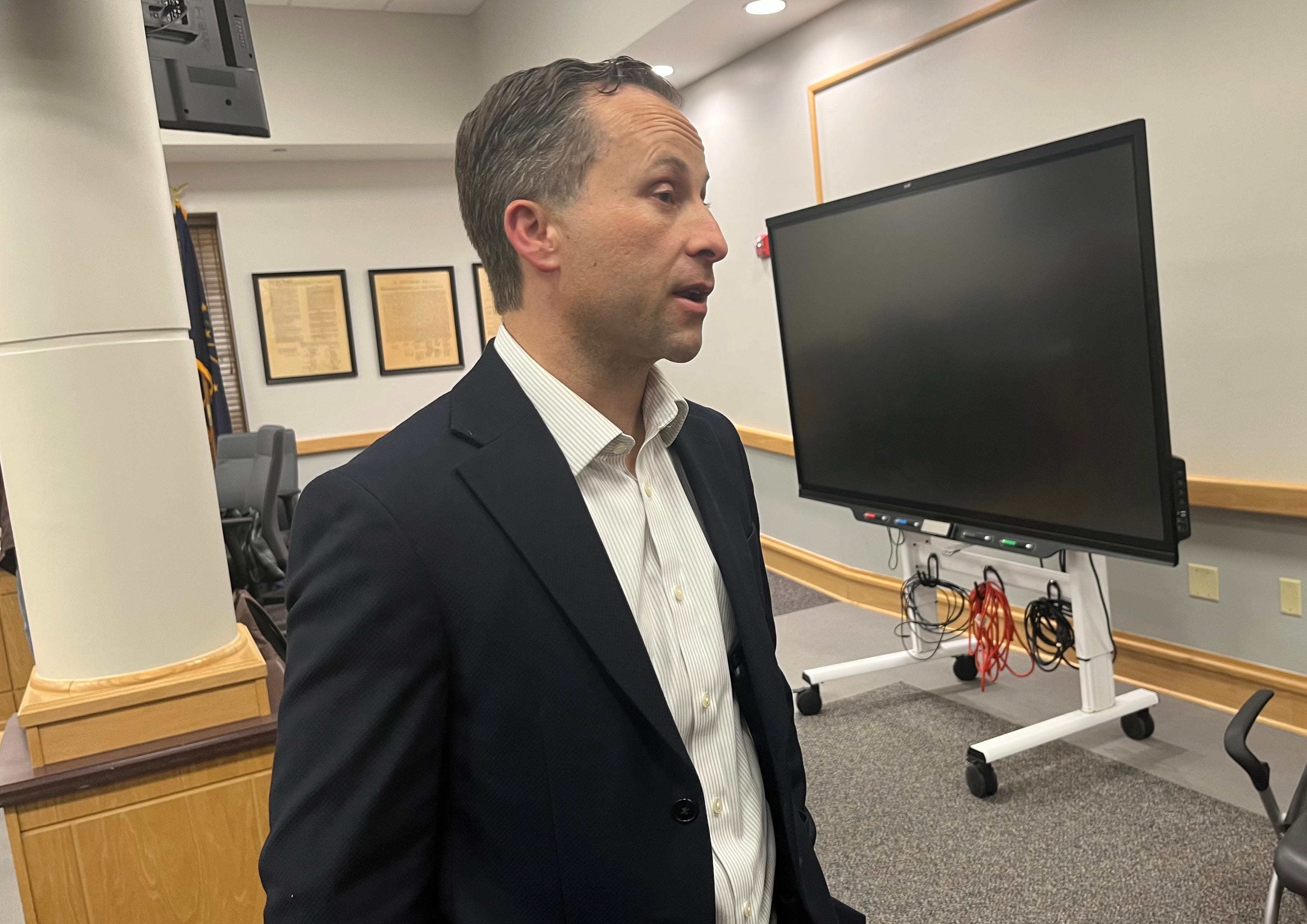
Deery did not attend Tuesday’s hearing in Indianapolis. Tuesday evening he told Based in Lafayette:
“I’m grateful to the public servants who put in a lot of hours over the last few weeks, and I am very pleased that the Recount Commission listened to the arguments and made a just decision.
“With that said, if I am being completely honest, I have not personally obsessed over details of the proceedings. That’s because the facts are that I had the most votes on election night. I had the most votes after the provisional ballots were counted, and I had the most votes after every ballot was counted again. Those facts, combined with the excellent work by my attorney to make sure that the law and the will of the voters were respected, have allowed me to focus on what I need to focus on most: uniting primary voters, talking to general election voters, and preparing legislation for the next session that will strengthen our state and be a blessing to Hoosiers. That has been, and continues to be, my focus.”
The winner of after the recount in Senate District 23 will face Democrat David Sanders and independent candidate Joshua Brant in a district that includes parts of Tippecanoe, Montgomery, Fountain, Warren, Parke and Vermillion counties.
On Tuesday, the Recount Commission also:
Rejected an effort by Deery to dismiss Copenhaver’s effort to contest the election.
Rejected a request from Copenhaver to issue subpoenas for Tippecanoe County Clerk Julie Roush and the Tippecanoe County Election Board to testify about a ballot counted in Tippecanoe County for Deery the morning after the May 5 primary. Bock argued that the move was made “without an official meeting of the Election Board having been convened or noticed.” The morning after initial results were counted, election officials in Tippecanoe County recorded votes from five absentee ballots that had been dropped off at vote centers before polls closed at 6 p.m. May 5. They said at the time that those ballots should have been counted along with the rest that night. Among those five was one Republican ballot from Senate District 23, Roush said May 6, the day after the primary.
Held off until August on an objection about the election certification process in Parke County, where Deery picked up one additional vote from provisional ballots counted in the 10 days after the May 5 primary. In question is how that vote was ultimately added to official totals May 21, days after the deadline and after ballots and election equipment were impounded by Indiana State Police for the recount, when Parke County Clerk Nicole Collins emailed the Indiana Election Division after discovering the vote “didn’t get saved when we added it to our totals and the election was certified.” Bock argued that the move, dubbed a “re-certification,” wasn’t covered by state law and that the hard deadline for election certification should apply and invalidate the updated results. In a response last week, DeWester argued that “a clerical, administrative, or transmission error does not change the underlying vote. Nor should such an error be transformed into a mechanism for excluding a lawful vote that the election records establish was cast and counted.”
Rejected a request by Copenhaver’s campaign to use federal Safeguard American Voter Eligibility Act (SAVE) data to check whether voters had proof of citizenship and were eligible to vote. Deery opposed that motion, saying that Copenhaver offered no evidence that noncitizens voted in the election. “As (Copenhaver) desperately scrambles for votes, she attempts yet another fishing expedition,” Deery’s attorney wrote in a mid-July response.
Rejected a request from Deery’s campaign to subpoena Copenhaver to back up her “claims to have personal knowledge” about “unlawful” or ‘invalid’ votes in the primary.
More coverage


Thank you for supporting Based in Lafayette, an independent, local reporting project. Free and full-ride subscription options are ready for you here.
Tips, story ideas? I’m at davebangert1@gmail.com.
Copenhaver is a disgrace. There is NOTHING in the state or federal constitution that says a citizen has to vote for the same party their entire life. She is a sore loser and a miserable excuse for a public servant. I almost always vote a straight Democratic ticket, but if there is a decent public servant running on the Republican ticket, I will cross over and vote for them, because no political party has a monopoly on good people.
This is tiny taste of what Republicans want to do all across America. Indiana should be ashamed. I can vote for whomever I want to vote for no matter my party affiliation.