

Attorneys for Thomas Moss, a Lafayette man accused of being at the center of an alleged attempted murder plot that led to the Jan. 18 shooting of Tippecanoe Superior Court 2 Judge Steve Meyer and his wife, Kim, filed a motion Monday to delay the start of his trial until summer 2027.
Moss’ attorneys argued that given the complexity of the case and several unresolved issues leading up to his trial set to start Sept. 9 that one year to 18 months of prep time to get through it all was “a more realistic timeframe for trial lawyers to prepare this matter for jury.”
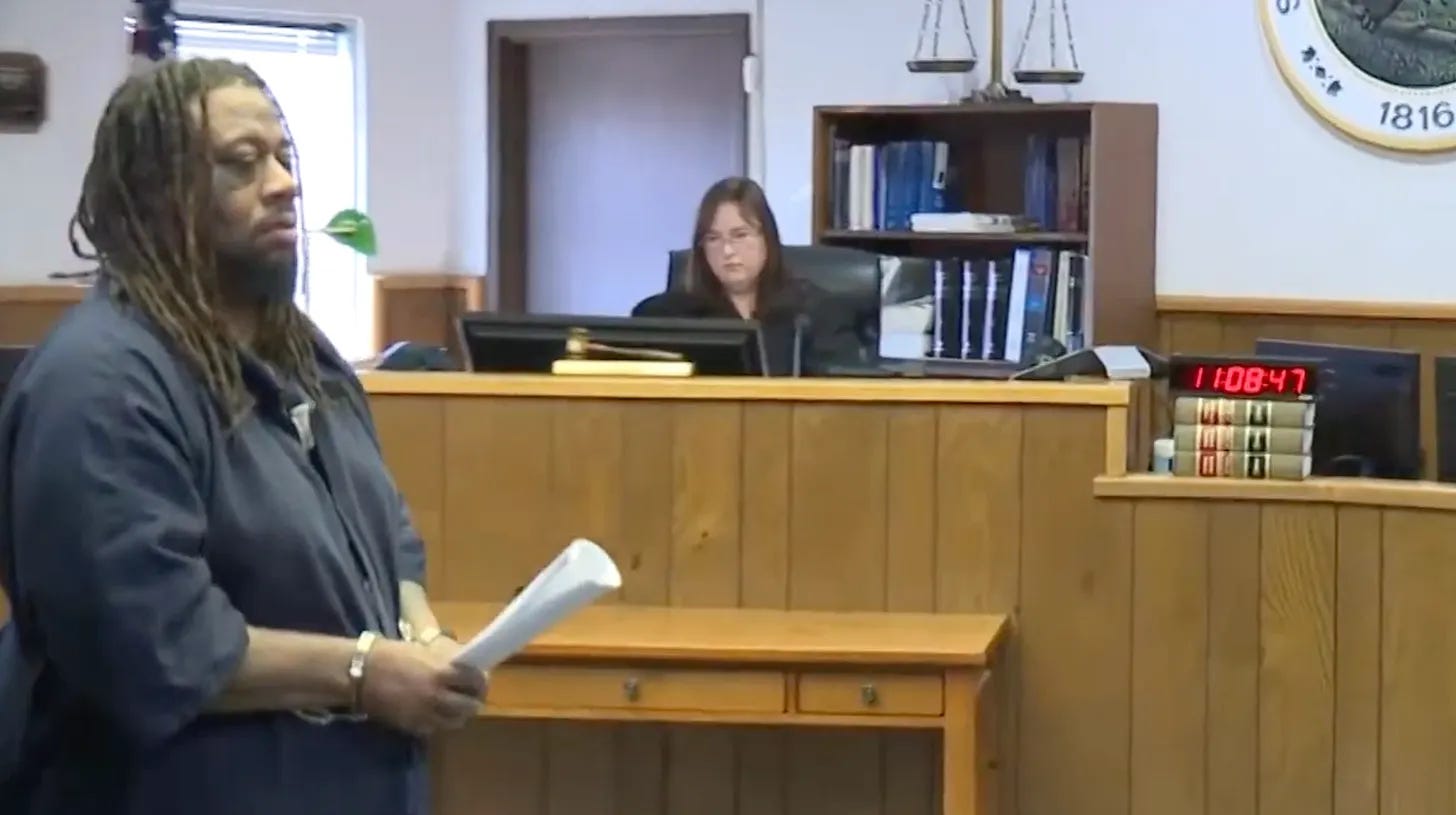
Meanwhile, Moss and two of his three alleged co-conspirators – Blake Smith of Dayton and Raylen Ferguson, a Lexington, Kentucky, man accused of pulling the trigger – asked for a stay in their cases until a higher court could hear an appeal on a judge’s denial to appoint a special prosecutor who didn’t have such a close working relationship with Judge Meyer.
As of Monday afternoon, the prosecution hadn’t filed a response, according to court records. Neither had Cass County Superior Court 2 Judge Lisa Swaim, who was appointed in January to handle cases related to the Meyers’ shooting and a larger alleged scheme intended to sidetrack a separate trial Moss faced in Meyer’s court.
Moss, Ferguson and Smith – along with Nevaeh Bell, 23, of Lafayette, who prosecutors say helped with details of the plan to keep Moss from going to trial and potentially to prison – face more than a dozen charges tied to the attempted murders of the Meyers and the victim in Moss’ initial domestic violence case.
They were arrested in the weeks after the shootings at the front door of the Meyers’ Lafayette home and since then have been held on bonds well into the millions of dollars, with conditions that keep them isolated from anyone other than their lawyers.
Moss’ trial is currently scheduled to be the first of the four, with the other three pushed out months later.
But the cases of Moss, Ferguson and Smith were scheduled for a test jury set to be called Sept. 2 to gauge how difficult it might be to find impartial jurors in Tippecanoe County.
Attorneys for Thomas Moss, Raylen Ferguson and Blake Smith have argued that it could be impossible to pick a local jury for a crime that garnered high-profile media coverage and where the victims were well-known in the community. Swaim said during a hearing earlier in July that the test jury would help her decide whether to move trials away or bring jurors from another county for a trial at the Tippecanoe County Courthouse.
In Monday’s motion to delay Moss’ trial, attorneys Mike Cunningham and Andrew Baldwin argued that with the other cases “inextricably intertwined with the facts” in Moss’ case, that “the fact that multiple defendants are accused of participating in a common scheme or plan adds complexity to the case, even for lawyers with vast experience.”
Cunningham and Baldwin wrote in Monday’s motion that they’d initially been reluctant to take the case “due to the additional time commitment that a high-profile and complex case like Moss’ would require.” But now, they argued, they needed more time to get through deposition and reams of evidence to defend Moss’ case.
They also contended that initial digital evidence received from the prosecution was corrupted, causing delays. And they argued that Swaim had been slow to rule on defense pre-trial motions, causing more delays.
They said Moss’ original trial, initially set to start two days after the Meyers were shot, should be held first. It also is scheduled to start Sept. 9, according to court records.
Then, Moss’ attorneys argued, there was a fresh motion filed Monday by Moss, Ferguson and Smith asking to appeal Swaim’s decision in July that rejected a request for a special prosecutor in the case.
In March, Baldwin argued in court that the prosecutor’s had a conflict of interest, due to its “close-knit” working relationship with Meyer and his court. Baldwin had argued that Tippecanoe County Prosecutor Pat Harrington had set precedents when he asked for special prosecutors in other cases, including one involving a Lafayette man charged in October 2025 of battering a public defender and another in which a defendant threatened to kill a Tippecanoe County judge and his family. Moss’ attorneys argued that prosecutors might pursue the case differently knowing they’d have to work with Meyer as a victim in this case and when he was on the bench in other cases.
In her order July 10, Swaim said that whether the prosecutor had a history of asking for special prosecutors in other cases “does not support or refute an inference that he acted improperly in this case by not asking for such an appointment.” She wrote that state law gave the prosecutor “significant discretion to analyze and decide and does not make them reveal the internal process.”

In Monday’s motion, attorneys for Moss, Smith and Ferguson asked for a review of Swaim’s decision by the Indiana Court of Appeals or the Indiana Supreme Court.
They asked to hold off on any other matters in the case until that is done.
They argued in the new motion that waiting until after a trial for an appeal about a special prosecutor “is inadequate.” They argued that settling that matter now could save time and effort later.
“They have already been arrested, detained and held in solitary confinement, and if convicted face over 300 years,” the attorneys wrote. “A post-judgment appeal cannot restore the fairness of a pretrial process already compromised by a conflicted prosecutor’s charging decision, discovery determinations and plea negotiation posture. Once those decisions are made, no appellate remedy can recreate what an unconflicted prosecutor’s independent judgment would have produced at each of those junctures.”


INDIANA RECOUNT COMMISSION SETS FINAL HEARING ON DISPUTED BALLOTS IN SENATE DISTRICT 23
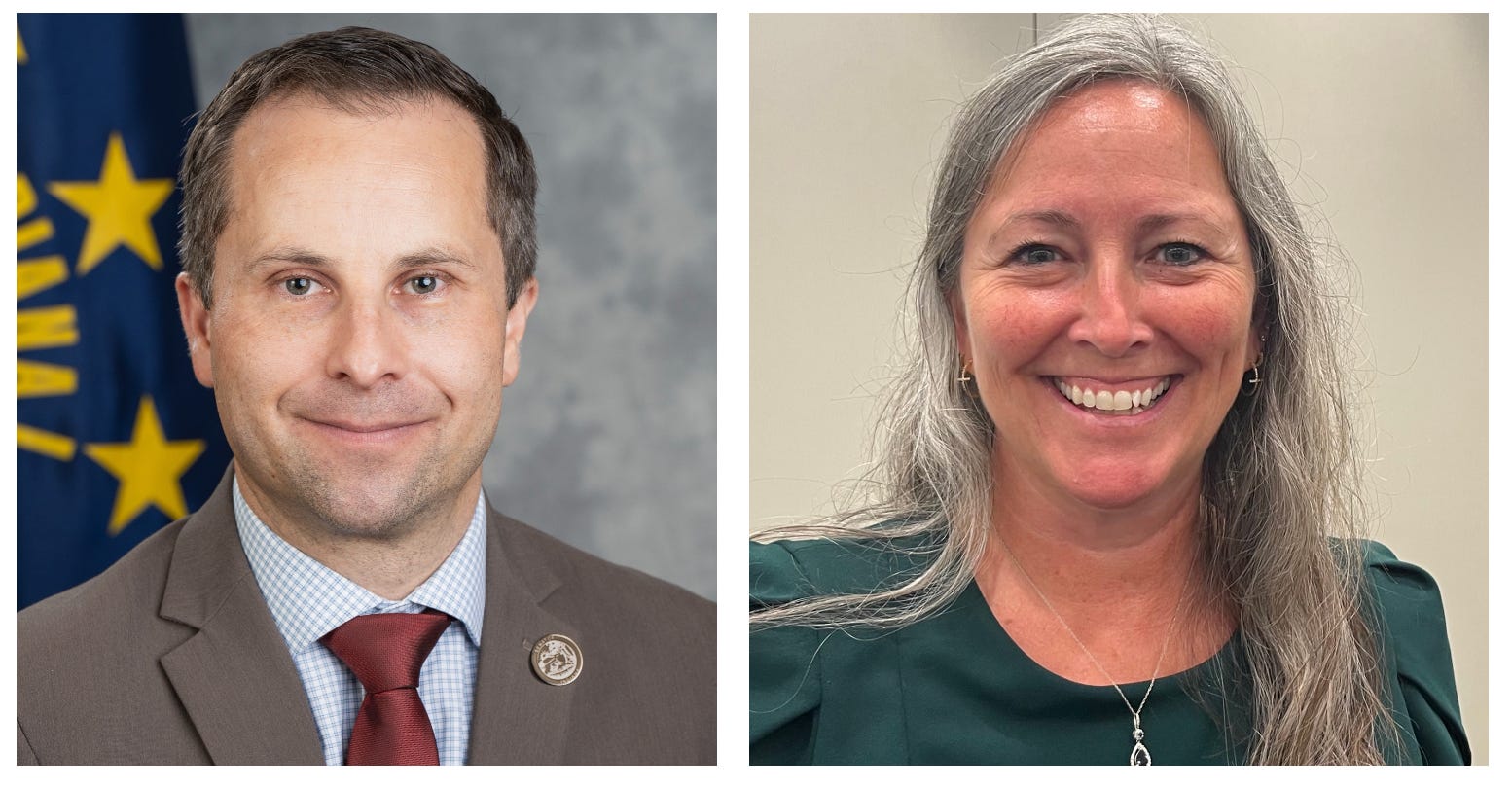
A final hearing in the recount in the disputed Indiana Senate District 23 race will be Aug. 10 in Indianapolis, according to an order issued Monday by Evan Norris, a Zionsville-based attorney overseeing the recount.
After an Indiana Recount Commission hearing last week, state Sen. Spencer Deery, a West Lafayette Republican, maintained a three-vote victory over his Trump-endorsed challenger Paula Copenhaver in the May Republican primary. Deery’s margin stood at 6,337-6,334, the same as it was after six county election boards certified results in May.
Not settled, yet, are votes Copenhaver, a former Fountain County clerk, disputes for various reasons.
Last week, a split Indiana Recount Commission voted 2-1 against Copenhaver’s demand to subpoena 11 voters – including nine from Tippecanoe County – she accused of crossing over to pull a Republican ballot to vote against her despite “boasting” on social media or in news articles that they typically vote for Democrats. Even without sworn testimony by the 11 voters accused of tampering, though, Copenhaver’s attorney, Bill Bock, is arguing that the Indiana Recount Commission has broad powers to wipe any of those from Deery’s totals if they’re shown to come from independents or liberally-leaning voters who technically shouldn’t have been allowed to vote in the Republican primary – even if voters didn’t understand they were going against a little-used provision in election law.
Those 11 votes are among roughly 275 flagged in June by Copenhaver’s campaign during the recount process. Bock said last week that the campaign disputed all ballots cast for Deery in those 11 voters’ precincts to make sure they were included in the Indiana Recount Commission’s final review.
Deery’s attorney, Samantha DeWester, has argued that Copenhaver’s claims are not only unprecedented, but also that the threat against guarantees of ballot secrecy is “disgusting.”
The Indiana Recount Commission also is scheduled to consider a pair of votes in Tippecanoe and Parke counties that Bock argued weren’t handled properly by county election officials. (Tippecanoe County Clerk Julie Roush fought back against that allegation a day later.)
The Indiana Recount Commission last week hinted that it would hold a final session Aug. 18 in Tippecanoe County to handle the disputed ballots. That changed, Norris said in his order, after consulting with Deery and Copenhaver’s attorneys and settling on a central location already set up for livestreaming and easier access for state staff.
That meeting now will be 9 a.m. Monday, Aug. 10, in Conference Room B of Government Center South, 302 W. Washington St. in Indianapolis, just across from the Statehouse.
For more coverage:


Thank you for supporting Based in Lafayette, an independent, local reporting project. Free and full-ride subscription options are ready for you here.
Tips, story ideas? I’m at davebangert1@gmail.com.